
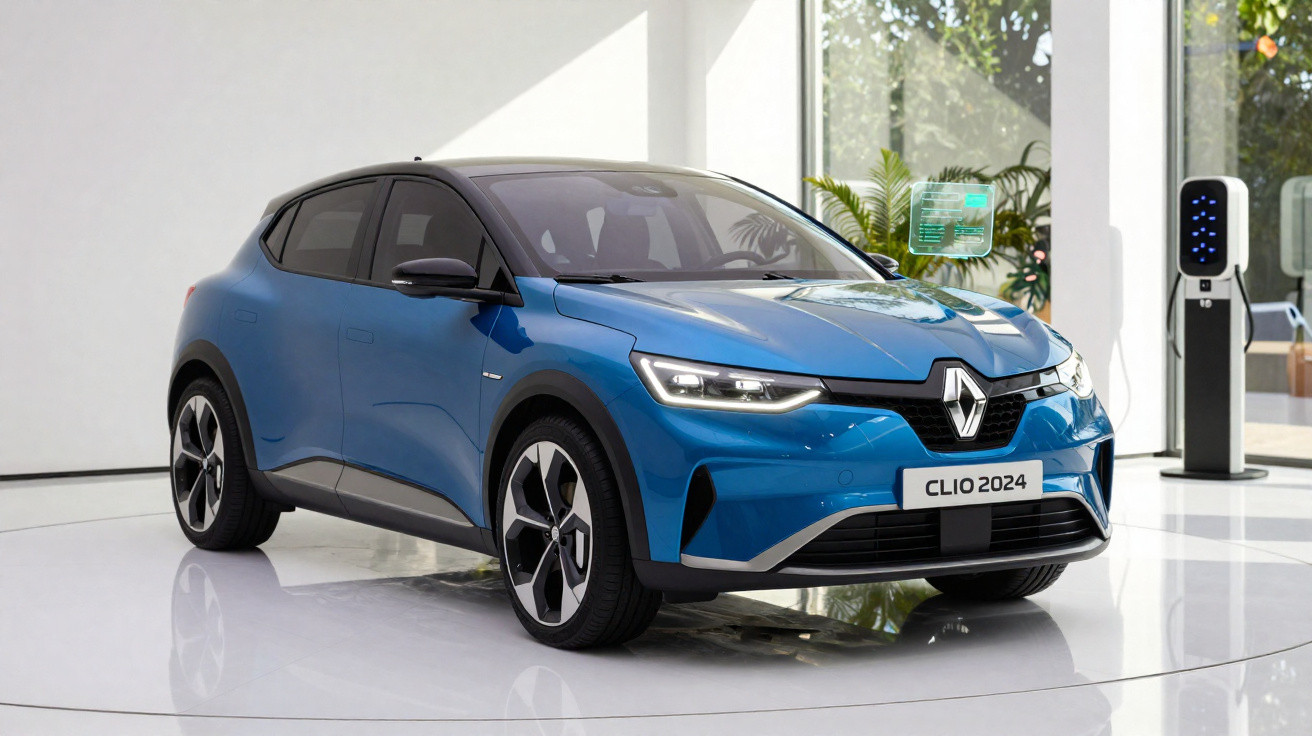
The Renault Clio is unquestionably the French brand’s most significant model and one of those cars that feels instantly familiar: since 1990, more than 16 million units have been sold.
The current generation arrived in 2019 and is now receiving a substantial facelift. Alongside new technology, it brings a fresh front-end that reveals the first cues of the brand’s new design language.
That updated look is one of the most obvious changes versus today’s model-and it’s one of five key highlights we’ve picked out below.
1. Debut of a new design language
The headline change on this refreshed Renault Clio is the redesigned front end, which already previews the new design direction the brand plans to roll out across its future models.
Among the most striking elements is the new LED light signature, which extends vertically down from the headlamps.
Up front, the grille is larger, bolder and more pronounced, framing the Renault badge. The headlamp units are slimmer and sportier in character, while at the rear a clearer, more crystalline look adds a modern twist to a shape we know extremely well.
2. Hybrid version updated
The E-Tech Full Hybrid powertrain remains one of the major draws in the updated Clio line-up. With two electric motors-one rated at 36 kW and a 18 kW high-voltage starter/generator-paired with a 1.6 l four-cylinder combustion engine, combined maximum output now rises to 145 cv (+ 5 cv).
This is all controlled by an intelligent multi-mode, clutchless gearbox. The system battery has a 1.2 kWh capacity, enabling the Clio to run in 100% electric mode for up to 80% of the time in urban driving.
As well as the hybrid, the new Renault Clio will also offer a bifuel option-LPG and petrol-linked to a 1.0-litre three-cylinder engine. It produces 100 cv and offers a range of more than 1,000 kilometres.
For more traditional buyers, versions with a conventional combustion engine will still be available: petrol (1.0 TCe 90 cv) or diesel (1.5 Blue dCi 100 cv).
3. More sustainability on board
Step inside the new Renault Clio and the overall impression is broadly in line with what we remember from the current model. The biggest interior update is the adoption of materials with a more sustainable origin.
In the Techno version, the seats, door panels and dashboard now feature a fabric containing around 60% of a bio-based cellulosic fibre.
4. Fully connected to the world
Also inside, the digital instrument cluster and the portrait-oriented central display have been updated. The touchscreen still comes in 7-inch and 10-inch versions, but it can now include new features such as connect radio and direct integration with the R&GO app on your smartphone.
And on the subject of smartphones, these can now be connected via Android Auto and Apple CarPlay without the need for cables.
On the technology front, the refreshed Renault Clio now totals 20 driver-assistance systems, covering driving, parking and safety.
5. Renault Clio also gets “Esprit Alpine”
Following the farewell to Renault Sport-badged versions, the more athletic-looking trims now adopt the “Esprit Alpine” name, first introduced on the new Austral.
In addition to sportier bumpers and larger wheels, there are specific body colours and a range of details exclusive to these versions. One example is the front blade that acts as a deflector, finished in a Matte Schist Grey shade. All of this comes alongside a very generous equipment level, positioned at the top of the range.
When does it arrive?
The updated Renault Clio will reach the market during the third quarter of this year-that is, after the summer.
Comments
No comments yet. Be the first to comment!
Leave a Comment