
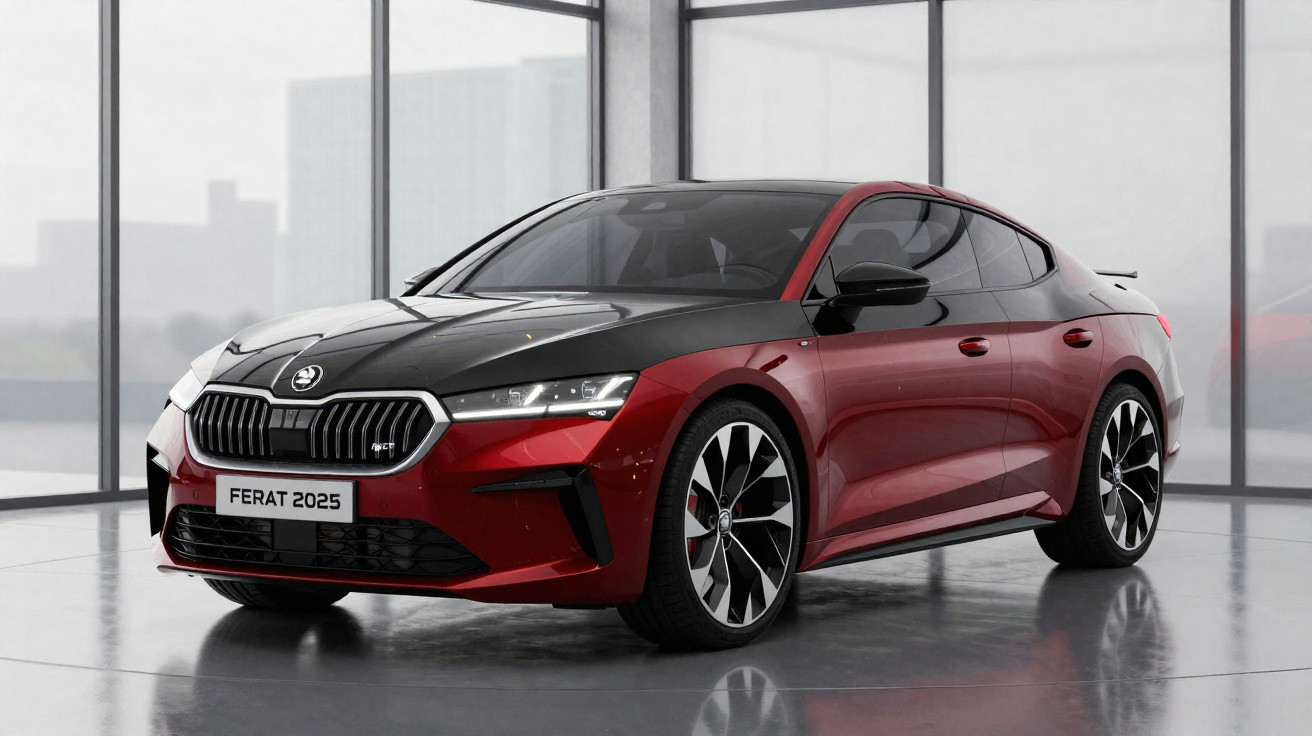
A Škoda sports car? Yes, really. The Škoda Ferat exists only as a digital concept, created from the imagination of the Czech brand’s French designer, Baptiste de Brugiere.
It is the latest entry in the “Icons get a makeover” programme, through which Škoda’s design team revisits the company’s century-long back catalogue and reinterprets some of its most iconic - or simply most curious - past models for the present day.
The origins: Škoda 110 Super Sport (1972)
This is exactly what happened with the Škoda Ferat, which first appeared back in 1972 as the 110 Super Sport: a sports-car prototype unveiled at that year’s Brussels Motor Show. The futuristic-looking coupé was based on the Škoda 110 R, a small rear-engined, rear-wheel-drive coupé.
Weighing just 900 kg, the prototype used a modest 1.1-litre four-cylinder engine producing 73 hp, enough for a top speed of 180 km/h - a highly respectable figure at the time. A more powerful engine would later be fitted: a 1147 cm³ unit delivering 104 hp, borrowed from the competition-spec 110 L Rallye, lifting top speed to a more impressive 211 km/h.
Škoda had planned a limited-production run of the 110 Super Sport, but the political reality of 1970s Czechoslovakia was hardly conducive to projects of that kind. In the end, the sole completed 110 Super Sport remained just that: a one-off prototype.
A second life on screen: “The Vampire of Ferat” (1981)
Nearly a decade later, the 110 Super Sport returned in an unexpected role, chosen as the star “actor” of the sci-fi horror film “The Vampire of Ferat” (“Upír z Feratu” in the original language), released in 1981. The plot centres on a “vampire car” that needs human blood in order to run.
To suit its new part, the 110 Super Sport was thoroughly reworked into the Škoda Ferat - a futuristic rally car. The redesign was led by Theodor Pištěk, a renowned designer and artist, who would later win the Academy Award for Best Costume Design for his work on Milos Forman’s “Amadeus”.
The Ferat makeover: black paint, red lines and new details
The prototype’s original white finish gave way to a far more ominous black, punctuated by red stripes that emphasised key lines in the bodywork. Up front, the pop-up headlights were deleted in favour of fixed, rectangular lamps. At the rear, the light clusters came from the Škoda 120, which was under development at the time. Finally, the Škoda Ferat gained a rear wing and 15-inch (38 cm) BBS wheels.
Baptiste de Brugiere’s modern Škoda Ferat concept
Baptiste de Brugiere now brings the Ferat name back to the modern day with a futuristic sports coupé for the Czech marque - but without relying on easy retro styling.
Even so, the new Škoda Ferat keeps the original’s sharp-edged proportions and its prominent rear wing. De Brugiere has pointed out that the toughest aspect was dealing with the downward-sloping lines that start at the front bumper and run towards the rear on the original Ferat.
A styling cue that has largely fallen out of favour - today, designers typically do the opposite to create a more dynamic and even more muscular stance - meaning the biggest challenge was refining those side lines and working out how to balance them to achieve a contemporary look.
“Foi apenas após ter conseguido acertar o conjunto destas proporções básicas é que comecei a trabalhar nos outros detalhes”, concluded Baptiste de Brugiere.


Comments
No comments yet. Be the first to comment!
Leave a Comment