
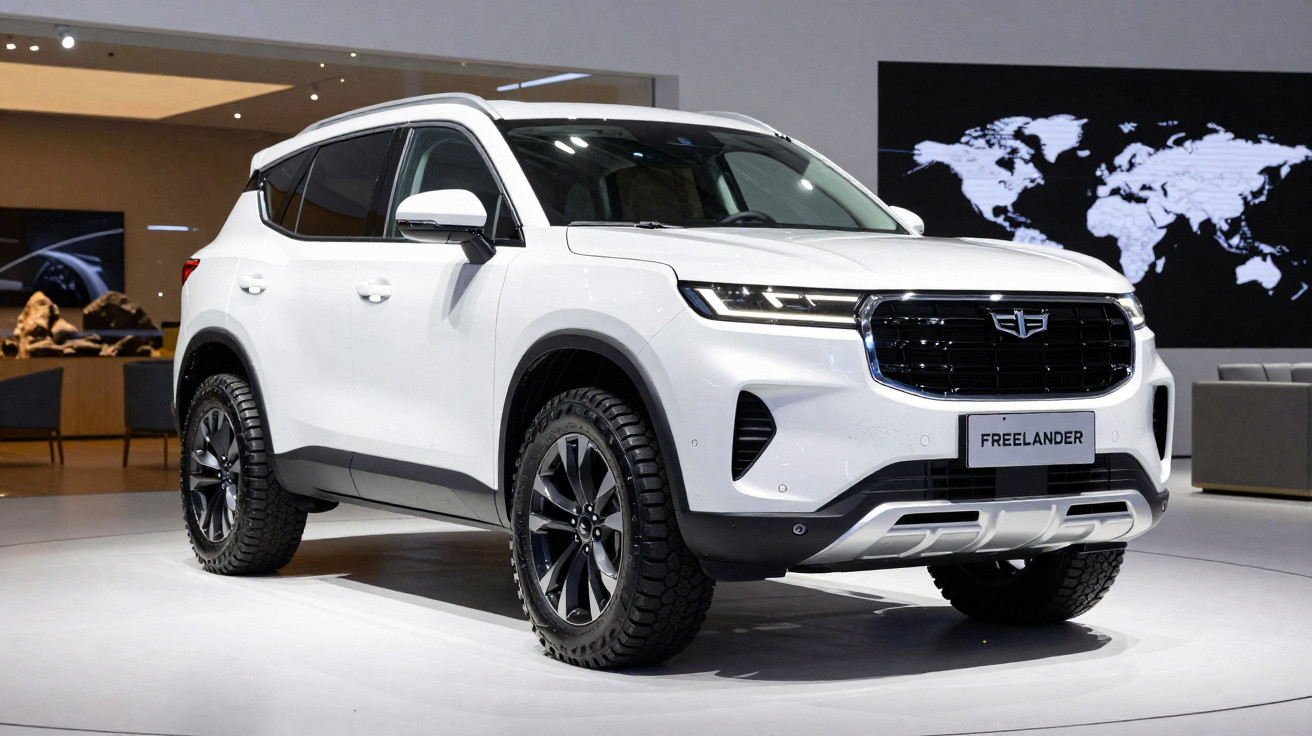
The 1990s proved especially productive for Land Rover, and it is worth looking back now that more than 30 years have passed. While the British marque was cementing the Discovery’s success and updating the Range Rover, it also explored a different route one class below: a smaller SUV designed for everyday driving, yet with off-road ability that comfortably went beyond city limits.
The name was Freelander - a well-mannered “baby Land Rover”. Everything about it was new, from the engines to the platform. Honda made meaningful contributions to the development, and in the early 2000s BMW’s arrival added fresh engines and brought greater technical maturity to the project.
Now the Freelander name is set to return. However, it will no longer represent a single model; instead, it will become a standalone brand created through a joint-venture between JLR and China’s Chery. That partnership will provide a largely technology-led boost, as outlined below.
The plan is unapologetically aggressive. The new brand expects to introduce one model every six months, aiming for a total of six vehicles over the next five years.
Chinese technology and European heritage
The Concept97 previews an architecture designed to support several electrification routes. Its technical base can underpin fully electric versions, plug-in hybrids and range-extender variants, reflecting an approach that is increasingly common among Chinese manufacturers.
An 800 V platform has been confirmed, enabling charging power of up to 360 kW. The battery, developed with CATL, uses third-generation CTP (cell-to-pack) technology and has been engineered for off-road use, with structural reinforcements and underbody protection.
There are still no official WLTP figures for power output or driving range. Even so, the inclusion of range-extender solutions points to a clear focus on markets where charging infrastructure remains a barrier.
At more than five metres long and with three rows of seats, it can no longer be described as a compact SUV. Instead, it moves upmarket, targeting a higher segment with global intent and a positioning closer to large family SUVs.
Technology and off-road ambition
Despite its electrified underpinnings, the Freelander does not give up on off-road capability. A new four-wheel-drive system known as i-ATS combines three differential locks with predictive dampers that can anticipate the terrain.
On the road, the partnership with Huawei brings a high-resolution LiDAR and hardware intended for advanced driver-assistance systems. Processing is handled by the Qualcomm Snapdragon 8397 chip, underlining the project’s technology-focused positioning.
When will it arrive?
The first Freelander model is scheduled to enter production at the Changshu factory by the end of this year. Following its debut in China, global expansion is planned, although there are not yet any confirmed dates for Europe.
Comments
No comments yet. Be the first to comment!
Leave a Comment