
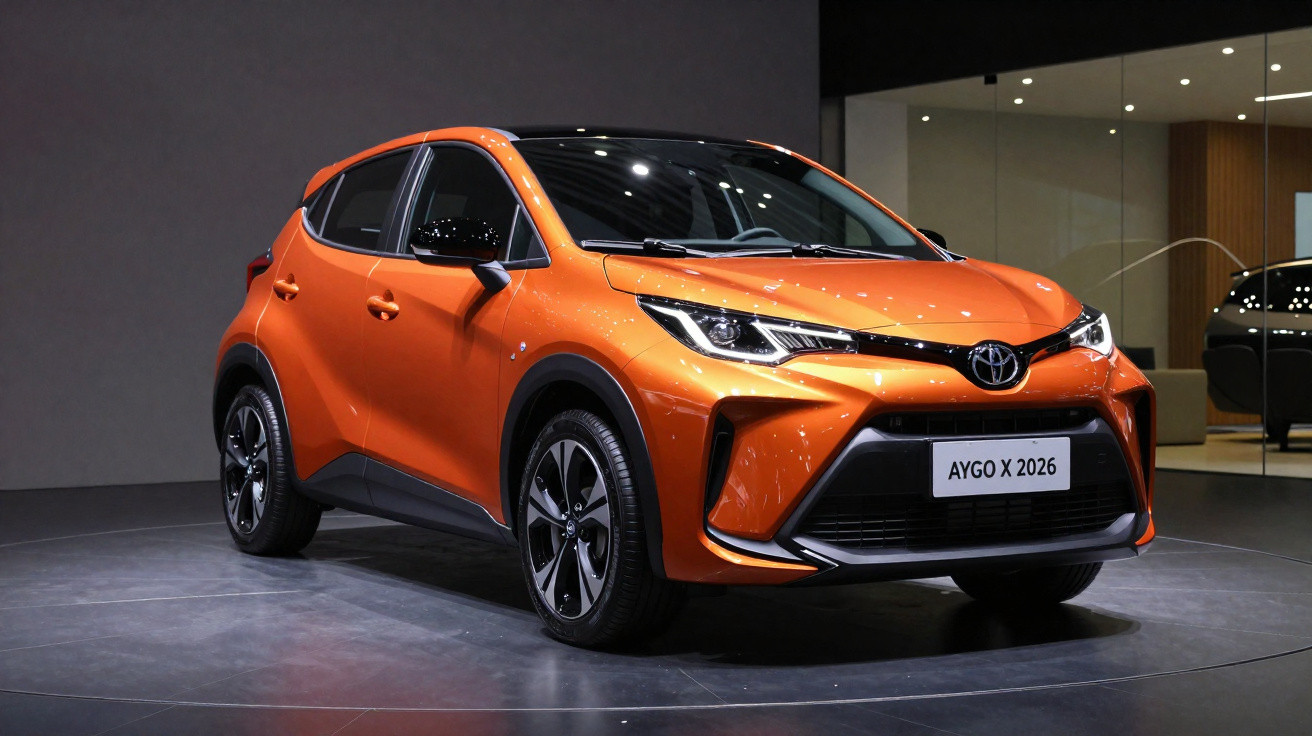
The new Toyota Aygo X is like fine dining: small portions and a hefty bill.
Small, nimble, economical and genuinely enjoyable. That could easily be the calling card of the new Toyota Aygo X - but every good thing has a drawback. With Toyota’s smallest model, the sticking point is the price. More on that shortly.
In reality, the 2026 Aygo X marks a turning point for this little Japanese city car - or, if you prefer Toyota’s own label, an “urban crossover”.
The famous 1.0-litre three-cylinder has been dropped in favour of a 1.5-litre petrol hybrid paired with an electric motor. It’s the same full-hybrid set-up used in the Toyota Yaris, lifting output to 116 hp - a long way from the previous generation’s 70 hp.
In Portugal, though, that progress brings an unwanted side effect: moving to a 1.5-litre engine from the old 1.0-litre means the Aygo X is hit with an additional tax charge of more than €2,000 under ISV. As I explain in this video, that’s going to be a major issue.
With that price jump, the gap between an Aygo X and a Yaris becomes marginal. Even so, there are still reasons some buyers may prefer this model.
Aygo X looks almost the same from the outside
Visually, the Toyota Aygo X changes very little, with the biggest shift linked to what’s happened under the bonnet. It keeps the same tough, urban styling - a small crossover look that helps it stand out in car parks dominated by “black and white”.
Despite sticking to compact proportions, the 2026 Aygo X has grown by almost 8 cm (to 3.78 m in length) - added ahead of the front axle - largely to make room for the new hybrid drivetrain.
These updates aren’t merely cosmetic. The overall profile remains well balanced, without overdone compromises. It’s a shape designed to work in day-to-day use, with practicality and function clearly prioritised. From my perspective: job done.
Inside, it feels like a Toyota
Step into the cabin and the Aygo X shows how much the concept has matured. Space is used intelligently (given the body size) and build quality is classic Toyota: mostly hard plastics, but they feel solid and long-lasting, wrapped in a layout that blends usability with a more up-to-date feel.
The driving position is agreeable, the controls make sense, and the onboard tech - including a digital instrument display and a refreshed infotainment system - does the job competently without truly dazzling.
Rear-seat room and boot capacity don’t increase in line with the Aygo X’s technological leap and remain tight. The boot, at around 231 litres, is still modest - a reminder that this is, at heart, a small city car.
A huge surprise on the road
The hybrid system is unquestionably the defining feature of this Aygo X. The new 1.5-litre three-cylinder engine combined with an electric motor delivers roughly 116 hp, along with extra torque that makes the car feel more lively both in town and beyond.
That pairing noticeably sharpens throttle response, with 0–100 km/h now taking around nine seconds. It’s a clear improvement over the old 1.0-litre unit’s roughly 15 seconds.
The Toyota Aygo X’s dynamic behaviour also reflects the broader development work. Steering feels well judged, and although it remains on the same TNGA GA-B platform, the chassis tuning is more capable, giving greater confidence when driving briskly.
Where this set-up really shines is in urban use: the handover between electric and petrol power is smooth, and the hybrid system enables frequent low-speed running on electric drive, helping to cut fuel use and emissions.
Out on open roads, the Aygo X stays efficient, with official combined consumption of around 3.7–3.9 l/100 km - figures that place it among the most frugal in its class, with a genuine benefit in everyday running costs.
Price is the Achilles’ heel
This is where the Toyota Aygo X story becomes more complicated in Portugal. The move to a 1.5-litre hybrid engine - technically understandable and highly desirable - clashes head-on with Portuguese car taxation.
As I set out in the video, the larger, more modern engine triggers a tax increase of more than €2,000 compared with the previous model. That fundamentally shifts how the Aygo X sits in the domestic market.
With well-equipped versions frequently pushing beyond €25,000, the Aygo X starts competing with cars from higher segments in terms of space, practicality and even perceived presence. I go through all of that in this video.
Ultimately, this Toyota Aygo X feels like going to a fine-dining restaurant: the portions are small, the quality is excellent, but the price is intimidating.
A rational buyer can’t ignore that, for the money, there are alternatives with more space. But if the goal is specifically a small city car with the maximum level of equipment and available technology, then it delivers exactly what it promises.

Comments
No comments yet. Be the first to comment!
Leave a Comment