
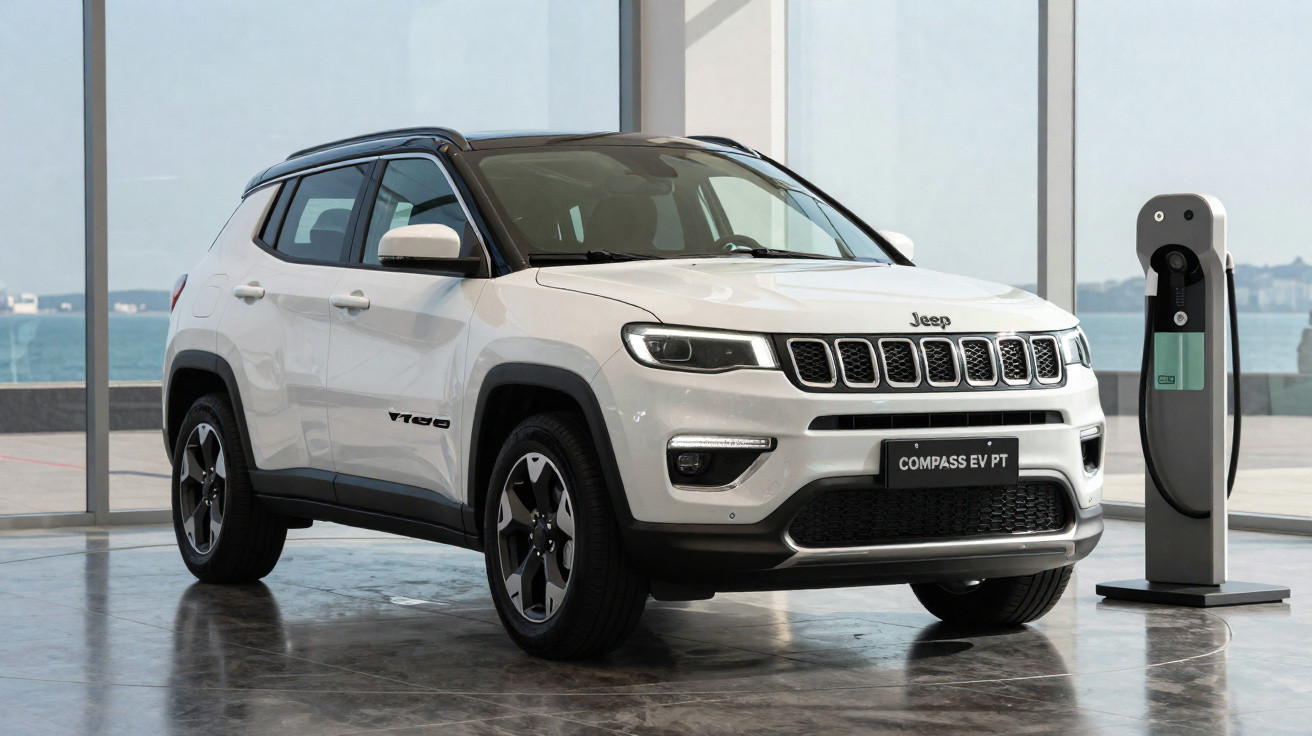
The Jeep Compass might not be the best-known name in the American brand’s line-up, as models such as the Wrangler or the Willys usually take the spotlight. Even so, the Compass has a particular place in the story: it was Jeep’s first SUV.
Now heading towards its final stretch before reaching two decades on sale, the Jeep Compass arrives in its third generation. That milestone lines up with this new release - the very model I had the chance to see in Barcelona - and it is already open for orders in Portugal from €39,000.
This latest generation marks a clear step forward in how Jeep is tackling the C-SUV segment. The company says the car was styled and engineered in Europe, with efficiency, comfort and a fully digital cabin as key priorities. An electrified platform and a reworked suspension are central to that progress, and both made themselves felt during the dynamic driving session.
Jeep Compass powertrains and efficiency
The Portuguese line-up launches with two power options: one fully electric and one mild-hybrid (MHEV). The all-electric version uses a 157 kW (213 hp) motor paired with a 74 kWh battery, delivering up to 500 km of range (WLTP). With 160 kW DC rapid charging, it can go from 20% to 80% in around 31 minutes. This set-up also includes One-Pedal Drive, aimed at making day-to-day urban driving easier.
The mild-hybrid variant matches a 1.2-litre 136 hp petrol engine with a 21 kW (28 hp) electric motor, for a combined output of 145 hp. Power is sent through a six-speed dual-clutch automatic gearbox.
Jeep quotes fuel consumption figures between 5.6 and 5.8 l/100 km, with drive remaining on the front axle. It positions the Compass squarely in the electrified market without needing any external charging.
Behind the wheel of the new Jeep Compass
In Barcelona, it was the mild-hybrid version in which I covered the most distance. The route began at the city’s marina, right in the centre, before heading out towards the mountain roads. After some traffic and tighter, twistier sections, the most telling moment arrived on an unpaved track with humps and an uneven surface.
The updated suspension not only showed the Jeep Compass to be significantly more comfortable than its predecessor, it also dealt with rough patches with a smooth, controlled response. It made clear the effect of the 15% reduction in vertical acceleration and the 20% reduction in lateral roll, exactly as Jeep claims.
From the driver’s seat, the position feels right thanks to good ergonomics and strong visibility. That said, the roofline sits rather close to your head - particularly if you are around 1.85 m tall - and that was one detail that did not fully convince me. There was not enough time behind the wheel to fine-tune every setting, but overall first impressions are very positive. The steering is light around town and accurate enough on the open road, helping deliver a well-balanced feel in this mid-size SUV.
Cabin space and technology in the Jeep Compass
Inside, several practical upgrades stand out. Boot capacity increases to 550 litres, which is 45 litres more than before, while rear passengers gain an extra 20 mm of legroom.
Up front, the new 10.25-inch and 16-inch displays give the cabin a more contemporary look, and connected features - including the Jeep 2.0 app - underline the model’s digital direction. All of this comes wrapped in a noticeably tougher design, with plenty of brand-history and adventure-themed easter eggs.
These changes bring the Jeep Compass closer to its rivals and address areas where the outgoing generation was beginning to show its age. Ergonomics have been more carefully considered, and there are clearly more places to stash smaller items.
Prices and range in Portugal
In Portugal, the Jeep Compass range is already available to order. Prices start at €39,000 for the mild-hybrid Altitude. The 100% electric Compass, with the same equipment level, begins at €49,750. The more exclusive “First Edition” adds €2,000 to the base price and will be offered with both powertrains.
Later on, the Compass range will be expanded with 4xe (plug-in hybrid) versions, offering power levels up to 195 hp and four-wheel drive. Jeep also confirmed a future all-wheel-drive electric variant producing 276 kW (375 hp), underlining the brand’s ambitions for this generation.
With this update, the new Jeep Compass has shown itself to be markedly more comfortable, more technology-led, and better aligned with European expectations. Early impressions in Barcelona were strong, particularly in the suspension’s performance and the overall ambience on board. It remains to be seen how the new Jeep Compass will behave over a longer test, this time back on home soil.
Comments
No comments yet. Be the first to comment!
Leave a Comment