
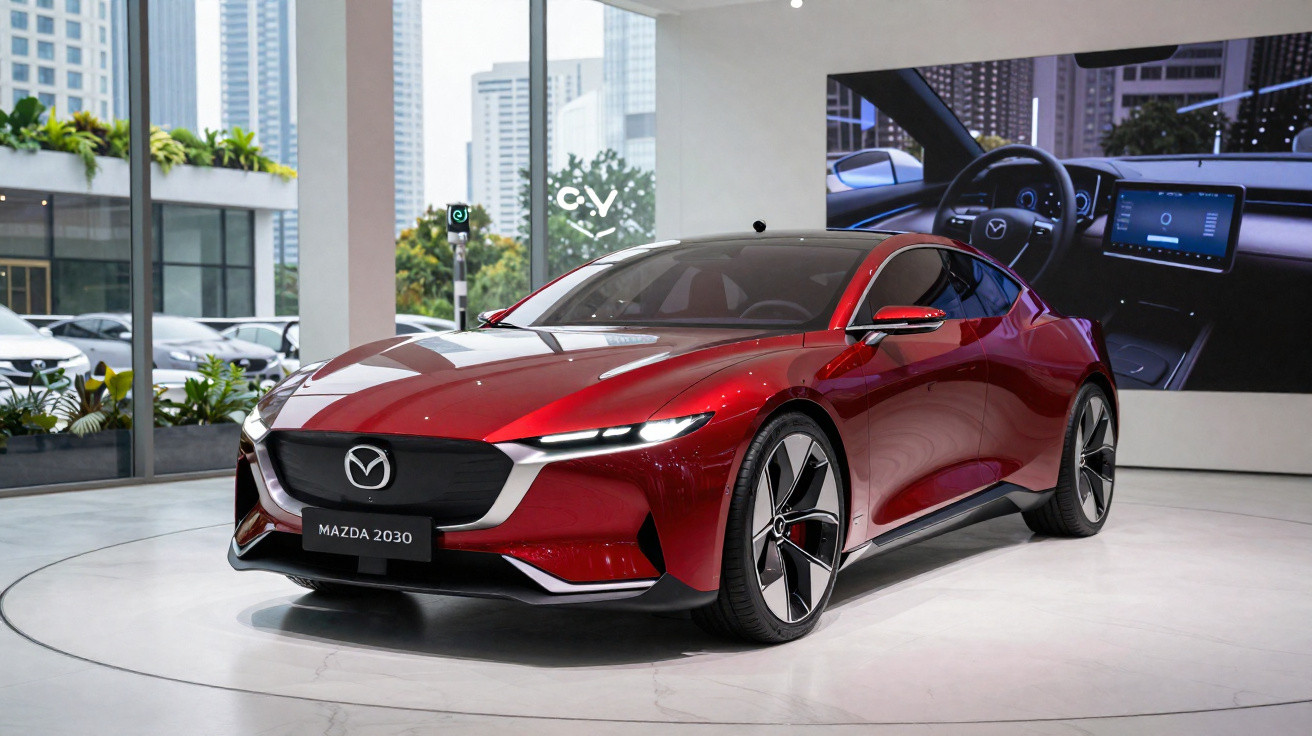
By 2030 - the year in which several manufacturers have already said they will stop selling models with internal combustion engines - Mazda is signalling a different pace: it expects only a quarter of its range to be fully electric. Even so, electrification in one form or another is set to reach every model in its line-up.
This target sits within a broader strategy aimed at achieving carbon neutrality by 2050. To support it, Mazda will introduce a new generation of vehicles between 2022 and 2025, built on a fresh underpinned platform: the SKYACTIV Multi-Solution Scalable Architecture.
From this new architecture will come five hybrid models, five plug-in hybrid models, and three 100% electric models - which ones they are will be confirmed at a later date.
Alongside that, a second platform is in development dedicated exclusively to electric vehicles: the SKYACTIV EV Scalable Architecture. A number of models of varying sizes and body styles will be derived from it, with the first arriving in 2025 and further launches continuing through to 2030.
Electric cars are not the only route to carbon neutrality
Mazda has long been associated with an unconventional approach to cleaner, more efficient powertrains, and it says the direction it intends to take through the end of this decade continues in that same spirit.
With the new SKYACTIV Multi-Solution Scalable Architecture, the Hiroshima-based manufacturer is also reaffirming its commitment to advancing the internal combustion engine, positioning it as a complement to ongoing electrification.
Most recently, the e-Skyactiv X - the latest evolution of the SPCCI engine - reached the market in the Mazda3 and CX-30. From 2022, it will be joined by new inline six-cylinder engines running on petrol and… Diesel.
Mazda’s efforts are not limited to engines. The company is also backing renewable fuels, putting money into a range of projects and partnerships. In Europe, for instance, it joined the eFuel Alliance in February, becoming the first car manufacturer to do so.
In Japan, the emphasis is on promoting and adopting biofuels produced from the growth of microalgae. Mazda says it is involved in multiple research projects and studies, as part of an ongoing collaboration spanning industry, training and education networks, and government.
Mazda Co-Pilot Concept
Mazda also used this moment to announce the introduction of Mazda Co-Pilot 1.0 in 2022. It is the brand’s take on “human-centred” autonomous driving, and it broadens its suite of advanced driver-assistance technologies (Mazda i-Activsense).
Over time, Mazda Co-Pilot will enable continuous monitoring of the driver’s state and physical condition. In Mazda’s words, “if a sudden change in the driver’s physical condition is detected, the system switches to autonomous driving, directing the vehicle to a safe place, bringing it to a stop and making an emergency call.”
Comments
No comments yet. Be the first to comment!
Leave a Comment