
We ended the previous chapter in the midst of the Second World War-a period of profound hardship for Europe as a whole, and for the automotive industry in particular.
In that context, Camilo Castelo Branco, one of Portugal’s most influential writers, wrote: “It is in adversity that great calculations are made, and great plans are drawn up.” That is precisely what Assar Gabrielsson, Volvo’s founder, set out to do: he calculated, and he mapped out a major plan for the marque.
Planning Volvo’s post-war direction
One step ahead of the competition
With Volvo’s viability during the war secured-thanks to orders from the Swedish Army-Gabrielsson used the period from 1940 to 1944 to focus on what the brand should become once peace returned.
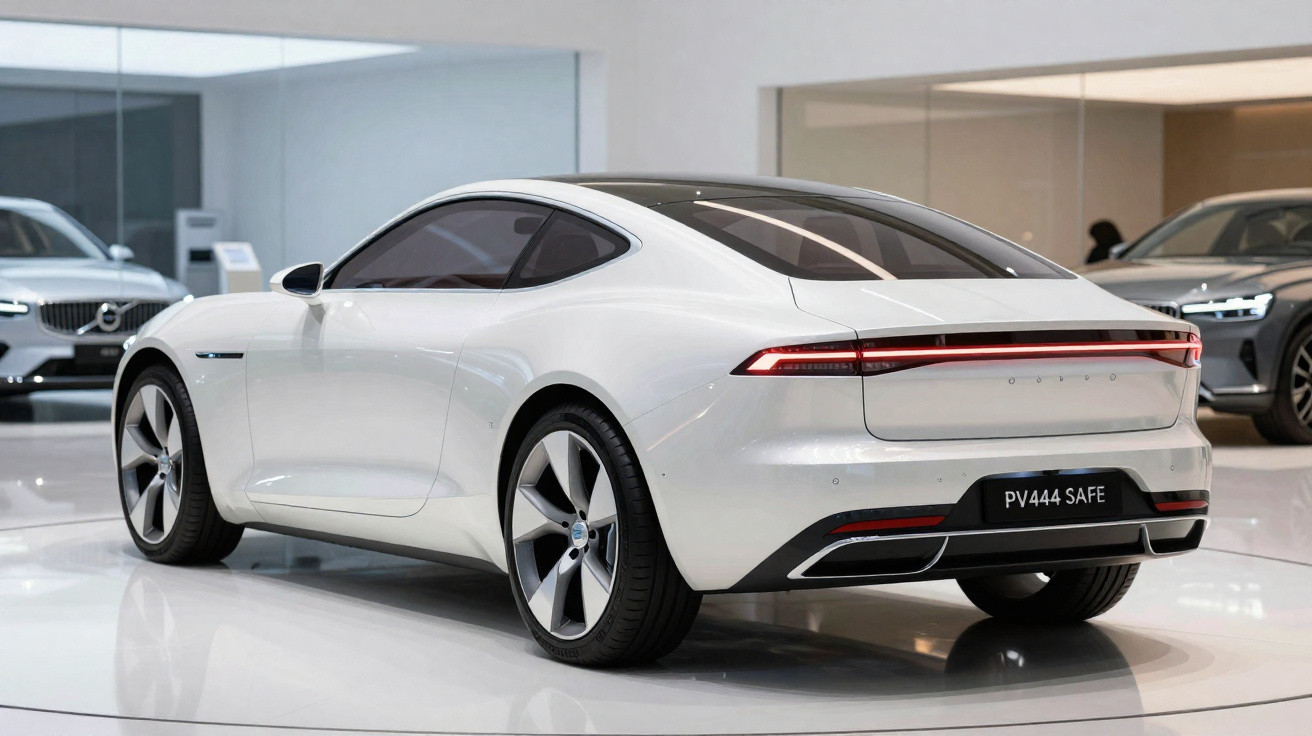
That strategic pause produced the PV444: Volvo’s first post-war car and the first Volvo of its “modern era”. Safety, modernity and dependability were the guiding principles behind the PV444’s development.
The PV444’s remarkable reception
Even Volvo’s most optimistic forecasts fell short of what happened next. From a planned run of 8,000 cars, production ultimately reached 200,000 units. From the PV444’s unveiling in 1944 through to its launch in 1946, orders were arriving day after day.
For its time, the Volvo PV444 sat among the most technically advanced cars on the road. It featured independent suspension, a unitary (monocoque) body, self-adjusting brakes on all four wheels, and a modern, efficient four-cylinder engine.
All of this was matched with a well-judged design influenced by American models. Gabrielsson, Larson and their team had found the right formula once again.
And thanks to a revamped production line and a reworked logistics chain, the PV444 also had a decisive advantage: price. The Volvo PV444 was sold for 4,800 Swedish kronor-the same amount the “Jakob” cost in 1927.
It is fair to say this was the model that firmly established Volvo’s defining values: care for people, strong build quality, and the use of the best available technology.
Transparency: from words to action
Transparency. From words to action
One of Volvo’s most important success factors was planning. As we have seen throughout this special feature, Assar Gabrielsson consistently tried to bring the industry’s best practices into Volvo.
One of the clearest examples of that relentless search happened in the United States. Gabrielsson was struck by how openly companies-Volvo’s competitors included-answered his questions and shared information.
From that point on, he decided that at Volvo the conduct of every employee, from the production line to the boardroom, should be defined by transparency.
Production of the Volvo 121 (Amazon), 1958.
That stance soon showed not only in the company’s annual reports, but also in how Volvo presented itself to the world-and it remains that way today.
The numbers speak for themselves: between 1945 and 1955, Volvo went from 3,000 units to 45,000 units produced. That is 1,500% growth in 10 years.
In 1956, Assar Gabrielsson retired and was succeeded by Gunnar Engellau-until then head of Volvo’s aeronautics division. The foundations for what came next were firmly in place.
Nils Bohlin, the man who saved millions of lives.
We now move to 1959, a pivotal year in Volvo’s history. From that year onwards, every car produced by Volvo shared one common feature: the three-point seat belt. It remains, without question, one of the most important milestones in automotive history.
The first models to receive this innovation were the PV540 and the P120 Amazon (shown in the image).
It is estimated that this technological breakthrough, developed by Nils Bohlin, has saved more than 1 million lives worldwide.
At the time, it was an advantage Volvo could have used in the sales “war”, but chose not to. Volvo’s transparency policy would not allow it.
Volvo’s management decided to waive all rights to the three-point seat belt patent so that every car-regardless of manufacturer-could be made safer.
Volvo safety and technology milestones (1944–2016)
Safety and technology? Always.
As you can see, technology and safety have been constant themes throughout Volvo’s story over these 90 years.
In this chapter we will highlight the technologies and key moments in this continuous pursuit of safety, year after year:
1944 | Monocoque safety structure and laminated windscreen
The PV444 was the first model to adopt a monocoque structure. It became the starting point for platforms designed with programmed deformation (crumple) zones.
Another debut on the PV444 was the laminated windscreen. This type of glass, when it breaks, keeps the fragments bonded together. It is made from two or more sheets of glass, joined by one or more intermediate layers of polyvinyl butyral (PVB) or resin.
1959 | Three-point seat belts
As noted earlier, the three-point seat belt is one of the most significant innovations in motoring history. To this day, it is estimated to have saved more than one million lives.
Studies carried out by Volvo engineers concluded that two-point (lap) belts could sometimes cause more injuries than not wearing a belt at all. The answer arrived in the form of the three-point belt.
1960 | Instrument panel with safety zones
At the start of the 1960s, when the PV444 was updated into the PV544, Volvo introduced an instrument panel with safety zones.
These safety zones used deformable materials in key areas to reduce the risk of injury in an accident.
1966 | First Volvo with programmed deformation zones
51 years ago, Volvo launched the 144. Among other innovations, this model introduced the brand’s first chassis with programmed deformation zones.
It was also with this model that Volvo reached the historic milestone of “1 million units produced”.
1972 | Volvo Experimental Safety Car (VESC)
At a time when safety was not a leading priority for much of the automotive industry, Volvo undertook an extensive research project into vehicle safety.
That work produced the Volvo Experimental Safety Car (VESC), a rolling laboratory that acted as a showcase for the technologies developed by the brand.
1972 | Rear-facing child seats
Taking inspiration from how astronauts were positioned inside space shuttles, Volvo developed its first rear-facing child seats.
These seats stood out because they helped spread crash energy over a larger area. Remember that frontal impacts are the most common type of collision and are generally the most severe in road accidents.
1973 | Steering column with programmed collapse zones
Volvo crash tests showed that one of the components causing the most harm to the driver was the steering column-which, in frontal impacts, could intrude into the cabin.
To address this, Volvo created a steering column with programmed collapse zones. Injuries caused by this component fell dramatically.
1974 | Repositioned and reinforced fuel tank
To reduce the risk of fire following an accident, all Volvo models (from 1974 onwards) were fitted with reinforced fuel tanks, placed in a central position.
1976 | Lambda sensor
Volvo’s concern for people extends across every part of the automotive world, including environmental sustainability.
The first car in history equipped with a Lambda sensor was a Volvo (the Volvo 244 you can see below, in the image). Thanks to this innovation, it became possible to cut vehicle pollutant emissions by 90%.
Today, every car uses this technology.
1978 | Booster cushion for children
From the age of 4, it became difficult to insist that children travel facing backwards. Volvo’s solution was to create a booster step/cushion that positioned a child’s body correctly in relation to the seat belt, reducing the risk of injury.
1984 | ABS (anti-lock braking system)
Volvo introduced ABS for the first time on its models with the 900 Series.
1986 | Third brake light
Before it became mandatory equipment, Volvo was already fitting its models with a third brake light.
1990 | Integrated child seat
With the 800 Series came the first integrated child seats built into the rear seats.
1991 | SIPS – Side Impact Protection System
SIPS was one of Volvo’s major advances in passive safety. Since then, every Volvo has used this system.
SIPS is a high-strength structure that channels impact energy through the car’s floor. It brings additional benefits in side impacts, where there is less space available for absorption.
In 1994 the system was enhanced by another world first: side airbags-another Volvo-signed innovation.
1997 | ROPS – Rollover Protection System convertible
Using a pyrotechnic activation device, a safety hoop would deploy in the event of a rollover.
This significantly improved safety for the Volvo C70 Cabrio.
1998 | WHIPS – Active head restraint
With this system, energy from impacts (front or rear) is absorbed evenly by the upper body, reducing “whiplash” in the neck area.
WHIPS was first introduced on the Volvo S80 and has since appeared on every model in the range.
1998 | Inflatable curtain airbag
Another major step forward in vehicle safety.
The inflatable curtain increased the energy-absorption capability of a side impact by up to 75%.
2002 | ROPS (rollover protection system) for SUVs
With the launch of the first-generation Volvo XC90-and because of the model’s higher centre of gravity-the brand had to rethink how to prevent rollovers and improve safety in an accident.
On the Volvo XC90, ROPS consisted of two systems: one electronic (reducing rollover tendency via ESP) and one structural (using high-strength steel in the body’s roof hoop/structure).
2002 | The first “pregnant” crash test dummy
Volvo’s pursuit of the highest possible safety in its models led it to study in depth the consequences of accidents involving pregnant women on board.
2003 | BLIS – Blind Spot Information System
This system uses radar to warn the driver of vehicles present in the blind spot.
2008 | City Safety
Did you know that 75% of accidents happen at up to 30 km/h and that in 50% of cases the driver did not even brake?
Volvo’s City Safety system is a laser-based setup capable of detecting the vehicle ahead. When needed, it alerts the driver that braking is required; if the driver does not respond, the system brakes automatically to avoid a collision.
2010 | Pedestrian detection system
Volvo’s safety focus also includes pedestrians. In 2010, City Safety was updated to detect pedestrians.
Today, this Volvo system can detect pedestrians, cyclists, animals, and even vehicles at junctions with limited visibility.
2014 | Asta Zero
Asta Zero is one of the world’s largest complexes dedicated to studying and developing safety systems for the automotive industry. Read more here.
2015 | Run-off Road Protection
With the second generation of the Volvo XC90 came another Swedish-brand innovation: run-off road protection. This system detects unintentional road departures and intervenes via the seat belts.
Thanks to it, the belts are automatically tightened around occupants to prevent excessive movement. The front seats are also equipped with an impact-absorption system. The aim: to reduce the likelihood of spinal injuries.
2016 | Auto Pilot
Using a comprehensive suite of state-of-the-art radars and cameras, 90 Series models can drive in a semi-autonomous way, monitoring surrounding traffic and keeping the vehicle in its lane.
In heavy traffic conditions, this system can take control of the vehicle up to 60 km/h.
The next chapter in this special feature will focus on the models that shaped-and promise to shape-Volvo’s history, from the “Jakob” to the new XC60. Don’t miss it.

Comments
No comments yet. Be the first to comment!
Leave a Comment