
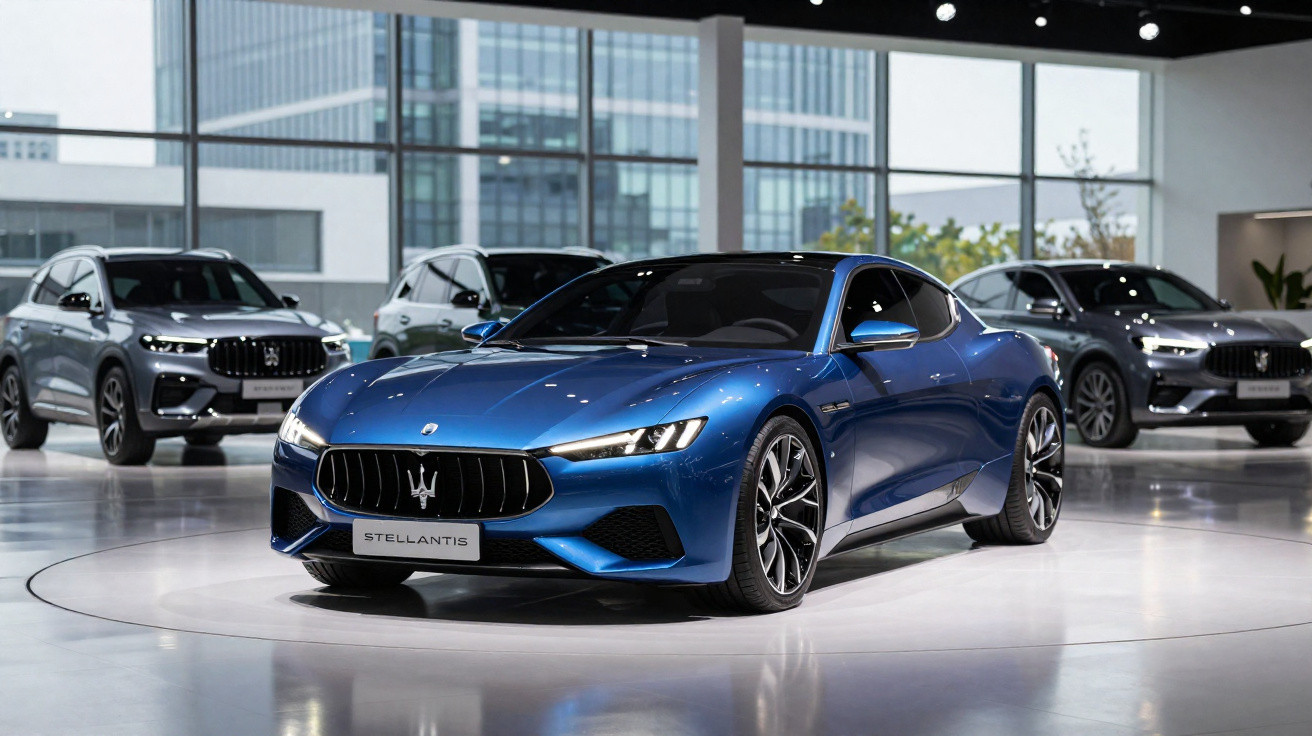
In his first press conference as Stellantis’ new-and inaugural-Chief Executive Officer (CEO), the Portuguese executive Carlos Tavares presented the headline figures for the newly created automotive heavyweight born from the merger of FCA (Fiat Chrysler Automobiles) and Groupe PSA, alongside the ambitions and obstacles that lie ahead.
It is worth starting with the scale, because the “new giant” label is not mere hype. Stellantis will be headquartered in Amsterdam, the Netherlands.
Together, the two groups bring:
- 14 automotive brands
- commercial operations in more than 130 markets
- industrial activities in more than 30 countries
- more than 400,000 employees (from more than 150 nationalities)
The financial picture, when combined, is equally striking. If FCA and Groupe PSA’s 2019 results were simply added together-the year the merger was announced-the group would have reported €12 billion in profit, an operating margin of around 7%, and €5 billion in cash flows. These are, once again, 2019 figures; 2020 results had not yet been announced and, because of the pandemic, were expected to be lower.
Status quo
Under the Stellantis banner, the group now has a much firmer global footprint, even if some gaps remain.
On the FCA side, the strength is clear and profitable across North America and Latin America (3/4 of revenue generated in 2019 came from that side of the Atlantic). On the Groupe PSA side, Europe remains the main engine (accounting for 89% of revenue in 2019), with the added advantage of having the right foundations-multi-energy platforms-to meet the strict regulatory demands of the “old continent”.
In practical terms, this means Groupe PSA, which had been seeking an entry into North America, achieves that goal in a major way, while sizeable synergy opportunities also open up in Latin America. FCA, meanwhile, which had already begun to renew its focus on rebuilding its European operations in higher-volume segments, now gains access to newer, better-suited hardware for the years ahead (electric and hybrid).
North America, Latin America and Europe are the three regions where the new Stellantis is strongest, while it also maintains a substantial presence in the Middle East and North Africa. The biggest weak spot, however, is China. The world’s largest car market has not been a success story for either FCA or Groupe PSA.
Tavares acknowledged the disappointing performance in China, but made it clear the company is not walking away from such a critical market-quite the opposite. As he explained, the priority is to understand precisely what went wrong. A dedicated taskforce has been set up to identify the causes of failure and to map out a fresh strategy so that Stellantis can also succeed in China.
Consolidation, consolidation and more consolidation
Even with those gaps, both groups were in a relatively solid position when the merger was announced in October 2019. Yet solidity alone would not be enough to thrive in a future that had been discussed for years-long before anyone could imagine the world grinding to a halt in 2020 due to a coronavirus.
The automotive industry was-and still is-undergoing radical change at breakneck speed, with enormous costs attached. The hurdles are well known: decarbonisation and (inevitably) electrification; mobility as a service; the arrival of (potentially) disruptive new players (such as Tesla); autonomous vehicles; and connectivity (5G compatibility, for instance, is already on the agenda).
It is no surprise that Tavares said car costs over the next 10 years-driven by regulation and innovation-could rise by between 20% and 40%.
That scenario would be difficult to sustain. If cars become up to 40% more expensive, there is a real risk of pushing away a significant share of customers whose purchasing power would not stretch to this new generation of electrified, connected vehicles.
If mobility is to remain affordable for everyone-or almost everyone-manufacturers either absorb the costs by accepting slimmer margins (while simultaneously putting the company’s long-term viability under pressure), or they must find alternative, economically sustainable solutions capable of dealing with steep development bills.
FCA and Groupe PSA chose to merge as a way of facing this demanding future with greater strength. The logic is to align (and also reduce) research and development work, and to spread those costs across a larger number of vehicles produced and sold. A merger that may look, at first glance, like a “defensive move”, but which, in Tavares’ view, will ultimately become an “offensive move”.
The clearest example is the much-publicised cost reduction repeatedly cited over the past 15 months: more than €5 billion! Reaching that figure depends on the planned synergies: vehicle development and manufacturing (40%), purchasing (35%), and general and administrative expenses (25%).
In vehicle development and production, for instance, savings are expected to come from planning, engineering and manufacturing. Put more specifically, the future should bring convergence in platforms (both multi-energy and dedicated electric), modules and systems; a consolidation of investment in internal combustion engines, electrification and other technologies; and efficiency gains across production processes and the tools that support them.
Will any brand be axed or any factory shut?
From the outset, Stellantis has promised that no factories would be closed. Tavares reiterated that commitment several times during this first Stellantis press conference, but he did not completely lock the door on the possibility-because in an industry changing this quickly, what is certain today may not be certain tomorrow.
And the pressure does not come solely from the automotive sector. Brexit, for example, raises questions about the long-term future of the Ellesmere factory in the United Kingdom. In addition, several plants (particularly in Europe) are operating below capacity and, as a result, are not profitable. Major political changes are also unfolding (Biden’s election in the US, for example) that will influence plans already set out.
Beyond potential factory closures-and the corresponding risk of job losses-there is also the complex task of managing 14 automotive brands under a single roof: Abarth, Alfa Romeo, Chrysler, Citroën, Dodge, DS Automobiles, Fiat, Fiat Professional, Jeep, Lancia, Maserati, Opel/Vauxhall, Peugeot and Ram. Could any of them be discontinued? It is a fair question. Not only is that a large portfolio, but several of these brands operate in the same markets (especially in Europe) and, in some cases, compete directly with one another.
A more definitive answer will likely take weeks or months, since Stellantis is still in its earliest days. Tavares said little to nothing about the detailed future of each of the 14 brands, but he never suggested that any of them would be shut down. For now, his priority is to clarify the positioning of each one and, as Tavares put it: “all our brands will get a chance”.
Even while trying to avoid speaking about specific brands, he could not entirely. One example is the plan to take Peugeot into North America-announced several times over the last two years-which has now been dialled back. With Stellantis already well established in the region, attention shifts to the brands that are already present there.
Opel was also highlighted, with Tavares signalling several developments for the near future “with the right technology”-a reference to hybrids and/or electric vehicles would make perfect sense. As for Alfa Romeo and Maserati, despite underperforming commercially in recent years, Tavares acknowledged their strong value within Stellantis because they sit in premium and luxury segments, which are typically more profitable than the rest.
Regarding Fiat (Europe) and a line-up that is largely ageing, changes are also expected at speed over the next 2–3 years to fill gaps in key segments.
For Fiat, an approach similar to what was seen at Opel after its acquisition by Groupe PSA is anticipated, where a new Corsa was rapidly developed and “paired” with the Peugeot 208. This is what Tavares calls “sister cars” (shared platforms, powertrains and multiple “invisible” components, while being properly differentiated in exterior and interior design) and it should quickly address the Italian brand’s needs.
In conclusion
Stellantis is still only just beginning. Carlos Tavares, its first CEO, could offer little more at this stage than broad outlines of the route Stellantis intends to take towards a future that looks more challenging than ever.
This merger of equals appears straightforward in its motivation: to secure the synergies and economies of scale needed to keep the (new) group competitive in a changing automotive industry and, as far as possible, to ensure mobility remains affordable for as many people as possible.
Over time, Tavares has shown signs that he has the right capabilities to deliver that ambition. Even so, it is equally true that he has never faced a challenge on the scale of Stellantis.
Comments
No comments yet. Be the first to comment!
Leave a Comment