
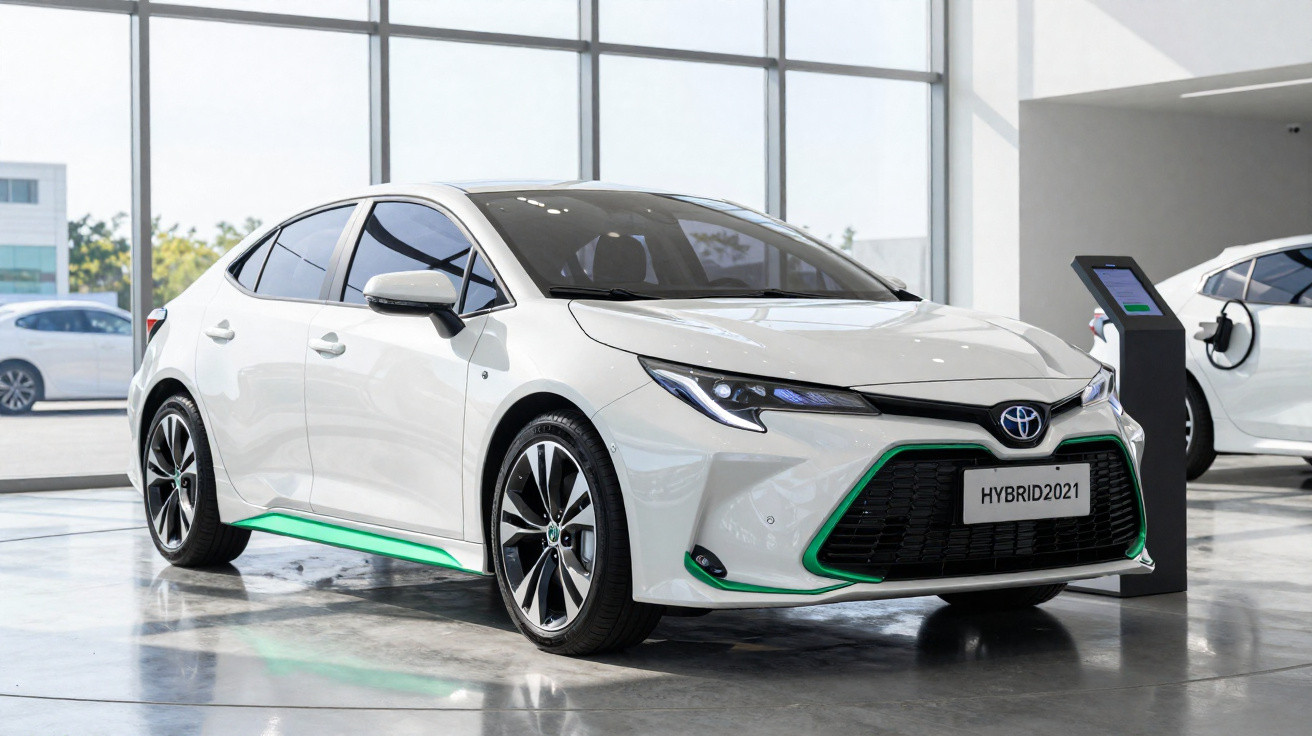
The controversy surrounding OE 2021 is still making headlines. After Honda, Toyota has now also commented on the proposal put forward by PAN – People Animals and Nature and approved with votes from PS and BE, opposed by PSD, PCP, CDS and Iniciativa Liberal, with Chega abstaining.
Background: OE 2021, ISV and the rules for hybrids
Under this approved proposal, hybrids without a range extender stop qualifying for the intermediate rate of Vehicle Tax (ISV). In practice, they will pay the full ISV instead of benefiting from a 40% “discount”.
As set out in the proposal, hybrid and plug-in hybrid models must offer more than 50 km of electric-only range and have official CO₂ emissions below 50 g/km. Because conventional hybrids have “no data on electric range”, they are particularly affected by this change.
Toyota’s reaction
In response, Toyota begins by stating that “The recent limitation on the Government’s tax incentives for hybrids and plug-in hybrids discourages the automotive sector from scaling up clean technologies”.
Toyota also adds that “The measure approved by the Government, which did not previously consult the sector’s representatives, runs counter to Portugal’s strategy and commitment to achieve carbon neutrality by 2050”.
Finally, it points out that the decision arrives “at a time when the automotive sector is recording a fall in sales of more than 35%”, calling it “a severe blow to the entire industry”.
Toyota’s five reasons for opposing the OE 2021 decision
Against this backdrop, Toyota sets out five reasons why it opposes the decision approved for OE 2021:
A passenger car fitted with a hybrid powertrain combines two motors: an internal combustion engine (for Toyota and Lexus, always petrol) and an electric motor. By switching smoothly between pure electric power and the efficiency of petrol as speed increases, Toyota Hybrid technology not only saves fuel but also produces lower CO₂ emissions than a conventional combustion-engined vehicle. For Toyota vehicles, cars operate in town in electric mode for up to 50% of the time-therefore with no emissions-significantly improving the vehicle’s environmental performance.
Compared with vehicles using conventional powertrains, hybrid vehicles have substantially lower emissions. For example: Toyota Yaris 1.5 Hybrid with 88 g/km CO₂ versus Toyota Yaris 1.0 Petrol with 128 g/km CO₂. For the Toyota Corolla 1.8 Hybrid, 111g/km CO₂ versus Toyota Corolla 1.2 petrol, 151 g/km CO₂. It goes without saying that all vehicles undergo strict European certification and type-approval testing that confirms these figures.
Portugal currently has some of the highest tax burdens on cars. The newly approved measure makes a more environmentally friendly technology less competitive, which in turn encourages more conventional-engined vehicles to remain in circulation with higher CO₂ emissions. In that sense, Toyota argues, the measure represents a step backwards in the Government’s environmental policy.
Portugal’s circulating vehicle fleet is among the oldest in Europe, with an average age of 13 years. Toyota believes the first step in reducing environmental impact should focus on incentivising the scrappage of older, more polluting and technologically outdated cars, promoting replacement with more technologically advanced vehicles. Electrified vehicles using hybrid and plug-in hybrid technology are presented as an environmentally friendly solution.
OE 2021 contains no change that restricts the import of more polluting used vehicles. This is a phenomenon that has persisted for several years and contributes to an ageing fleet and higher pollutant emissions.
Comments
No comments yet. Be the first to comment!
Leave a Comment