
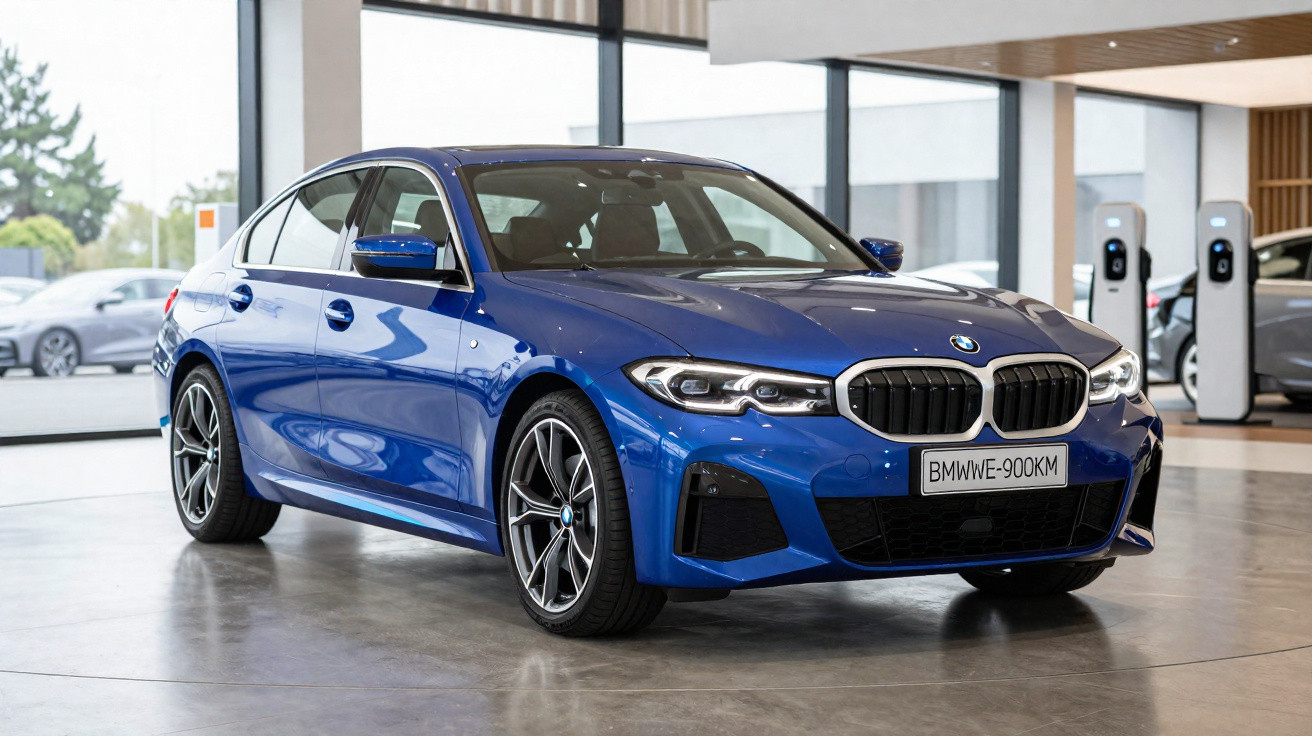
Some models matter in BMW’s history, and then there’s the 3 Series: a name that has spanned generations, engines and trends without ever losing its place. This eighth generation follows that tradition - with one major shift. For the first time, it is openly and unapologetically electric.
It is called the BMW i3, and it represents the second instalment of the Neue Klasse - the architecture set to underpin most BMWs through this decade and the next. The opening act was the iX3 SUV, which is now starting to reach customers. The new i3 shares almost everything with it, from the platform to the batteries and the electronic architecture.
As a saloon, it brings some immediate strengths: it is lighter, lower, and more aerodynamically efficient. In other words, the i3 is positioned to go further - both figuratively and in real-world range. Here’s what you need to know about the exterior, the interior and the key features.
The essentials of the new BMW i3
If you have already seen the iX3 - we recommend reading (or re-reading) our first drive - much of what follows will feel familiar. The foundation is the same, but the body style changes the whole proposition.
The battery matches the iX3 with the same 108 kWh usable capacity and incorporates BMW’s sixth-generation electric technology, delivering gains of around 30% in energy density and charging power. Peak charging climbs to 400 kW thanks to an 800 V architecture. The outcome is a (provisional) quoted range of 900 km (WLTP combined cycle), which is almost 100 km more than the equivalent iX3.
The reason is shape. With a lower roofline, a smaller frontal area and a better aerodynamic drag coefficient (Cx) - potentially around 0.22 - the i3 can squeeze more efficiency from the same drivetrain.
Inside is where the most dramatic change happens. As on the iX3, the traditional instrument cluster is removed and replaced by Panoramic Vision, a display that runs along the full width at the base of the windscreen.
Alongside it sits a 17.9" central screen, angled 3° towards the driver, plus a fresh interaction concept with touch controls on the steering wheel and an interface designed to feel more driver-focused.
Cabin room in the BMW i3 also benefits from the dedicated EV layout. With no central tunnel and a flat floor, the second row becomes easier to use day to day. Rather than simply describing it, watch the video above to see how a 1.80 m occupant fits in the rear.
More efficiency, the same identity
As with the iX3, the first version due to arrive will be the BMW i3 50 xDrive. It uses two motors (one per axle) and all-wheel drive, producing a combined 345 kW (469 cv) and 645 Nm of maximum torque. Later on, rear-wheel-drive variants will follow, with smaller-capacity batteries and, naturally, high-performance versions from BMW M - yes, a fully electric M3 is on the way.
BMW did not want the story to be only about figures. Perhaps the biggest leap with this Neue Klasse generation is in the software. In practice, these are BMW’s first truly software-defined vehicles (SDV), where the on-board electronic “brains” and external connectivity help shape the car.
Rather than using numerous control units (one per component) talking to each other, Neue Klasse brings in four “super brains” tasked with managing every major function, from comfort features to the driving experience.
One of these is called “Heart of Joy”, responsible for dynamics. It oversees the motor, brakes, steering and stability systems, and promises faster, more precise and more harmonious responses across everything involved. This is how BMW intends to ensure that, even as an EV, the 3 Series still feels like a 3 Series.
And speaking of the combustion-engined BMW 3 Series, it is not going away. It will continue to be sold alongside the i3, and a new generation is expected as soon as next year. Its design will be “closely aligned” with the i3, but it will remain on the CLAR platform, built for combustion engines and hybrid systems.
When does it arrive?
Production of the new BMW i3 is set to begin in the second half of the year at BMW’s Munich plant, which is being retooled to build only Neue Klasse models. The market launch is planned for the end of the year.
Until then, there is still plenty left to learn - from final specifications to the driving experience. And, of course, pricing.

Comments
No comments yet. Be the first to comment!
Leave a Comment