
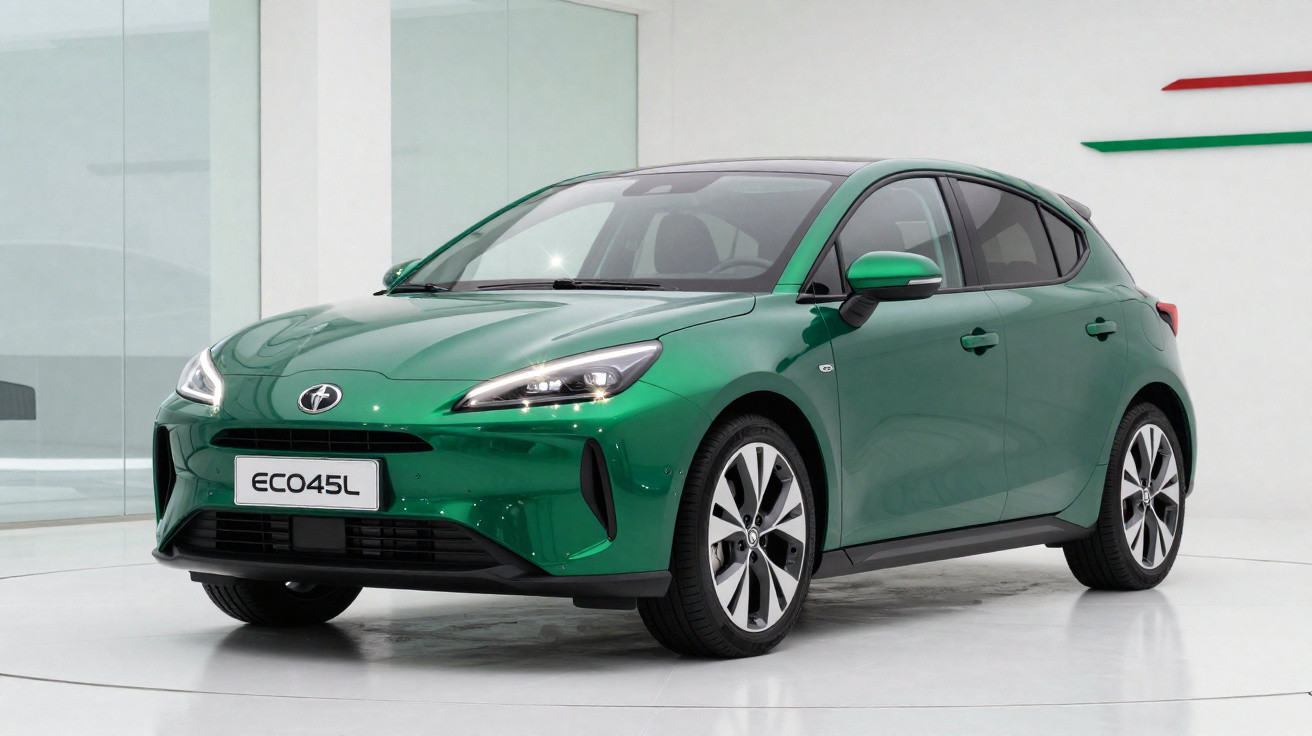
The traffic lights on the ring road flick to green and the small Italian city car darts ahead - not with a growl, but with a calm, purposeful hum. To your right, a Toyota Yaris driver glances across, assuming you’ll be dropped in an instant. But at the next set of lights you’re level again: his fuel gauge has dipped a touch; yours has scarcely shifted.
From the driver’s seat, you’re not hunting 0–100 km/h bragging rights. You’re watching a trip display that stubbornly sits around 4.5 l/100 km, run after run. The odometer keeps ticking upwards; your fuel spend barely follows.
This isn’t a car that shows off. It simply chips away at the pump bill for half the neighbourhood - quietly.
And that’s exactly where things start to feel different.
An Italian answer to the Yaris, one fuel receipt at a time
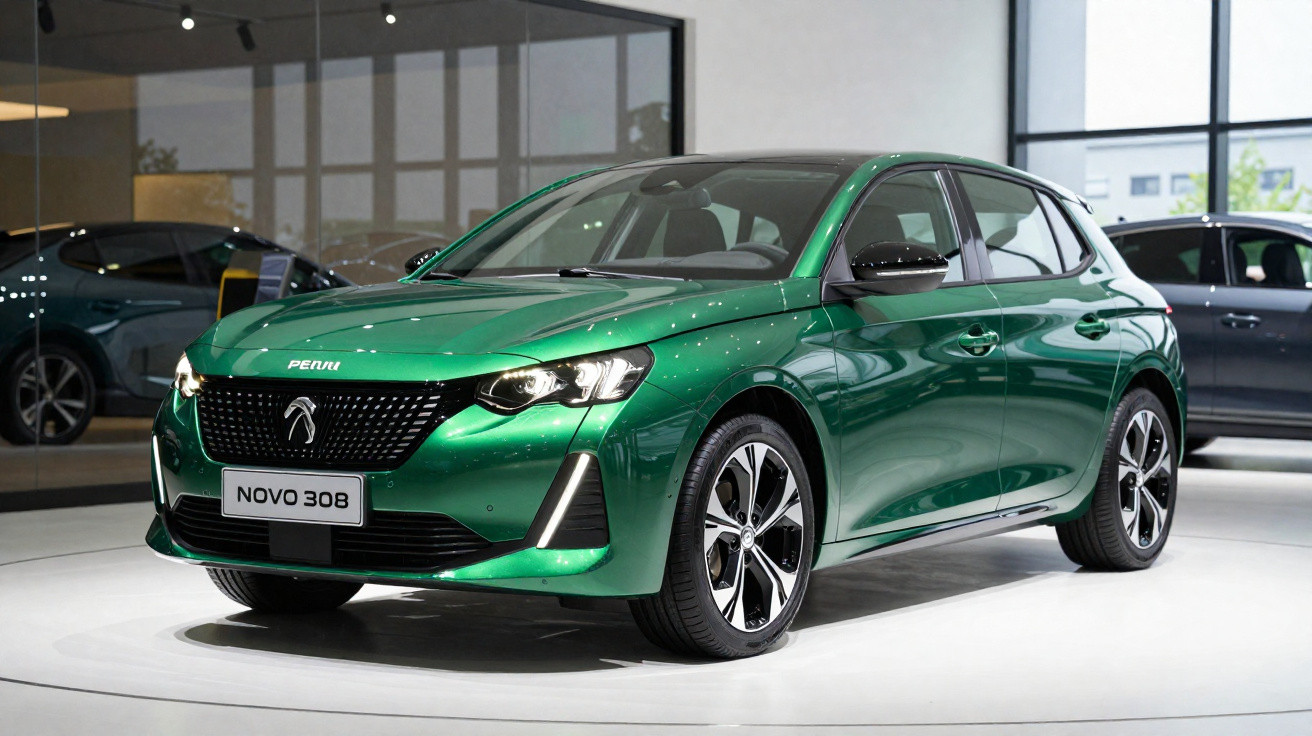
On the busy streets of Turin and Milan, this new Italian challenger doesn’t demand attention. It threads into tiny gaps, slips past scooters, and squeezes into spaces where crossovers surrender. The recipe is straightforward: a compact body, a modest engine, and a real-world aim of around 4.5 l/100 km - squarely aimed at the day-to-day world Yaris drivers know.
You sense that intent in the way it goes about its work. At higher speeds it can feel a bit lethargic, but up to 60 km/h it’s almost cheeky. The instruments gently steer you towards economical driving, and every careful throttle input is paid back with a satisfyingly low consumption figure.
Picture a commuter in Bologna covering 15,000 km a year, mostly through town and the suburbs. Averaging 4.5 l/100 km, they’ll use about 675 litres annually. Put that same mileage into a similarly sized petrol car nearer 6.0 l/100 km and the total rises to 900 litres.
At €1.80 a litre, that’s €1,215 versus €1,620. Over five years, you’re suddenly talking about more than €2,000 staying in your account rather than going to the forecourt. And it’s not just brochure optimism: Italian testers have already reported mixed-use consumption ranging between 4.3 and 4.8 l/100 km.
So how does an Italian city car pull off that sort of thrift without a huge battery pack or a futuristic hybrid set-up? The answer is reassuringly traditional. There’s a small-capacity engine tuned for low-end torque instead of headline power, paired with gearing that drops revs as soon as you settle into a steady pace. A lightweight build removes needless kilograms - from the seats to the door trims - reducing the effort required every time you pull away.
The upshot is a car that never feels dramatic, yet keeps flattering your fuel gauge.
Not a rocket, but a quiet master of the pump
Pressing on along the motorway is like asking a barista to pull ten espressos back-to-back: it’ll comply, but it would rather you didn’t. This car is happiest from 30 to 90 km/h, in the everyday rhythm of junctions, roundabouts and speed bumps. You quickly learn that short-shifting and early upchanges keep the little engine in its sweet spot - and that’s where it sips instead of gulps.
Treat it as what it is: a city expert. Aim it at narrow streets, thick traffic and short commutes, and it answers with light, easy steering, compliant suspension and a consumption readout that refuses to climb.
It’s easy to forget just how much driving style affects economy in small city cars. On a dealer test drive, the salesperson keeps the revs down, reads the traffic early, and the computer smugly shows 4.2 l/100 km. A week later the new owner launches onto the ring road every morning, tries to match larger cars, and suddenly the average looks more like 5.3.
This Italian model is particularly sensitive to that swing. Drive it hard and the small engine has to strain - and when it strains, it drinks. Handle it gently and it becomes almost comically frugal, the sort of car that makes you check your fuel receipts and wonder whether the pump has got it wrong.
There’s a straightforward reason for the split personality. The drivetrain is built with efficiency as the priority and performance as the afterthought. That translates into long gearing, a naturally aspirated or small turbo engine that prefers low to mid revs, and software always nudging you away from the red zone. On flat roads it feels spot on; on uphill motorway slip roads, the limitations are suddenly obvious.
Let’s be frank: nobody buys a car like this to boast in the outside lane. You buy it because every tank lasts longer, because the range estimate on the dash looks almost too hopeful, and because filling up feels more like routine than punishment.
How to actually hit 4.5 l/100 km in real life
If you want that 4.5 l/100 km figure to appear and stay on the display, the first rule is brutally clear: drive as if you handed over the fuel money in cash before you set off. That means smooth pull-aways, progressive braking, and relying on the engine’s low-end torque rather than stretching it to the redline. Change up early - especially in the lower gears - and let the car coast whenever the road allows.
In town, looking two or three cars ahead helps you read red lights early rather than rushing towards them and braking late. This Italian city car is designed to reward that kind of anticipation with absurdly low consumption.
Plenty of drivers step into an efficient little runabout and then use it like a mini hot hatch. They accelerate hard between lights “just this once,” wind it out on motorway on-ramps, and sit at 140 km/h because the engine is “surprisingly quiet.” Then they’re shocked when the average sits well above 5 l/100 km.
The key is accepting the car on its own terms: a relaxed commuter, not a sprinter. Keep speeds sensible, use eco mode when it’s available, and that Yaris-level economy becomes genuinely achievable. And in urban traffic you won’t get there any later anyway - gridlock levels everyone.
This Italian city car isn’t here to win drag races; it’s here to win the long war against the fuel bill.
- Prioritise the 30–90 km/h band where the engine is at its most efficient.
- Keep tyre pressures at the recommended setting, particularly before longer commutes.
- Pack light: every extra 20–30 kg gradually nudges consumption upwards.
- Treat the onboard eco-coaching as a game, not a lecture.
- Where you can, avoid short trips from cold; bundle errands into one warmed-up run.
When “slow” quietly starts to feel like freedom
Somewhere around your third or fourth fill-up, something odd happens. You stop fixating on horsepower figures and 0–100 times, and start thinking in kilometres per tank. You realise the Italian three-door down the road and the tidy Yaris parked beside it are playing the same sport: stretching each litre as far as the laws of physics will allow.
And suddenly, the idea of an unassuming, slightly slow, extremely thrifty car doesn’t feel like a compromise anymore; it feels like a strategy.
For many city and suburban motorists, everyday life means queues, roundabouts, speed cameras and speed humps. In that reality, a quiet, frugal city car can feel more freeing than a powerful, thirsty one. You spend less, you stop less, and you think about fuel less. This Italian challenger, taking aim at the Yaris with a 4.5 l/100 km promise, may not match the poster car you wanted as a teenager - but it could suit an adult budget far better.
And that’s the understated revolution: efficiency you barely notice, until you check your bank balance.
| Key point | Detail | Value for the reader |
|---|---|---|
| Real-world 4.5 l/100 km target | Optimised small engine, long gearing and light weight | Lower monthly fuel spend without changing daily routes |
| Urban-focused performance | Best between 30–90 km/h, less at home on fast motorways | Matches actual city driving reality and reduces stress |
| Driving style sensitivity | Gentle, anticipatory driving dramatically cuts consumption | Concrete way to save money with habits, not gadgets |
FAQ:
- Question 1 Is this Italian city car really as economical as a Toyota Yaris hybrid?
- Question 2 Can I use it regularly on the motorway, or is it only for the city?
- Question 3 Does the low consumption mean the car feels underpowered?
- Question 4 How close can I get to the claimed 4.5 l/100 km in everyday use?
- Question 5 Is it a better choice than a small electric car for urban driving?

Comments
No comments yet. Be the first to comment!
Leave a Comment