
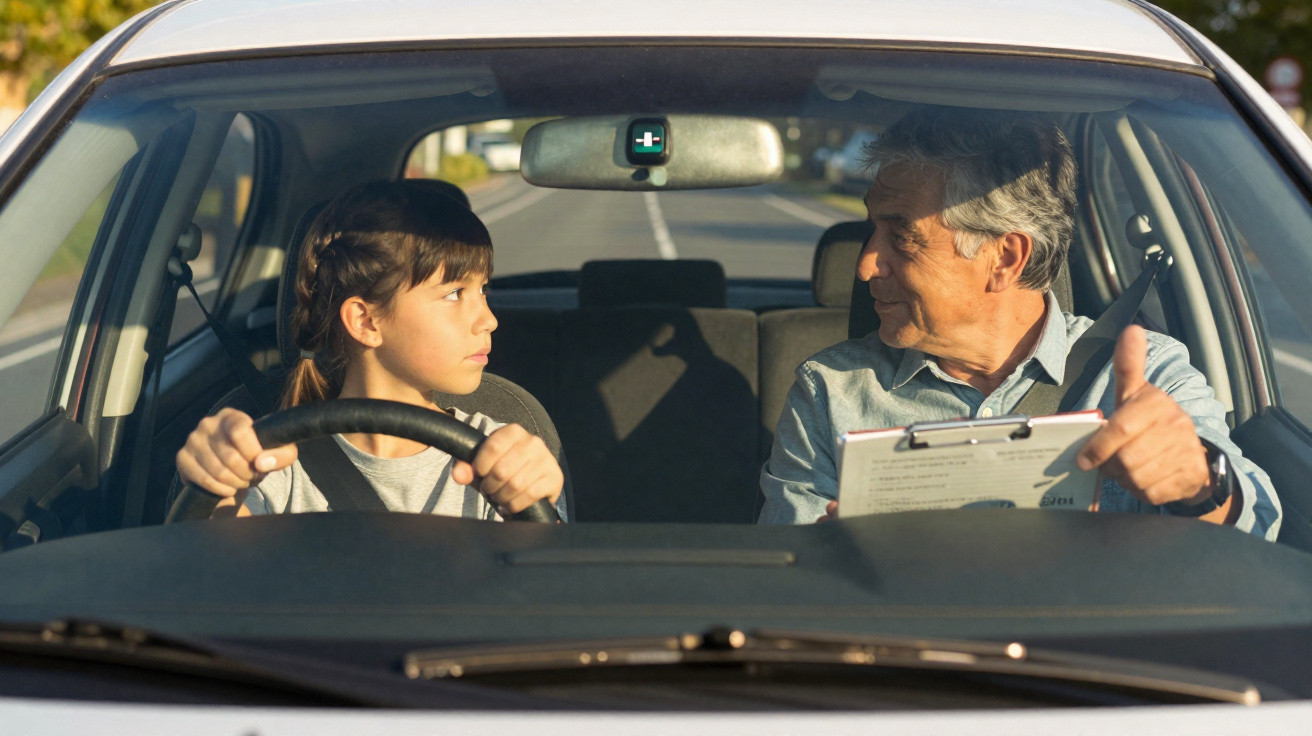
The Government’s proposal to overhaul the current driving instruction framework is facing strong opposition. Under the plan, the number of practical lessons with certified instructors would be cut by half - 16 hours instead of the original 32 - with much of the learning shifting to an accompanied driving solution with a tutor.
What the Government is proposing
The National Association of Driving Schools (ANIECA) argues that the change could undermine road safety. The association stresses that learning to drive involves far more than simply getting time behind the wheel, and that it requires specialist pedagogical supervision.
"Driving instruction is not merely a practical experience but a complex educational process, involving real risks and requiring technical and teaching skills that only certified instructors possess," the association said in a statement.
Based on data gathered by ANIECA in 2022, the vast majority of young people (96%) identify driving schools as their main source of learning about road safety.
Lack of international precedent
ANIECA also criticises the absence of an international benchmark for the proposal. Countries such as Norway - which previously used this learning model - later dropped the practice due to "the inherent risks". In Austria, Belgium or France, accompanied driving is only allowed with immediate family members and over a far longer period than is currently being proposed, ranging from 1500 km to 3000 km.
ANIECA’s warning on road safety and training quality
For António Reis, ANIECA’s president, the measure could be serious: lowering the level of preparation for new drivers is "opening the door to more accidents and more victims on the roads".
"We cannot allow road safety to be put at risk in the name of a supposed simplification," he added.
The association also notes that the proposal runs counter to the National Road Safety Strategy - Vision Zero 2030 - which argues for more training, not less.
Even so, ANIECA says it is willing to work with the Government and the IMT, while insisting on one point: accompanied driving must be an addition, never a replacement for training delivered by professionals. "The goal must be clear: to reduce road traffic accidents and not to reduce quality training," it concluded.
In Portugal, accompanied driving with a tutor is already permitted for those learning to drive Category B vehicles, as set out in Article 9 of Ordinance No. 185/2015 of 23 June, albeit subject to several important conditions. These include the requirement for the candidate to complete at least "12 hours of practical training and 250 kilometres driven, in real traffic conditions".


Comments
No comments yet. Be the first to comment!
Leave a Comment