
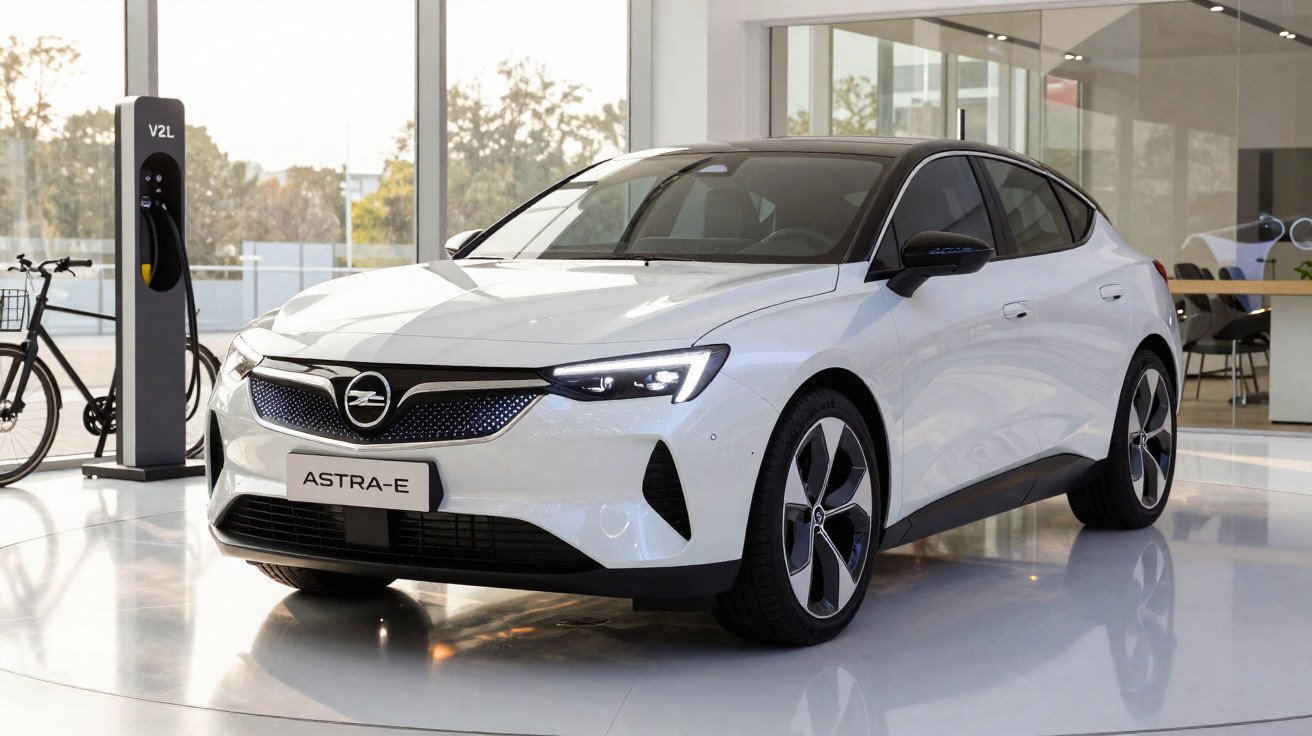
Opel is refreshing the Astra. Alongside a handful of welcome styling tweaks, the German hatchback is arriving with genuinely new lighting tech and improved range. Here’s what we’re expecting ahead of the road test.
Seeing at night as though it were daytime is the bold promise attached to the latest Opel Astra. Beyond a subtly reworked look, the compact car’s headline feature is its new lighting system. Called Intelli-Lux HD, these headlamp units deliver outstanding visibility thanks to 50,000 individual elements-something neither Tesla nor Peugeot currently offers.
Illuminated logo and Intelli-Lux HD: Opel’s styling bet against the Peugeot 308
Even though it shares its underpinnings with the Peugeot 308, the Opel Astra is keen to underline its own identity. This mid-cycle facelift is the perfect moment to widen that gap further. Up front, the design is updated with an illuminated Opel badge first seen on the Grandland.
With its 50,000 elements, Intelli-Lux HD is designed to produce a highly precise beam, allowing you to drive with main beam effectively all the time. Other road users are not dazzled, and the system also detects road signs to avoid blinding the driver. At this level of sophistication, it’s a standout in the class.
Elsewhere, the bumpers have been reshaped. The side profile, however, remains largely familiar, retaining the same sculpted lines as before-the wheels are the main genuinely new detail. Changes at the rear are even more subtle, with the only real update being a lightly revised Opel badge. The Sports Tourer estate stays in the line-up.
454 km range: the electric Astra goes further with a barely larger battery
Thanks to a slightly bigger 55.4 kWh battery, the new electric Opel Astra is able to travel further than before. Its 454 km range is even marginally better than its cousin, the Peugeot e-308, which claims a round 450 km. How has Opel managed it? The Astra posts a lower energy use figure than the French car, at 14.8 kWh/100 km. And with less fussy styling, its aerodynamics should naturally be more efficient.
Under the skin, though, little changes: the drivetrain remains the same, using a 156 hp electric motor. So performance is nothing to write home about-on the road or at the charger. Peak DC charging is still capped at 100 kW, and the Astra charges from 20 to 80% in 32 minutes. That mirrors the Peugeot e-308 we tested, and it’s not impressive. There’s also no battery preconditioning to help charging performance in cold weather.
Physical buttons: German ergonomics versus the all-screen approach
Old-fashioned isn’t always bad, and Opel’s ergonomics team seems to agree. While it may not be the most cutting-edge cabin on the market, the new Astra’s cockpit makes sensible choices. Where Tesla doubles down on all-touch controls, Opel keeps physical buttons for the ventilation. Even Peugeot didn’t do that on the 308, opting instead for a more “modern” feel.
In day-to-day use, that should simply be easier. And if you do want screens, the Astra isn’t left behind: a 10-inch digital instrument display and a 10-inch central touchscreen should satisfy most buyers. Comfort also gets attention, with AGR-certified ergonomic seats that can be heated and offer a massage function, helping drivers settle into a good position quickly.
V2L function: the new Astra can charge your e-bike
As mentioned, there’s no battery preconditioning. There’s also no One Pedal mode, and no route planner built directly into the central display. So yes, the new Opel Astra’s EV feature set feels a little behind the curve-but it’s not completely out of the running. The big new addition is the V2L function, which enables the car to feed power back out to an external device.
It’s a feature we’ve already seen elsewhere, now finally arriving on the German compact. Better late than never. The good news is that it’s standard equipment, with no extra cost. That means you’ll be able to charge your e-bike-or even run a coffee machine-whenever you like. It’s unlikely many Astra owners will do exactly that, but it’s useful to have the option.
So, between the Astra’s reassuring usability with its physical buttons and the radical minimalism of a Tesla Model 3, which would you choose for everyday life? Share your view-we’ll respond in our test drive, published this Sunday at 10am!
Comments
No comments yet. Be the first to comment!
Leave a Comment