
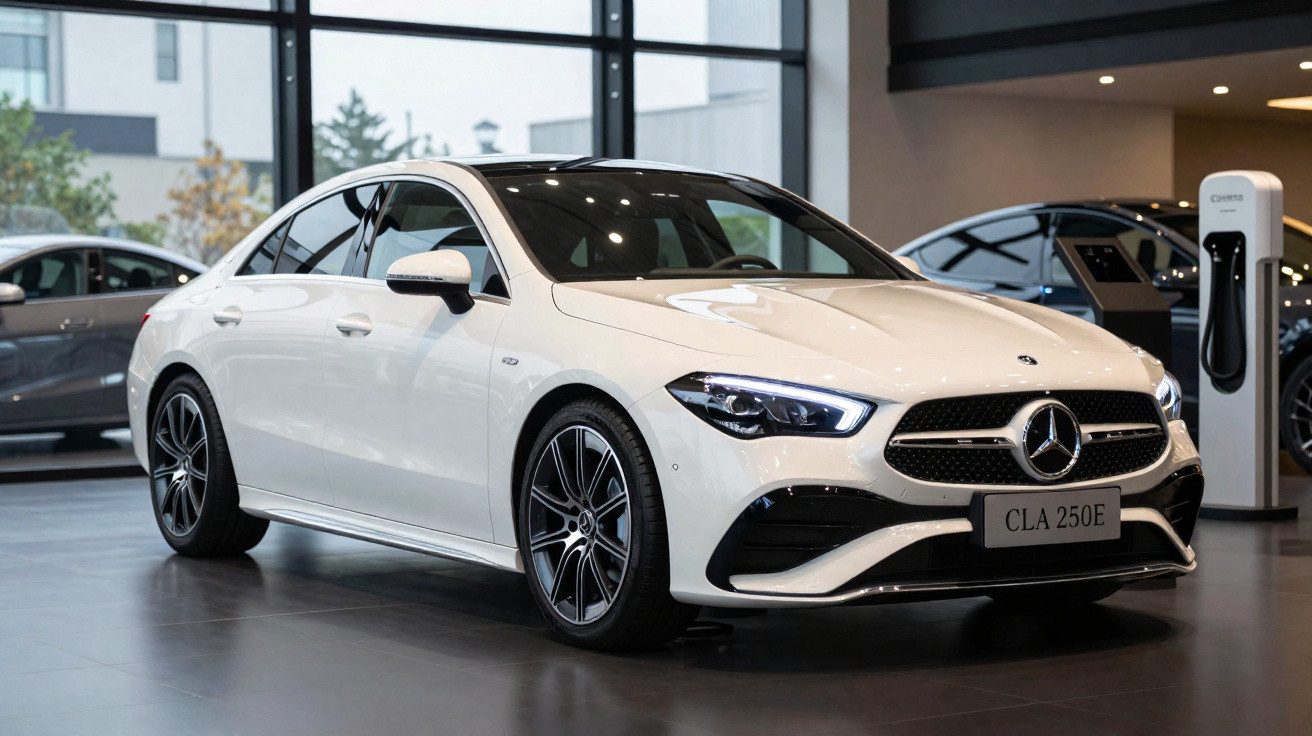
Mercedes is bringing a fully electric version to the roads for the first time with the third generation of the CLA. The CLA 250+ AMG Line is intended to combine long range, strong charging performance and the brand’s familiar comfort, pushing straight into Tesla Model 3 territory - and even beating it on efficiency.
What makes the electric CLA so special
For Mercedes, the electric CLA is more than simply another powertrain choice. It is designed as a technology showcase for the next wave of electric cars from Stuttgart. The saloon measures just under 4.72 metres in length and sits on a new platform developed from the outset with efficiency as the priority.
"With up to 792 kilometres of stated range in the 250+ version, the CLA places itself right at the top of the current EV league."
Instead of following the common approach of fitting ever-larger batteries, Mercedes is pursuing a mix of an aerodynamically optimised body, a highly efficient drivetrain and sophisticated thermal management. The aim is clear: Tesla-like range without inflating the battery unnecessarily.
Technical specifications at a glance
| Item | Specification |
|---|---|
| Model | Mercedes-Benz CLA 250+ AMG Line |
| Drive | 1 electric motor, front-wheel drive |
| Transmission | Automatic with 2 gears |
| Maximum torque | 335 Nm |
| Battery capacity | 85 kWh (gross) |
| Length / width / height | 4,723 m / 1,855 m / 1,468 m |
| Boot capacity | 405 litres (plus frunk) |
| Seats | 5 |
Range and efficiency: the first true Tesla hunter?
The headline feature of the new CLA 250+ is its range. Under the idealised test cycle, it can achieve up to 792 kilometres - a figure that, until now, has been closely associated with Tesla. Even subtracting a realistic 15 to 25 per cent still leaves seriously strong distances.
Mercedes does not reach these figures solely via an 85 kWh battery; the real driver is the efficiency of the overall system. Several elements work together to achieve that:
- extremely low aerodynamic drag thanks to a low, airflow-optimised body,
- an electric drivetrain with high efficiency and a two-speed gearbox,
- intelligent thermal management for both battery and motor,
- predictive regenerative braking that factors in driving data and sat-nav information.
This is exactly where many early-generation German EVs struggled: high consumption, heavy batteries and limited range. The CLA 250+ flips that narrative. Rather than relying on sheer battery size to take on Tesla, it competes on efficiency - and therefore travels further with a similar battery capacity.
Charging: brief stops, lots of miles added
Range is only half of the long-distance equation; charging speed matters just as much. The CLA 250+ is set up to take on large amounts of energy quickly at rapid chargers. What counts is not only peak charging power, but how long the car can sustain it.
"With the CLA, Mercedes is aiming for very short charging stops relative to the range added - an area where many rivals still fall short."
One detail worth noting is the 400-volt converter. This component can make certain charging scenarios more efficient, yet it was initially not available at all and is now offered only at extra cost. At this price level, that feels surprising - particularly for high-mileage drivers who regularly rely on a wide variety of charging points.
Interior: modern, but not without compromises
On first entry, the CLA 250+ feels characteristically Mercedes: solidly assembled, neatly joined materials, sporty shapes and AMG details. The infotainment system also comes across as current, quick to respond and, for a modern car, unexpectedly straightforward to operate.
At the same time, Mercedes allows itself a few drawbacks that can be noticeable in everyday use:
- The almost vertical dashboard looks cool and less welcoming.
- Many functions are buried in menus, with fewer traditional buttons.
- Cabin space is clearly tighter, particularly in the rear seats.
As a result, the CLA is aimed more at drivers who deliberately want a sporty, compact saloon, rather than families prioritising maximum headroom and flexibility. The 405-litre boot is sufficient for day-to-day use and a weekend away, and the additional front storage compartment (frunk) makes it easier to manage charging cables.
Driving experience: comfortable, yet with bite
On the road, the CLA 250+ delivers a driving feel that appears noticeably more mature than many early German EVs. The suspension smooths out bumps effectively without becoming floaty. The electric motor’s torque is available instantly, but it is metered out cleanly to the front axle.
In daily driving, the two-speed automatic transmission barely draws attention to itself, yet at higher speeds it helps keep revs lower and therefore reduces energy use. That becomes particularly beneficial on motorway runs. Anyone stepping over from a combustion model is likely to recognise the familiar blend of long-distance comfort and strong overtaking reserves.
Strengths and weaknesses at a glance
| Pros | Cons |
|---|---|
| very generous range buffer | tight cabin, especially in the rear |
| short charging times relative to the range gained | cool-looking, vertical dashboard |
| modern, genuinely usable infotainment | operating logic is limited and sometimes unergonomic |
| accomplished, confidence-inspiring handling | key technology (400-volt converter) only optional |
| practical extra storage space at the front | pricing is likely to be high |
What the CLA means for the EV market
With the electric CLA, Mercedes is responding to a shift that has been building for years: for many buyers, range and efficiency are becoming the deciding factors - even ahead of outright performance. Anyone wanting to cover long distances with fewer stops pays close attention to consumption per 100 kilometres, charging speed and how well the car integrates route planning.
Tesla embraced this approach early and built a clear lead. The fact that a German manufacturer is now putting a model on the road that is at least on a par in efficiency sends a strong signal to the market. For drivers who never really warmed to Tesla’s design, operating philosophy or service set-up, a new alternative is opening up.
What prospective buyers should know before purchasing
If you are considering the CLA 250+, there are a few points worth checking carefully:
- Does rear-seat space meet your needs?
- If you do frequent long motorway trips, is the extra cost of the 400-volt converter worth it?
- Is the 405-litre boot, including the frunk, enough for everyday life and holidays?
- Are you comfortable with the infotainment menu structure, despite fewer physical controls?
A thorough test drive that includes motorway sections will help you better judge real-world consumption and charging behaviour. Many dealers now also offer routes with a rapid-charging stop so potential buyers can simulate a genuine long-distance scenario.
Classification: efficiency, consumption and range explained clearly
If you are new to electric cars, you quickly run into terms such as efficiency, consumption or WLTP range. Put simply: the fewer kilowatt-hours a car needs per 100 kilometres, the more efficient it is. High efficiency not only lowers electricity costs; it also allows smaller batteries for the same range - saving weight and resources.
The official range figure is generated in a standardised test cycle. In real life, speed, outside temperature, terrain and driving style all play a major role. An efficient car like the CLA 250+ has a key advantage here: drivers with a light right foot can access a larger share of the theoretical range, while less efficient models - driven in the same way - will arrive at a rapid charger much sooner.
All told, the electric Mercedes CLA 250+ AMG Line represents a change of direction: rather than focusing only on luxury and performance, the brand is now placing a deliberate emphasis on efficiency. That combination of premium feel and long-range strength is what makes the model compelling - not only for loyal Mercedes drivers, but also for anyone who has previously only been looking at Tesla.
Comments
No comments yet. Be the first to comment!
Leave a Comment