
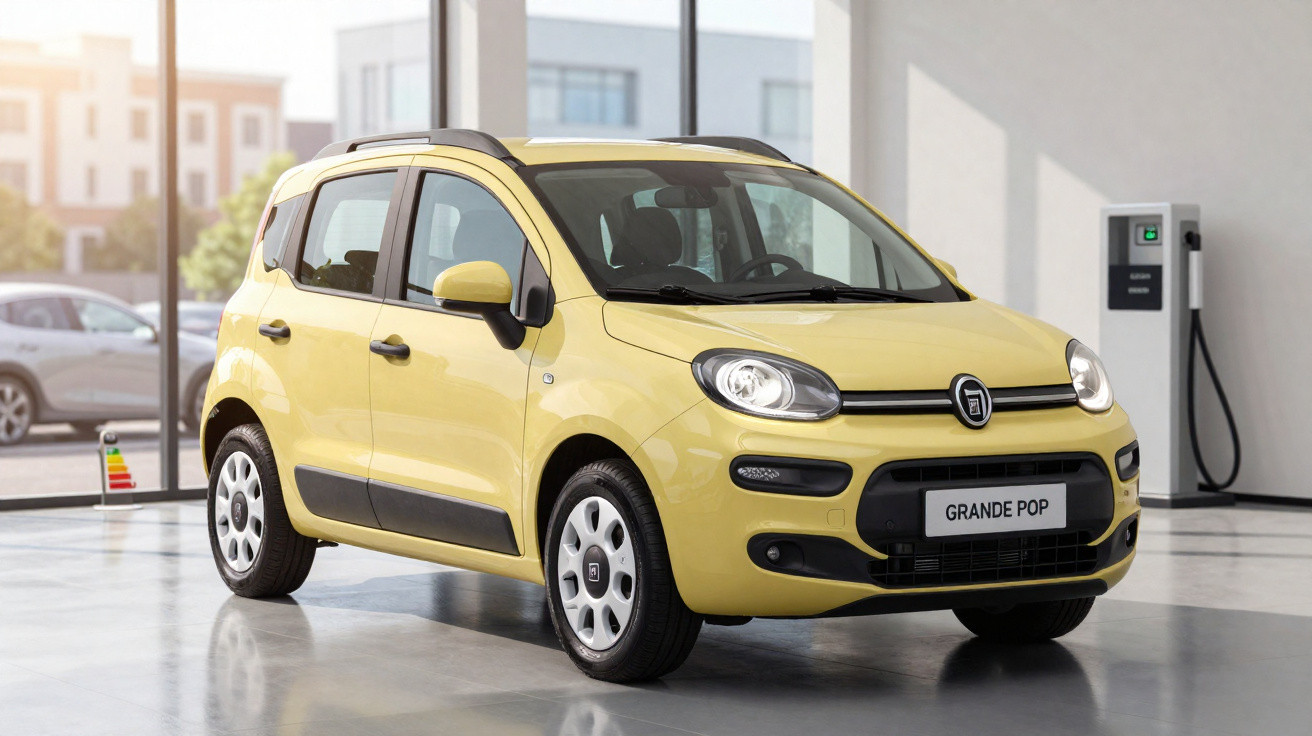
Fiat is putting more emphasis on pure petrol power again and is tempting buyers with an especially low-cost entry version of the new Grande Panda. A modern supermini for under 17,000 euros almost feels like stepping back in time. The key question is what, exactly, you get for the money-and where Fiat has had to cut corners.
Fiat goes back to the classic combustion engine
Over recent years, Fiat has electrified its line-up heavily. Many small cars arrived either as full EVs or with Mild-Hybrid technology. With some models, the brand is now changing tack and adding traditional petrol engines back into the range-Grand Panda included.
The car launched initially as an electric model and as a Mild-Hybrid. For a few months now, the configurator has also listed a pure petrol option. It sits at the absolute bottom of the price ladder and is aimed at drivers who want neither charging cables nor hybrid tech-just straightforward, familiar engineering.
"Pure petrol, manual gearbox, clearly calculated price – Fiat is pitching the Grande Panda at cost-conscious city drivers."
Engine and performance: frugal rather than sporty
In the Grande Panda, Fiat uses an engine that has already been proven across the group. Stellantis also fits this unit in cars such as the Citroën C3. That has a practical upside day to day: most early issues have been ironed out, and workshops are already familiar with the drivetrain.
Three-cylinder with 100 PS
Under the bonnet is a 1.2-litre, three-cylinder petrol engine with no electrification of any kind. The headline figures are:
- Displacement: 1.2 litres
- Power: 100 PS
- Torque: 205 Nm
- Gearbox: 6-speed manual
- Drive: front-wheel drive
With 100 PS, the Grande Panda sits squarely in the middle of the supermini class for output. Around town and for everyday commuting, that is more than adequate. On the motorway, though, it is not going to perform miracles-especially when accelerating in higher gears, where it is clear the engine is tuned more for efficiency than punch.
Fuel consumption and CO₂ figures
For official consumption, Fiat quotes an average of 5.7 litres per 100 km for the petrol version. That is higher than the Mild-Hybrid, which is rated at 5.1 litres. Without electric assistance, you feel the difference directly at the pump.
CO₂ emissions are also higher: the petrol model is listed at 131 grams per kilometre. In markets that apply CO₂ penalty taxes, that can add a noticeable surcharge, clawing back part of the low entry price.
"Higher consumption and higher CO₂ figures make the combustion version less appealing on paper than the Mild-Hybrid – but the purchase price remains its strongest argument."
Equipment: what does the entry-level version include?
The cheapest trim is called “Pop” and is unapologetically focused on saving money. Anyone expecting high-tech features and lots of comfort kit will be disappointed. Anyone happy with a no-nonsense car may be perfectly content.
Plain outside, but not bare
Visually, the entry-level Panda keeps things restrained. The most eye-catching detail is the no-cost paint option “Rouge Passione”, a strong red shade offered without a surcharge. Apart from that, the only alternative is white, so the colour selection is extremely limited.
The car comes on 16-inch steel wheels without wheel trims. It looks a bit utilitarian, but there is a practical bonus: kerb scuffs are less painful visually, and replacements are inexpensive.
Interior: the essentials, very little fuss
Inside, the Grande Panda follows the same approach: functional, simple and free of gimmicks. A large central touchscreen? Not here. Instead, Fiat fits a smartphone holder, letting you run navigation and media from your own phone.
That said, the car is not entirely old-school. In front of the driver sits a 10-inch digital instrument display, keeping the key information clear and easy to read.
Standard equipment includes:
- manual air conditioning
- electric front windows
- digital instrument display (10 inches)
- smartphone station instead of a central screen
- central locking
Safety and driver assistance systems
Even in base form, Fiat does not completely do without modern assistance. In city driving, these can be genuinely useful:
- traffic sign recognition
- rear parking sensors
- lane departure warning
- autonomous emergency braking
That puts the Grande Panda broadly in line with current class expectations. There is no adaptive cruise control and no sophisticated assistance packs, but the most important everyday functions are included.
"The base version is deliberately pared back, but it is not completely spartan on safety."
Price, taxes and the competition
The petrol model starts at 16.900 euros. At first glance, that is a very appealing figure-particularly next to many small EVs, which in some cases cost well over 25.000 euros.
In countries with a CO₂ malus, however, an environmental charge of around 1.000 euros is added on top. That pushes the entry-level petrol car closer to the Mild-Hybrid, which officially starts at 19.400 euros, though incentives can change the equation depending on the market.
| Version | Power | Official consumption | CO₂ emissions | List price |
|---|---|---|---|---|
| Petrol | 100 PS | 5,7 l/100 km | 131 g/km | 16.900 € |
| Mild-Hybrid | 110 PS | 5,1 l/100 km | lower | ab 19.400 € |
So the real issue is not so much, “Is the petrol version cheap?” but rather, “Will the simplest version do for me, or is it worth paying extra for the Mild-Hybrid?”
Who is the petrol Fiat Grande Panda for?
This variant is clearly aimed at city drivers and short-trip users who want a brand-new car for used-car money and do not mind a simple specification.
Typical buyer profiles include:
- new drivers who want an uncomplicated first car
- households looking for a low-cost second car for urban use
- older motorists who do not care for large screens
- high-mileage drivers on a tight budget who prioritise running costs over status
It is less suitable for long-distance commuters who regularly rush up and down the motorway, or for big family holidays with lots of luggage. In those scenarios, the Mild-Hybrid has an advantage thanks to extra reserves and slightly better efficiency.
What does “Mild-Hybrid” mean compared with a pure petrol model?
Many buyers wonder what the Mild-Hybrid label actually involves. Essentially, it is a small add-on system with an electric motor and battery that assists the combustion engine rather than replacing it. Driving on electric power alone is, in practice, not really possible.
Everyday benefits include:
- stronger pull-away performance
- slightly lower fuel consumption
- in some cases, lower CO₂ taxes
On the flip side, the technology is more complex, and servicing may end up a little more expensive over the long term. If you want maximum simplicity and mostly drive short distances, the pure petrol version is closer to the classic supermini idea.
Practical view: what to check before you buy
If you are considering the Fiat Grande Panda petrol, it is worth working through a few points before signing anything:
- Will the base equipment be enough day to day, or do I need more comfort?
- How many kilometres do I drive per year, and how much will the higher consumption matter?
- Are there local taxes or charges based on CO₂ output that change the real purchase price?
- Am I happy with a manual, or do I need an automatic?
In particular, it is worth taking a close look at the smartphone station in place of a full infotainment system. If you already rely on your phone and prefer modern apps, the idea should feel natural quickly. If you would rather have built-in navigation, you may find the base solution harder to live with.
Ultimately, the petrol Grande Panda is aimed at buyers who are deliberately skipping luxury in favour of a sensibly equipped, affordable everyday car. Fiat’s swing back towards combustion also underlines how strongly price and simplicity are once again shaping the supermini segment.
Comments
No comments yet. Be the first to comment!
Leave a Comment