
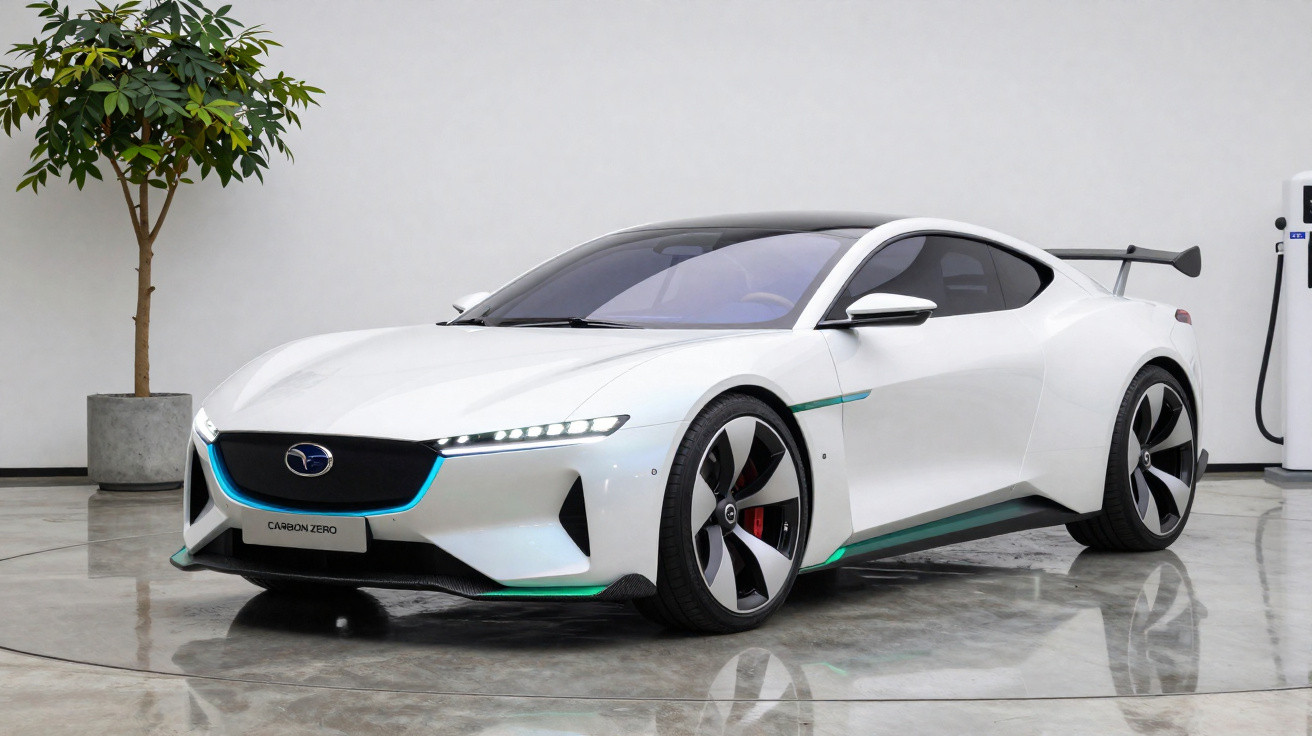
Japanese car makers are refusing to abandon the internal combustion engine. The latest sign comes from Toyota, Subaru and Mazda, which are joining forces to develop new engines designed to work with battery-hybrid systems and to be compatible with carbon-neutral fuels.
“With these engines, each of the three companies will aim to optimise integration with motors, batteries and other electric drive units,” says Toyota in its statement, underscoring the importance of “pursuing carbon neutrality”.
Carbon is the enemy
With carbon seen as the “enemy”, the three Japanese manufacturers view the internal combustion engine as the technology best able to deliver the much-needed reduction in carbon emissions.
The plan is to create power units that are more compact and more efficient than today’s engines. However, as the official announcement explains, “the three companies will seek not only to improve the performance of the standalone engine, but also to optimise its integration with electric propulsion units, leveraging the strengths of each one”.
At the same time, the intention is for these new engines to run on several alternative fuels, namely synthetic fuels (or e-fuels), biofuels and liquid hydrogen.
Impact on design
Another advantage Toyota, Subaru and Mazda are highlighting with these new internal combustion engines relates to the design of the cars themselves.
That is because they are promising combustion engines that are considerably smaller than the ones we have today, which in turn gives design teams more freedom.
“Smaller engines will allow even lower bonnets, improving design possibilities and aerodynamic performance, while also contributing to better fuel efficiency,” Toyota’s official statement says.
Three distinct formulas
At this stage, none of the three brands has set a date to unveil this new generation of engines. Even so, some details are already known: Mazda has confirmed it will continue developing the Wankel engine, and Subaru has revealed it will back its well-known opposed-cylinder engine technology (or boxer).
“As we continue to refine electrification technology, we will also improve our opposed-cylinder engines with the aim of using carbon-neutral fuels in the future,” said Atsushi Osaki, President and Chief Executive Officer of Subaru Corporation.
Meanwhile, Masahiro Moro, President and Chief Executive Officer of Mazda Motor Corporation, confirmed that “given the compatibility of the rotary engine with electrification and carbon-neutral fuels, Mazda will continue to develop the technology through co-creation and competition to ensure it can contribute broadly to society”.
As for Toyota, it is worth noting that it pioneered a multi-energy approach rather than a strategy fully focused on 100% electric vehicles. That direction even began with Akyo Toyoda, the brand’s former Chief Executive Officer (and current Chairman).
Koji Sato, the current President and Chief Executive Officer of Toyota Motor Corporation, has maintained that vision. Proof of this is that Toyota remains active on several fronts, as we saw at the latest edition of the Kenshiki Forum in Brussels (Belgium), where we were present:
In other words, despite all the investment it is making in 100% electric cars and batteries (it has been one of the main drivers behind solid-state batteries), Toyota continues to develop conventional hybrids (HEV), plug-in hybrids (PHEV) and hydrogen fuel-cell electric vehicles (FCEV or fuel cell).
Comments
No comments yet. Be the first to comment!
Leave a Comment