
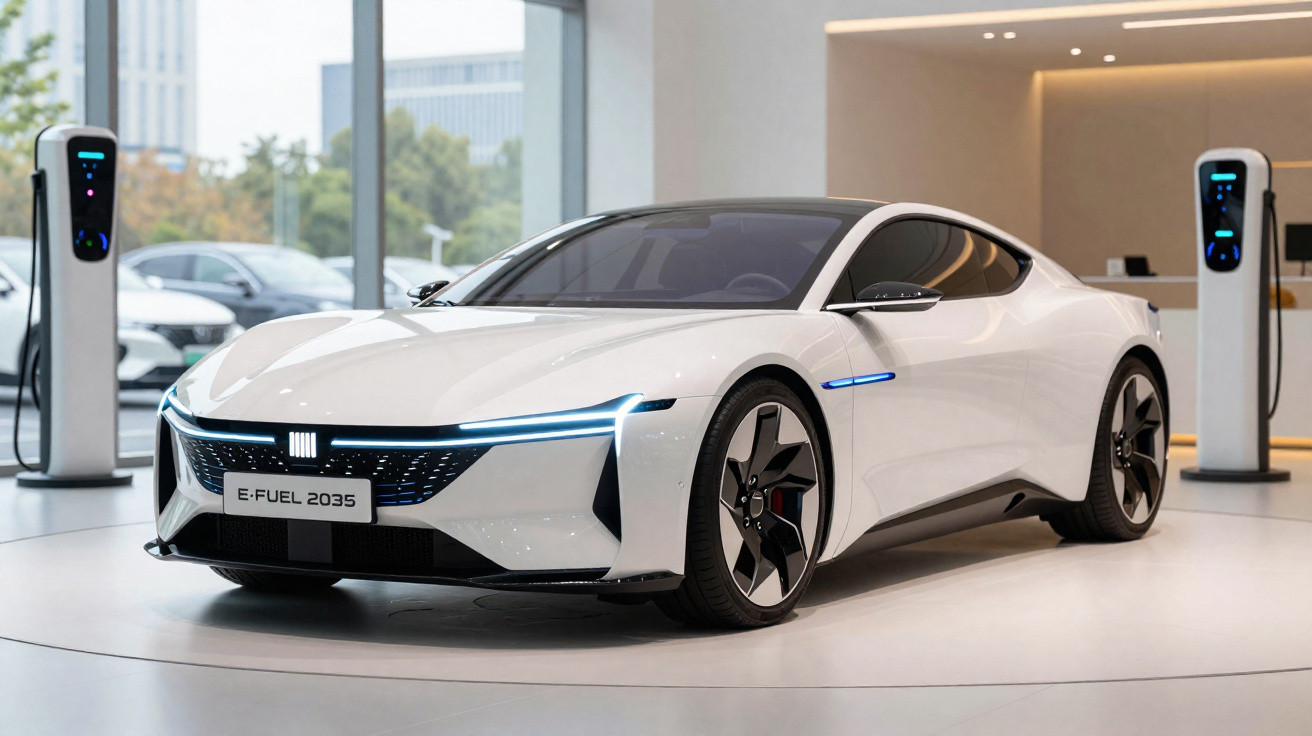
Political waters have been choppy in Brussels. After the past few days - and following weeks of debate - the European Union and Germany have reached an agreement to allow the combustion engine to remain on the road after 2035, provided it runs on carbon-neutral synthetic fuels.
Carlos Tavares and Stellantis: electrification remains unchanged
Asked what this could mean for the industry during the Freedom of Mobility Forum, Carlos Tavares (Stellantis’ Chief Executive Officer) was unequivocal, stating that “nothing has changed” in Stellantis’ electrification path.
“In Stellantis’ case, we will be absolutely ready in time to deliver that electrified mobility. That is clear,” he said, before criticising policymakers: “The decision on this should have been taken earlier, perhaps in 2014 or 2015”.
It is worth recalling that the latest European Union draft allows internal combustion engines to remain “alive” beyond 2035, as long as they use carbon-neutral synthetic fuels.
Synthetic fuels, clean mobility and affordability
“I think synthetic fuels will be another technology that will be developed. But at the end of the day what we need is safe, clean and affordable mobility. The future will tell whether or not we have found the solution for affordability. The solution for clean mobility exists if the energy is renewable. But affordability still has to be proven, largely because of the scarcity of raw materials,” Carlos Tavares warned during a conversation lasting around two hours, featuring a six-person panel.
The lithium problem
“We know we need lithium. Right now there are 1.3 billion cars on the planet with an internal combustion engine. We have to replace that with clean mobility. And that will require a lot of lithium,” Tavares said, before issuing a warning: “Not only may lithium be insufficient, but the concentration of lithium mining could create other geopolitical problems”.
Among the concerns raised by Carlos Tavares is the fact that some governments are introducing requirements to source raw materials domestically, or even restricting access for certain trading partners. According to the Portuguese executive leading Stellantis, that “increases the costs” of electric cars.
Is one solution no solution?
On policymakers putting all their chips on a single approach, Tavares also took a critical view:
Our societies are losing a lot of potential because they do not have technologically neutral regulations. It is a huge loss of creativity from scientific power to decide in advance to impose a single technology instead of adopting technologically neutral rules that would help create healthy competition.
Carlos Tavares, Chief Executive Officer of Stellantis
Even so, after weighing it all up - and regardless of this shift in the EU’s position - Carlos Tavares insisted that it will not change anything.
“If I think it will change anything? No. We will be ready for electrification before the ban, in 2035, but we have to recognise that this is a profound transformation of the industry”.
Comments
No comments yet. Be the first to comment!
Leave a Comment