
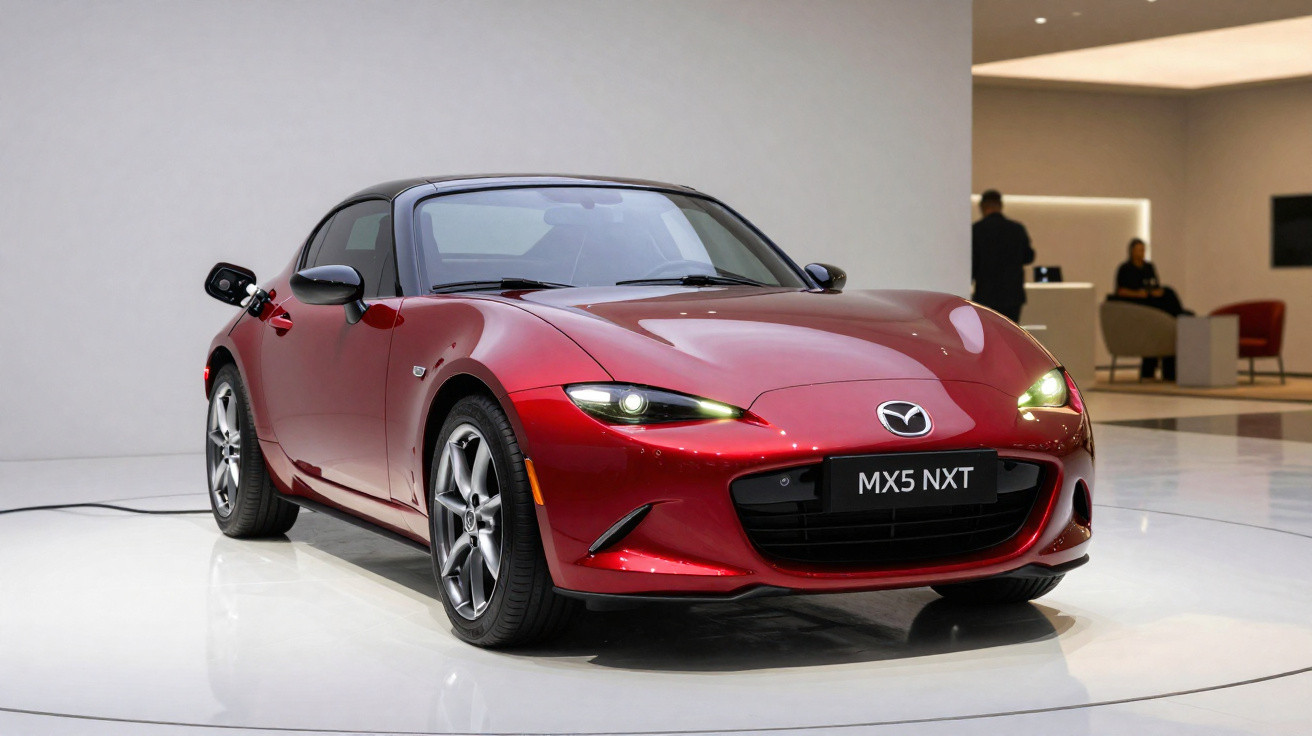
Mazda may be steering the next MX-5 towards electrification, but petrol is not ready to bow out of the Japanese roadster just yet. The upcoming generation is being developed to support multiple powertrains, including a fully electric version and another using the new Skyactiv-Z engine.
Speaking to the German magazine Auto Motor und Sport, Mazda Chief Executive Masahiro Moro said that “the successor also has to be ready for a scenario without a combustion engine”.
That is not a definitive confirmation that the next Mazda MX-5 will come as an electric model. Even so, it is the clearest indication so far that the brand is actively weighing that option.
For Moro, the biggest hurdle is not electrification itself, but protecting what makes an MX-5 an MX-5: compact dimensions, low weight and a direct connection between driver and car. “The challenge is to make the basic structure lighter without resorting to exotic materials, such as carbon fibre,” he explained.
Rather than leaning on costly lightweight materials, Mazda’s engineers have been tasked with cutting mass through more conventional materials and solutions. The target set for a potential electric MX-5 sits between just under 1000 kg and 1200 kg. “I believe we can do it,” the Chief Executive insisted.
If Mazda manages that, an electric MX-5 could weigh about the same as today’s petrol MX-5, whose lightest version with a fabric soft-top starts at 1009 kg. That low mass is a defining trait of the roadster and a major contributor to its handling and driving experience.
It is an especially demanding goal for an electric variant. Batteries add a substantial amount of weight and can force changes to the car’s architecture, proportions and overall weight distribution.
Petrol remains in the plans
Engineering the platform to accommodate a fully electric version does not mean combustion engines are about to disappear from the MX-5. On the contrary, the next generation is expected to retain a petrol option.
Mazda technical chief Ryuichi Umeshita has previously suggested that the next MX-5 could use the new Skyactiv-Z four-cylinder engine with 2.5 litres of displacement. However, the brand has not officially confirmed this engine’s use in the roadster.
Mazda is also considering introducing a hybrid system, provided it can cut fuel consumption and meet future emissions standards without undermining the model’s low weight and character.
In this way, the next generation could offer different levels of electrification while still keeping a combustion-engined version. The final decision will depend on how regulations develop across different markets. The fifth-generation MX-5, expected to adopt the NE code, is due to arrive from 2028.
A new icon above the MX-5
As it shapes the MX-5’s future, Masahiro Moro also wants to add a second sports car to Mazda’s line-up-more exclusive and positioned above the small roadster. “I want a hero car for Mazda, a true top model that best represents our brand values,” he said.
The aim is not to replace the MX-5, which will continue to represent Mazda’s more accessible sports-car offering. Instead, this new model would serve primarily as a flagship, designed to strengthen the brand’s image rather than deliver high sales volumes.
According to Moro, it could even be built in a largely hand-crafted manner. For now, it remains an aspiration from the Chief Executive, with no timetable, technical specification or final approval for production.
Comments
No comments yet. Be the first to comment!
Leave a Comment