
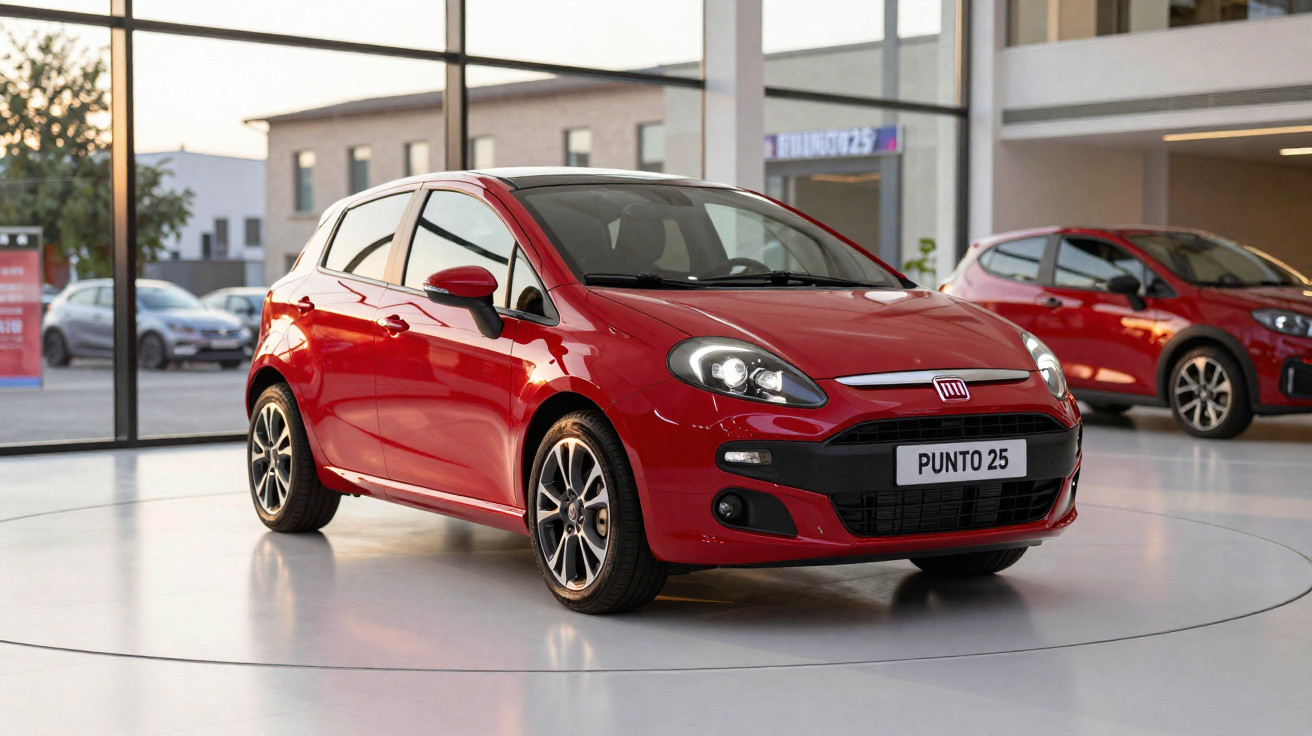
The Fiat Punto reaches the end of production
After 25 years on sale and three generations - with the most recent one remaining in production for 13 years - and with plenty of commercial successes along the way, the Fiat Punto has now reached the end of the line. For all its name recognition and longevity, it ultimately exits in a rather undistinguished way.
The final generation, introduced in 2005, should realistically have been replaced many years ago. Over that same 13-year period, rival manufacturers managed to roll out two full generations of competing models. In the Punto’s case, there were several name changes - Grande Punto, Punto Evo and, finally, simply Punto - plus a refreshed interior and various mechanical updates, along with some (albeit modest) styling revisions.
A model left behind
Even so, the gap to the competition became impossible to ignore.
Euro NCAP: the zero-star result
The clearest demonstration came when Euro NCAP tested the veteran Punto last year, while it was still on sale, and it became the only model to date to be awarded zero stars. That outcome was hardly surprising, given how long the car carried on without major changes and how Euro NCAP’s protocols have progressively become more demanding - particularly in areas linked to active safety.
Why did it never get a replacement?
The global financial crisis (which erupted in 2008) and the limited profitability of the segment in Europe (high volumes, but slim margins) led Sergio Marchionne, the late FCA CEO, first to push a successor back until after the crisis and, eventually, to decide not to replace it at all - for the profitability reasons already mentioned.
It was a controversial and historic move: Fiat effectively stepped away from a market segment that, for much of the brand’s life, had embodied its identity, delivered its main revenue stream and generated many of its biggest successes.
Back in June, when presenting the FCA group’s plan to investors, Marchionne had already indicated that production in Italy would be focused on higher value-added models - above all, new vehicles for Jeep, Alfa Romeo and Maserati - which was bad news for the Punto and the Panda, both built “at home”.
However, while the Panda has a successor secured - with production expected to return to Tichy, in Poland - the Punto has no plan for a direct replacement. When the Fiat Argo launched in Brazil in 2017 - replacing the Punto and Palio sold there - there was speculation it might be adapted for Europe as a Punto successor, with Serbia suggested as the manufacturing base, where the 500L is currently produced. That did not happen - and, as far as we know, it still won’t happen…
What now?
In practical terms, Fiat will no longer have a “conventional” representative in the B segment; the Italian brand’s presence there is instead covered by the 500L MPV and the 500X SUV. Mike Manley, the newly appointed CEO of the FCA group, is the only person who could overturn Marchionne’s decision not to pursue a conventional supermini for mainland Europe. Whether he will do so remains to be seen, pending future statements from him.
If the plan unveiled last June goes ahead unchanged, we will see new generations of the Fiat Panda and Fiat 500 before the decade is out. It is confirmed that the Fiat 500 will gain a new derivative, the 500 Giardiniera - the estate version of the model, echoing the original Giardiniera from the 1960s. Taking the speculation a step further, the Giardiniera could mark a route back into the B segment, if this estate follows the pattern seen at Mini, where the Clubman is notably larger and sits a segment above the three-door Mini.


Comments
No comments yet. Be the first to comment!
Leave a Comment