
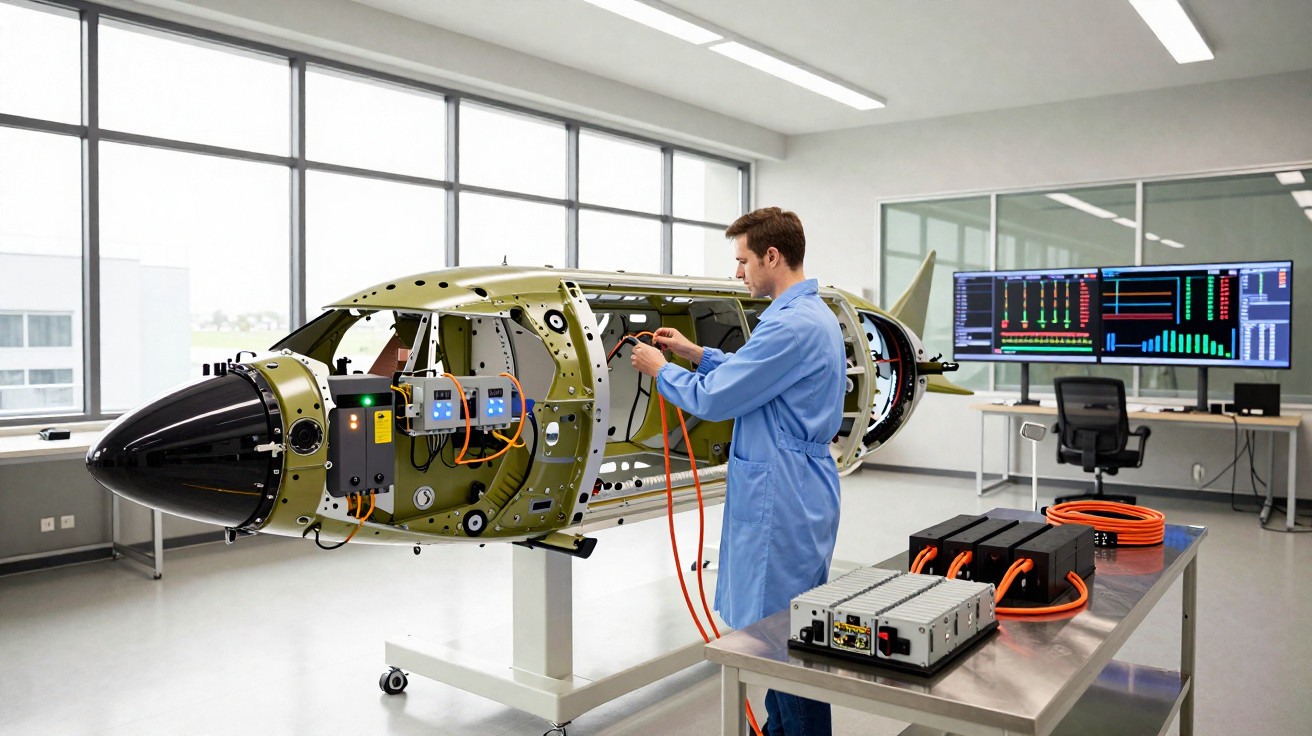
Airbus, working with partners from across the European Union, the United Kingdom and the United States, is pursuing its ambition to lead the way in a hybrid-electric, non-propulsive power architecture for the next generation of commercial aircraft through the LEIA project - Large Scale Integration Demonstrator of Hybrid Electrical Architecture.
LEIA: Airbus and a hybrid-electric electrical architecture for future aircraft
Backed by the European Union’s Clean Aviation Joint Undertaking, LEIA is set to play a key role in progressing high-voltage power generation and distribution for innovative electric aircraft systems aimed at short- to medium-range operations. By closing the gap between component-level innovation and aircraft-level maturity, the project is intended to make these technologies ready for future integration and certification.
“Our progress in developing hybrid-electric technologies and our move to the LEIA demonstrator marks a fundamental change in how we design the future of flight,” said Karim Mokaddem, Head of Research and Technology for Future Aircraft at Airbus. “By moving to integrated and intelligent hybrid-electric architectures, we are actively laying the physical and digital foundations for the next generation of aircraft. This evolution shows that the future of aviation is about more than new energy sources; it is also about the new ecosystems that will manage them.”
Building on SWITCH and moving testing to Airbus’s STEP lab in Ottobrunn
LEIA follows on from the successful completion of the SWITCH project, which focused on hybrid-electric powertrain subsystems and reached a major milestone in July, when Collins Aerospace completed integrated laboratory tests. That result reflects close collaboration across the project’s partners, including Pratt & Whitney, GKN Aerospace and MTU Aero Engines.
With those subsystems operating alongside simulated aircraft and engine systems, the programme is now transferring activities to Airbus’s STEP laboratory - Sustainable Technology and Engineering Projects - in Ottobrunn, Germany. There, Airbus teams will carry out critical aircraft-level integration testing, including design work, battery interfacing and power management systems.
Component integration, validation, and a ground demonstration by 2027
Airbus is leading the integration of a suite of advanced electrical components, including scalable motors/generators, next-generation electronic controllers and power distribution equipment, alongside a range of other aircraft systems. These will be assessed through an extensive test campaign, culminating in a key ground demonstration by 2027.
Both SWITCH and LEIA also draw on Airbus’s ongoing participation across multiple Clean Aviation projects targeting electrification technologies for regional aircraft and short- to medium-range platforms. By managing cross-border supply chain integration and demanding technical requirements, Airbus continues to support the aviation sector’s shift towards a more electric future, with the ultimate goal of cutting greenhouse gas emissions from aviation.
Airbus is working with a wide set of partners on LEIA: AVL, Collins Aerospace, European Aerospace Science Network (EASN), Fraunhofer-Gesellschaft, Liebherr Aerospace, Lynxeo, Netherlands Aerospace Centre (NLR), Safran, SAFT, University of Warwick and Wroclaw University of Science and Technology.
Information from Airbus


Comments
No comments yet. Be the first to comment!
Leave a Comment