
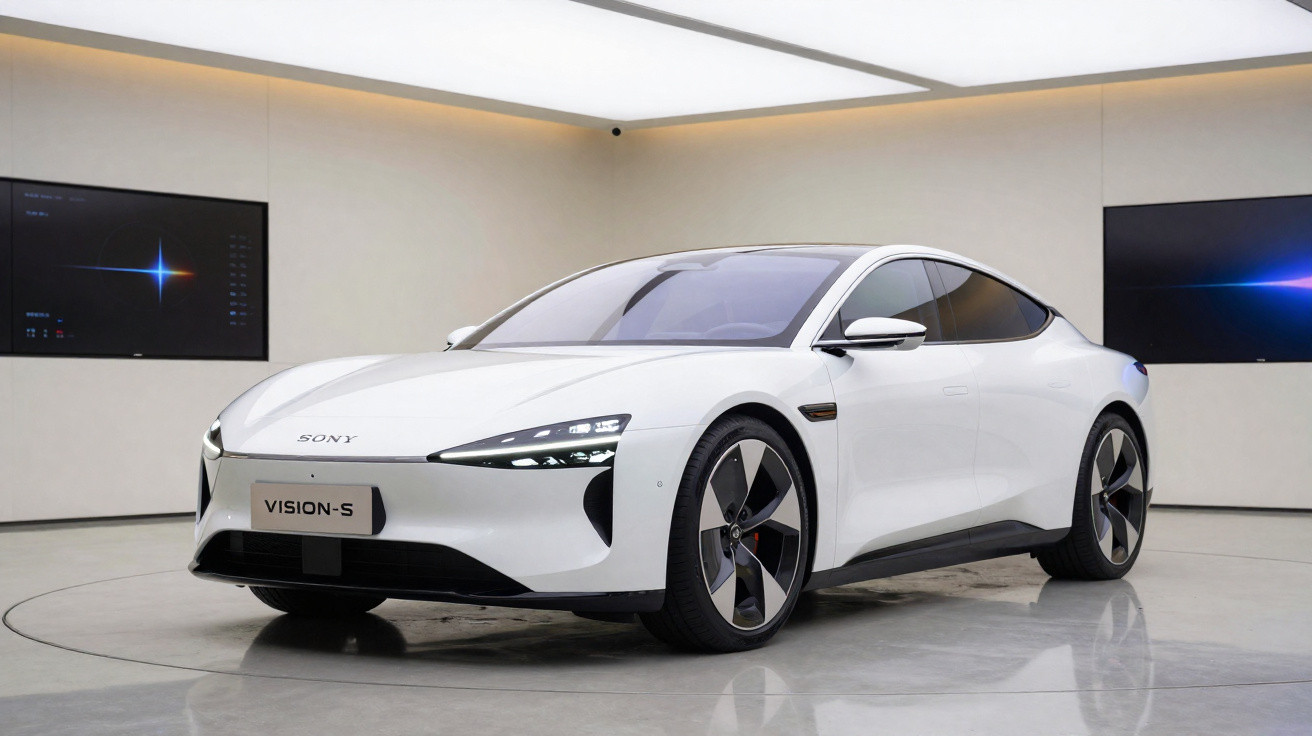
The Sony Vision-S first grabbed attention at CES 2020, where Sony astonished "half the world" by presenting an electric car designed to showcase the company’s progress in mobility - while insisting it had no intention of building it at scale or selling it.
In practice, the vehicle acts as a "rolling laboratory" for a range of technologies. Most of these are linked to autonomous driving, although there is also a clear focus on in-car entertainment.
Sony Vision-S road tests and ongoing speculation
Since that debut, the Vision-S has been "caught" road-testing on German roads on several occasions, keeping speculation alive about whether it might one day move beyond the concept stage into production and commercialisation.
What Izumi Kawanishi says about the Vision-S next steps
Speaking to Automotive News, Sony Executive Vice President Izumi Kawanishi did little to clarify the project’s future: "we do not have a concrete plan at the moment because the current phase is one of research and development". He also stated: "We have to investigate what our purpose is in contributing to mobility services. That is our basic idea, and we have to continue the research and development phase."
With research and development under way, it naturally raises the question of whether further phases are planned. Kawanishi did not elaborate, so the uncertainty surrounding the Vision-S looks set to continue.
Sony Vision-S as a living room on wheels
While the current test programme is aimed at confirming essential safety functions, the Vision-S is also being used to trial infotainment systems for a more distant future - one in which autonomous cars are commonplace and the cabin effectively becomes a living room on wheels.
Sony is therefore exploring options such as panoramic displays running across the dashboard, integrating its 360 Reality Audio system, and even enabling a remote connection to a PlayStation at home via 5G. Naturally, this is paired with over-the-air updates intended to refine and improve these systems and features over time.
To support that, Sony has partnered with the German software supplier Elektrobit, an independent subsidiary of Continental. Together, they aim to bring these systems and functions into a more cohesive whole by polishing the user experience - including the development of the infotainment system’s hardware and software, the instrument cluster, and integrated voice controls.
More updates at CES 2022?
Alongside Elektrobit’s work on system integration and user experience, Sony is also collaborating with Magna Steyr - a supplier capable of developing a vehicle "from start to finish" and with the capacity to manufacture it. By way of example, Magna Steyr builds the Mercedes-Benz G-Class, the Jaguar I-Pace, and the Toyota GR Supra and BMW Z4.
Magna Steyr was responsible for developing the Sony Vision-S, and given its capabilities, that has only added further fuel to the debate over what might come next for the model.
Even so, Kawanishi reiterated Sony’s original position that there are no plans to mass-produce the Vision-S.
At the same time, he left the door open to further announcements about the project at the next CES (Consumer Electronic Show), scheduled to take place from 5 to 8 January 2022 in Las Vegas, USA.

Comments
No comments yet. Be the first to comment!
Leave a Comment