
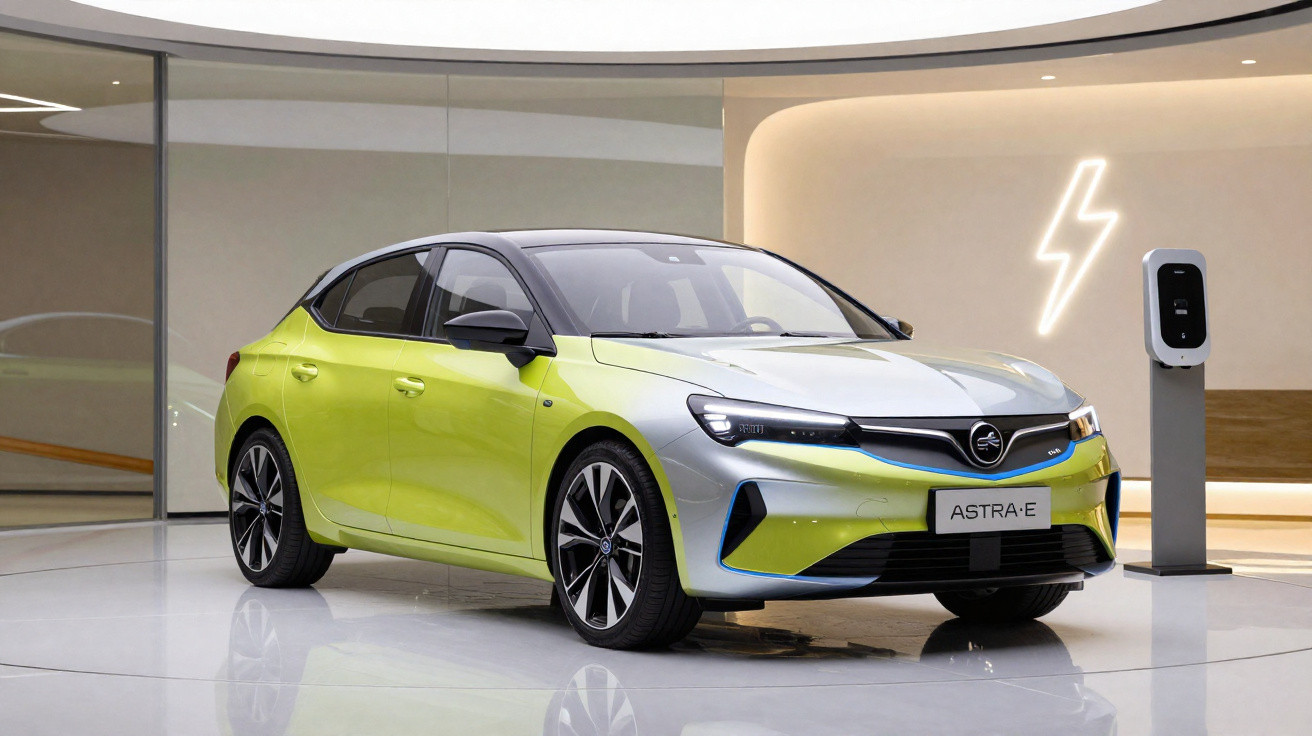
The new Opel Astra L opens a fresh chapter in the German brand’s long-running line of compact family cars, a story that began 85 years ago with the first Kadett, launched in 1936.
After the Kadett came the Astra in 1991 and, in the 30 years since, we’ve seen five generations reach the market - adding up to almost 15 million cars sold. That heritage will carry on with the Astra L, the model’s sixth generation, which, like those before it, was engineered in Rüsselsheim and will be built there too - Opel’s home base.
The Astra L also brings a number of firsts to the compact family-car formula. Most significant for today’s market is that it is the first Astra ever to be offered with an electrified powertrain: two plug-in hybrids delivering 180 hp and 225 hp (1.6 turbo + electric motor), with up to 60 km of electric-only range. And that won’t be the end of the story.
A 100% electric Astra? Yes, that’s coming too
Confirming the rumour, Opel’s new Chief Executive Officer, Uwe Hochgeschurtz - who, by coincidence, officially takes up the role today, 1 September, at the same time as the new Astra generation is unveiled - announced that an all-new electric version of the German model will arrive from 2023: the Astra-e.
As a result, the new Opel Astra L will offer one of the broadest engine line-ups in its segment: petrol, diesel, plug-in hybrid and fully electric.
This new Astra-e will join the Opel electric models already on sale, notably the Corsa-e and the Mokka-e, as well as the brand’s electric vans such as the Vivaro-e and its “touring” variant, Zafira-e Life.
It’s a move that sits within Opel’s widening electrification strategy: by 2024, the entire range will be electrified and, from 2028 - in Europe only - Opel aims to be a 100% electric car brand.
The first Stellantis-era Astra
While electrification takes centre stage in the Astra L story, it’s worth noting that this is also the first Astra developed under Stellantis, following Opel’s purchase by the former Groupe PSA.
That background explains why there is familiar hardware beneath the fresh bodywork, which adopts the company’s latest visual language. Up front, the spotlight falls on the Opel Vizor (optionally paired with Intellilux headlamps featuring 168 LED elements), which is, in short, the new Opel face first seen on the Mokka.
The Astra L uses the well-known EMP2 platform, the same architecture underpinning the latest Peugeot 308 and the DS 4 - and we learned yesterday that the DS 4 will also gain a 100% electric version from 2024. Even if this points to extensive parts sharing between them, particularly mechanical, electrical and electronic components, Opel has still managed to create convincing separation from both in terms of design.
Externally, there’s a clear break from the previous model, largely thanks to the new identity elements already mentioned (Opel Vizor), but also through a stronger emphasis on straight lines and more clearly defined “muscles” over the axles. The Astra also debuts two-tone body finishes.
Inside, the Astra L introduces the Pure Panel, a decisive shift away from earlier interiors. The key feature is the pair of horizontal screens set side by side - one for the infotainment system and the other for the instrument display - which has allowed Opel to remove much of the physical switchgear. That said, a handful of controls regarded as essential remain.
When does it arrive and how much will it cost?
Order books for the new Opel Astra L open next October, but production won’t begin until closer to the end of the year, so the first deliveries are expected only in early 2022.
Opel has announced pricing from €22,465, but for Germany. For now, both the Portuguese prices and more precise dates for the start of sales of the new-generation Astra in Portugal remain unknown.
Comments
No comments yet. Be the first to comment!
Leave a Comment