
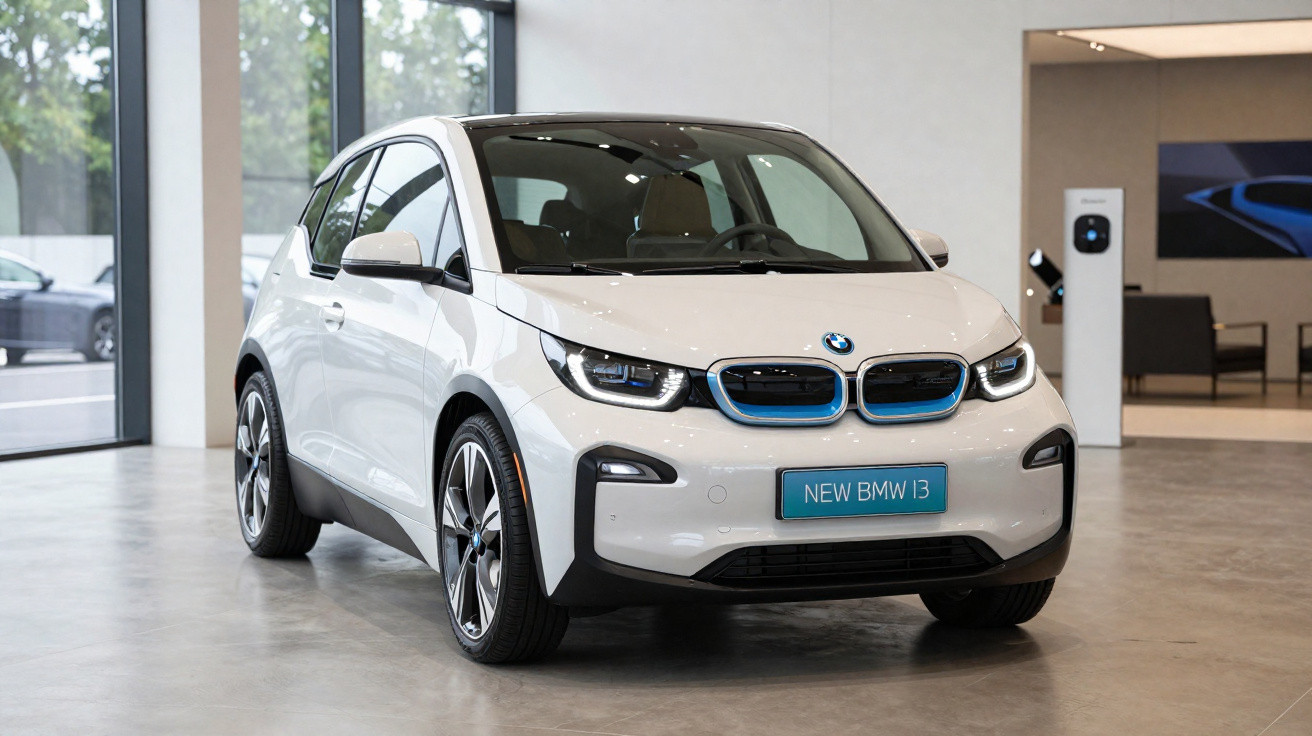
Ever since I first saw the BMW Vision Neue Klasse in 2023, I’ve been looking forward to an electric i3 - or an electric 3 Series - with genuine anticipation. The iX3 SUV appeared first, and it offered encouraging signs that this new design language, trailed by various prototypes since 2021, would survive the jump from concept car to real roads.
But the real proving ground was always going to be the i3. The 3 Series carries too much history and symbolism to be taken lightly, and this sweeping shift in mindset - from combustion to electric - had the potential to create design “chaos”: in the proportions, the surfacing, and the finer details. Thankfully, the production car hasn’t undone what the prototypes promised. Quite the opposite.
Before getting into what irritates me, it’s worth recognising what works - and there’s plenty of it.
Overall, the Neue Klasse approach is a return to the sound principles that defined BMW design from the original Neue Klasse cars of the 1960s: strong proportions, an emphasis on horizontality, restraint, and clear identity cues without going overboard. That’s exactly what we’ve seen on the iX3, and now on the i3 as well.
In broad terms, the proportions of this two-and-a-half-box saloon are well judged - proportions are the foundation of any good design. The silhouette isn’t as flowing as on some other electric saloons, where the cabin volume stands apart in a more traditional way, like the saloons of decades past.
That doesn’t mean it’s flawless. A dedicated EV platform forced BMW to raise the car by 4 cm compared with the combustion-engined 3 Series, because the battery sits in the floor. To visually offset that extra bulk, the i3 has been given enormous 21-inch wheels, which help it read as more compact even though it’s larger than the 3 Series in every direction. Anyone who remembers the visual lightness of the E46 - or even the F30 - will notice the difference.
That’s the cost of electrification, yet the end result still doesn’t disappoint. Just compare it with the current 5 Series/i5, which struggles to match its predecessors where proportions really matter.
Even so… there are two details that annoy me. They don’t keep me up at night, but I keep coming back to them whenever I see images of the car.
Always, always the double kidney
This reworking of the double kidney is the most convincing solution BMW has managed in recent years (previous attempts either looked exaggerated or were diluted to the point where they barely read as a kidney grille at all), although the execution is still open to debate. Rather than fitting a physical grille with no breathing function - as so many other EVs do, BMW included, sometimes with results that are frankly awkward - the brand has reimagined the graphic using light.
On the i3, the issue is the geometry. Head-on, it looks great; but from many angles - which is how you see most cars in the street - the illuminated outline of the two main elements (which integrate the headlamps) creates a perception problem. Not only do the two shapes seem different, they also appear misaligned. It’s very clear in the image below:
There’s a critical point: the “valley” where the badge sits and where the two illuminated rings meet. That “valley” continues down into the bumper, making the “kidneys” fold inwards. In turn, it changes how you read the direction of the lines, creating the illusion that something is slightly off.
It isn’t as unsettling as the cross-eyed look of the Morgan Aero 8, caused by the eccentric positioning of its headlamps. It’s not as obvious as the off-centre rear number plate on the Land Rover Discovery, which from certain angles made the whole rear end look skewed. But it’s irritating enough that your eye keeps returning to that spot, searching for reassurance that everything is actually fine…
It may be that this impression disappears in person. Some cars look odd in photographs yet simply work in the metal. Still, it’s not a gamble BMW should need to take.
Fixing it doesn’t seem especially hard. On the iX3, the “valley” where the badge sits ends at the bonnet - although the integration of the double kidneys there also deserves some criticism. The same solution is even clearer on the 2021 Vision Circular prototype. Perhaps with an i3 update in a few years’ time, this detail can be corrected, making the overall impression of the i3 stronger still.
Hofmeister kink
The second issue is easier to describe and harder to excuse. The “Hofmeister kink” - the detail at the rear corner of the side window that has defined BMW’s formal language since the 1960s - appears on the i3 as a piece of plastic applied over the bodywork, rather than being part of the door. It looks cheap. Full stop.
There’s no aesthetic justification for it, and I struggle to find any other rationale for the decision. The 2023 Vision Neue Klasse handled this exactly as it should be done: integrated into the window shape and forming part of the door opening. No need to stick a bit of plastic on top.
There, the kink emerges naturally from the side aperture and belongs to the whole. Here, it looks like something added at the last minute.
Even so, I’m glad BMW didn’t try to reinvent it, unlike on the current 3 Series with that odd kind of double kink. Still, it’s an identity detail that deserved more care - almost as significant as the double kidney itself.
There are also a few messy moments at the lower extremes of the bodywork - vertical elements near the bumpers, both front and rear, that look as though they’ve been slotted in without much consideration for what surrounds them. They do serve an aerodynamic purpose, yes, but the integration could be better.
What comes next could be even better
I didn’t want to end on a purely critical, negative note, because, as I said at the start, the new BMW i3 represents a return to form for Munich. After years of watching the brand’s defining cues become caricatured (giant double kidneys) or diluted (joined kidneys), alongside other needless styling complications, Neue Klasse feels like a healthy change of direction. And this language will spread across the rest of the range.
One final note of anticipation: next year we’ll see a new combustion-engined 3 Series arrive. Visually, there shouldn’t be any shocks - the Neue Klasse language will be the same.
But by keeping the CLAR platform from the current 3 Series, it will enjoy a natural advantage in the proportions department: it will sit lower, and the front axle will be further forward from the cabin - the so-called dash-to-axle, which has defined what premium and luxury look like since the earliest days of the motor car. The promise is something slimmer and more elegant, without the substantial body that the i3 can’t fully disguise.
By now, the design of the combustion 3 Series is likely long since locked in, and it’s unlikely the details I’ve described will be corrected there - but its even better proportions have the potential to show this design language at its best.
Comments
No comments yet. Be the first to comment!
Leave a Comment