
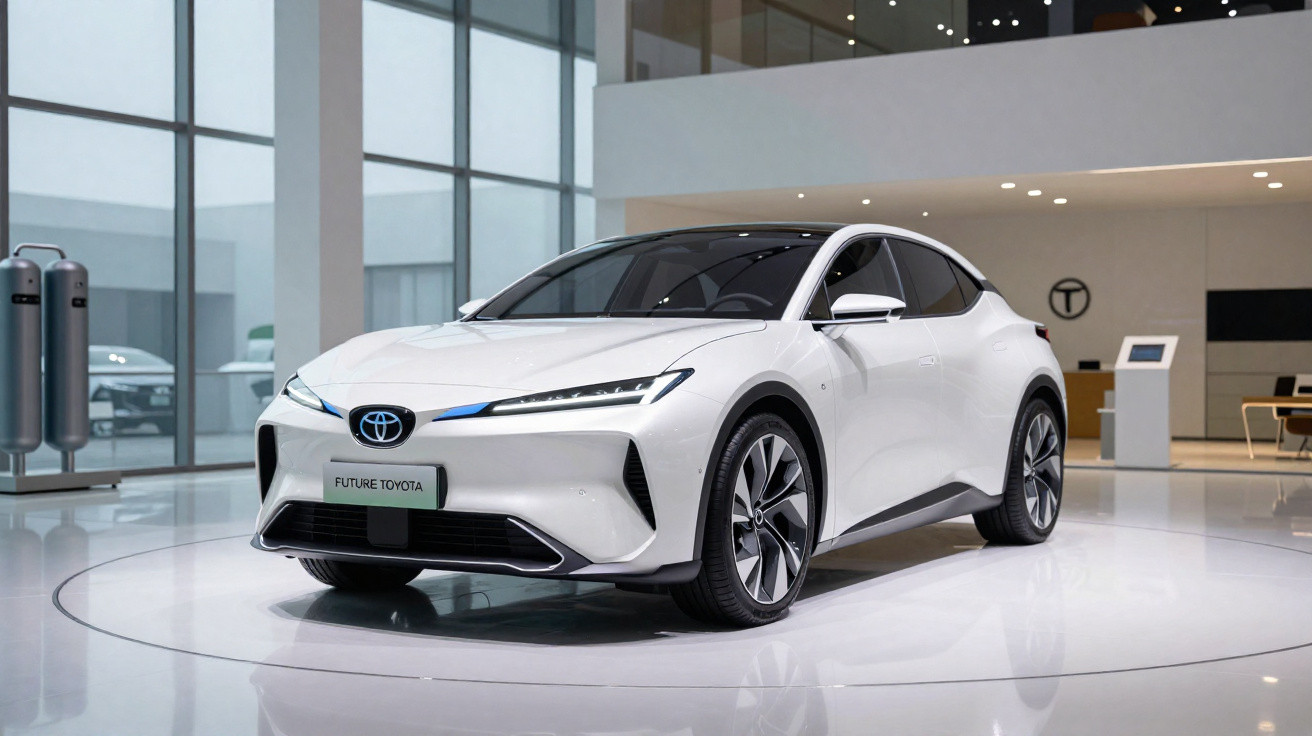
It almost feels like a deliberate jab at Europe. Toyota once again chose Brussels-home to Europe’s key decision-making institutions-to unveil its outlook for what comes next at the Kenshiki Forum 2025. The plan leans heavily on electrification, while still keeping combustion engines in the picture.
Toyota’s leaders insisted there is no provocation intended. “We are a global brand; we have to think about and offer solutions for everyone,” said Shinichi Yasui, Vice President of Toyota Motor Europe, to Automotive Reason, noting that within the company “77% of Toyota vehicles sold in Europe are ‘made in Europe’.”
On the back of that worldwide footprint-and a commitment to “mobility for all”, perhaps the phrase repeated most often by the Japanese executives-Toyota set out its strategy. In the video, we show the main announcements:
Electric push with three models
Over the next two years, Toyota will introduce six 100% electric models. The first trio was shown at this Kenshiki Forum: Toyota Urban Cruiser, bZ4X and CH-R+. Further models arrive next year, split between Toyota and Lexus-the Japanese giant’s luxury brand.
Among the cars presented, the one drawing the most attention was the CH-R+, which promises more than 600 km of range. Meanwhile, the Urban Cruiser was positioned as the brand’s most affordable electric option. Prices have not yet been confirmed, but the entry versions are not expected to go above €32,000 (including VAT).
Combustion, yes, but…
The message is familiar: Toyota argues that the “enemy of the planet” is not combustion engines themselves, but greenhouse gases. “The most important thing is to achieve carbon neutrality” and, to do that, “we are relying on all technologies,” said Shinichi Yasui, Vice President of Toyota Motor Europe, to Automotive Reason.
Working from that principle, the Japanese brand again pointed to progress on its new family of combustion engines, alongside ongoing advances in the development of synthetic fuels. Full details are in the featured video.
A bet on hydrogen
This is one of the areas where doubts still outweigh certainties. Challenges around hydrogen production, storage and transport have yet to be fully resolved. Even so, Toyota continues to reaffirm its commitment to the technology.
At this Kenshiki Forum, a new generation of hydrogen fuel cell (fuel cell) was revealed, claimed to be 50% cheaper, 25% more efficient and more powerful. Toyota also states a maintenance-free durability of more than one million kilometres.
In Europe, Toyota hopes the AFIR plan-which sets out the creation of refuelling corridors across European territory at intervals of 150 km-can support quicker adoption of this technology, especially for freight transport.
Comments
No comments yet. Be the first to comment!
Leave a Comment