
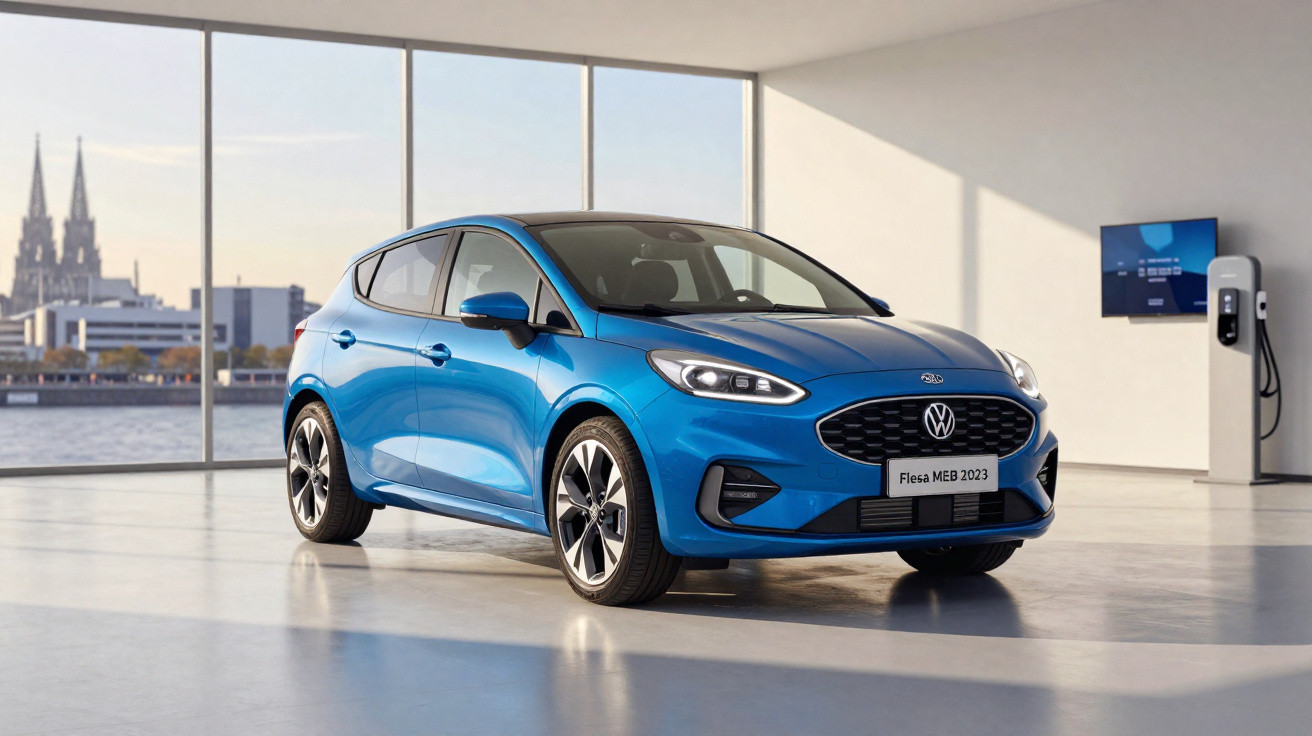
At present, the Ford Fiesta is built in just one place: Cologne, Germany, which is also home to the brand’s European headquarters.
That makes it unsurprising that Ford has selected Cologne as its “electrification centre” to kick off an ambitious programme that will gradually reshape the American brand’s European line-up until it consists solely of 100% electric models from 2030 onwards.
Progress has already been made in that direction. The Mustang Mach-E is already in production, yet it is in 2023 that we are expected to see arrive what is likely to be one of the most important parts of this strategy.
Cologne and Ford’s electrification plan in Europe
In 2023, production begins on a new 100% electric model that will be more compact and more affordable than the Mustang Mach-E - and all signs suggest it will also be a crossover. The chosen manufacturing site is precisely the Cologne plant where the small Fiesta is currently assembled.
The 2023 Ford electric model and the Volkswagen MEB platform
One detail about this new model is already clear: it is one of the outcomes of the agreement signed between Ford and Volkswagen. In other words, Ford’s next 100% electric car will use MEB, the Volkswagen Group’s dedicated platform for 100% electric vehicles, which has already underpinned models such as the Volkswagen ID.3 and ID.4, as well as the Skoda Enyaq and CUPRA el-Born.
What will happen to the Ford Fiesta?
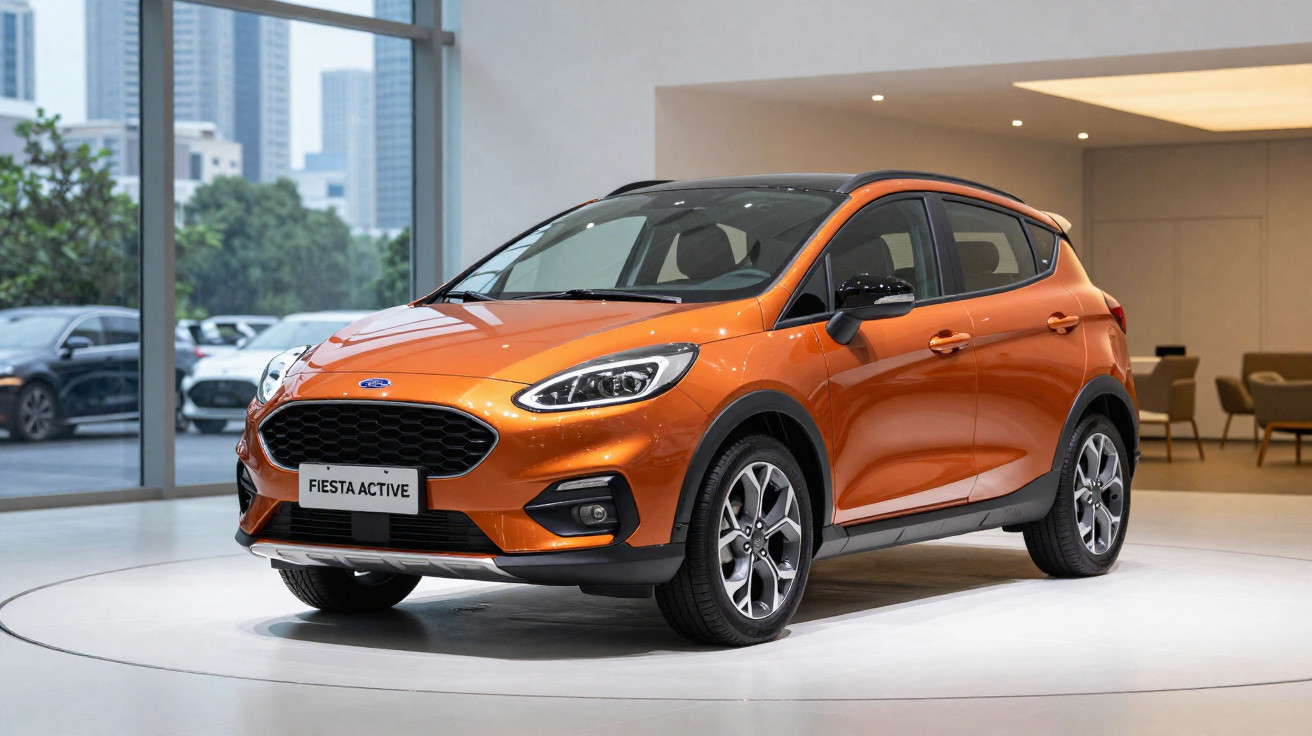
By the time the new electric model arrives in 2023, the current Ford Fiesta will have been on sale for six years - a point at which you would normally expect to meet its replacement. Will this new electric vehicle be the Fiesta’s successor? Very likely not. In fact, the current generation of this historic and successful model could well be its last.
The reason is precisely the decision to use MEB. The new Ford electric model that will take the Fiesta’s place on the production line is expected to be similar in size to the ID.3, meaning it would sit somewhere between a Ford Puma and a Ford Focus. That would make it too large to serve as a direct successor to the Fiesta.
What’s more, as a 100% electric vehicle, it is reasonable to expect it to be considerably more expensive than the supermini, which still relies exclusively on internal combustion engines - even the most affordable versions of the ID.3 exceed €30,000.
Volkswagen Group is developing a more compact version of MEB that will give rise to the ID.1 and ID.2, which in terms of dimensions would correspond to a Polo and a T-Cross, respectively. However, this smaller platform variant will not be the one used for Ford’s new electric model - forecasts suggest the ID.1 will only reach the market in 2025.
Rumours suggest Ford may already be looking at a second electric model to be built in Cologne in order to achieve higher production volumes, but for now it is not possible to confirm when that might happen or what type of vehicle it would be.
As things stand, the chances of the Ford Fiesta receiving a direct successor look increasingly slim. This means that when the new electric model goes on sale in 2023, the Puma crossover could very well become the entry point to the Ford range. That does not mean Ford cannot return to the segment in later years.
Source: Auto Motor und Sport.
Comments
No comments yet. Be the first to comment!
Leave a Comment