
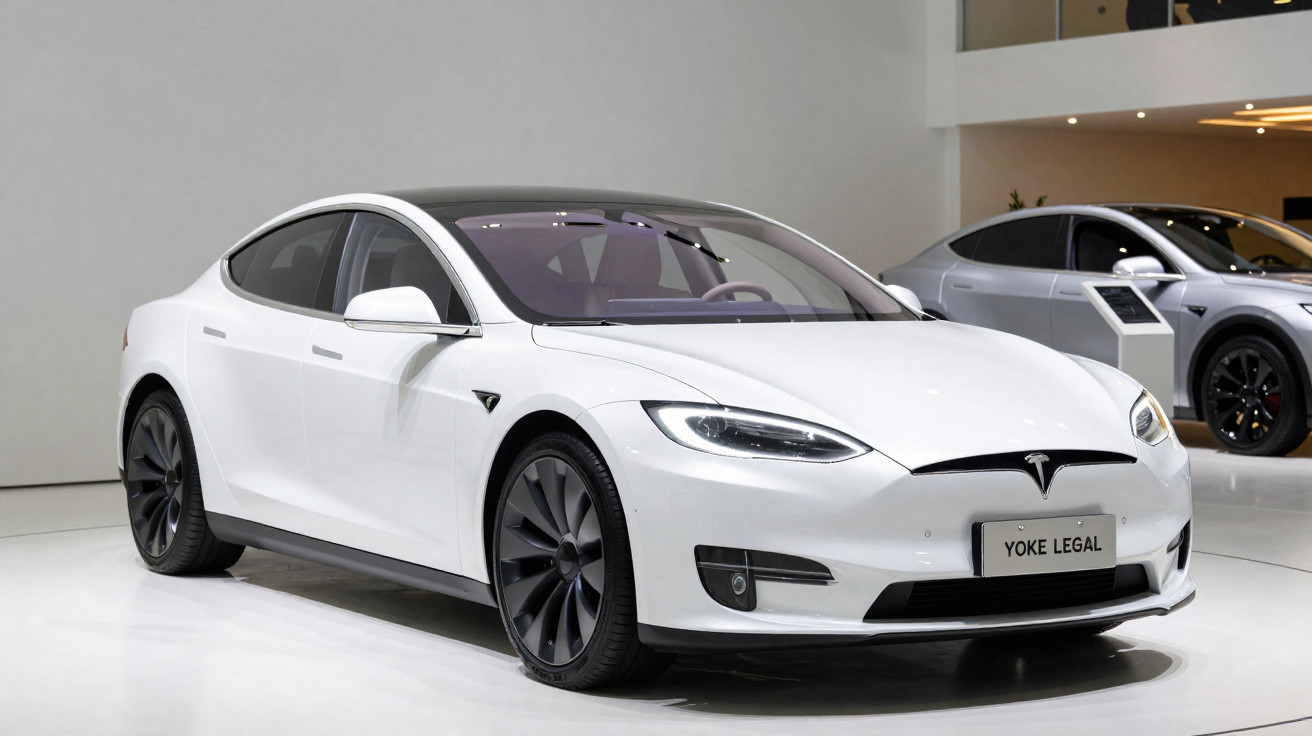
The new steering wheel fitted to the refreshed Tesla Model S and Model X is sparking plenty of debate, because it looks far less like a traditional wheel and far more like an aircraft yoke.
A yoke-style steering wheel and relocated controls
With the arrival of this new (half) steering wheel, the stalks previously mounted behind it disappear as well - the ones that used to operate the indicators and, on the Model S and Model X, the transmission. Some of those functions, including the indicators, are now built directly into the steering wheel via touch-sensitive surfaces.
Practical and ergonomic questions for Tesla Model S and Model X
That change immediately raises a host of questions, particularly around ergonomics and day-to-day use. These days, plenty of cars no longer come with a perfectly circular steering wheel: some are flat-bottomed - said to look sportier - while others, like those found in Peugeot models, have flattened “poles”, much like planet Earth.
Even so, there are obvious differences between those designs and Tesla’s new steering wheel. It is not only flat at the bottom; it also has no top at all, a solution reminiscent of what many people remember seeing in Knight Rider’s KITT. But what happens during a parking manoeuvre or a turn in the road where you need to wind on several turns of lock?
On the current Tesla Model S, the conventional round steering wheel requires 2.45 turns from lock to lock. For this new wheel to be as usable as possible, it would need a much quicker steering setup that cuts down the number of turns required. At the moment, it is not known whether the steering ratio has been changed on the refreshed models.
Beyond the operational and ergonomic doubts - which will only really be answered once we can, quite literally, put our hands on the steering wheel in the updated Tesla Model S and Model X - another question quickly follows.
Is Tesla’s new steering wheel legal?
It is being asked in many places, and even the organisations responsible for vehicle safety rules - such as the US National Highway Traffic Safety Administration (NHTSA) - have not offered a definitive response. The NHTSA says it has started discussions with Tesla to gather more information - although it is fair to ask whether that should have happened before the model went on sale.
In Europe, we looked for the regulations that cover steering systems. This information is set out in United Nations Economic Commission for Europe (UNECE) Regulation No. 79 - Uniform provisions concerning the approval of vehicles with regard to steering equipment.
In Regulation No. 79, there does not appear to be anything that specifies which steering-wheel shapes are acceptable; as noted, there are countless steering wheels on the market that are not perfect circles. However, Section 5 of Regulation No. 79 includes provisions that could leave room for interpretation during type approval. The first general provision is worth highlighting:
"5.1.1. The steering system shall permit easy and safe control of the vehicle up to speeds less than or equal to its maximum design speed (…). The equipment shall have a tendency to self-centre when tested in accordance with paragraph 6.2 with the steering equipment in good condition. (…)"
In other words, in principle, the steering wheel used in the refreshed Tesla Model S and Model X is legal and should not face approval issues - leaving the earlier doubts about how it works in practice, and whether it genuinely ensures “easy and safe control”.
That said, given this approach could run into resistance on crucial topics such as safety, it may be possible to choose an allegedly 100% round steering wheel for the refreshed Model S and Model X. Images from Tesla itself (since removed) that were used in the online configurator appeared to show that option.
Comments
No comments yet. Be the first to comment!
Leave a Comment