
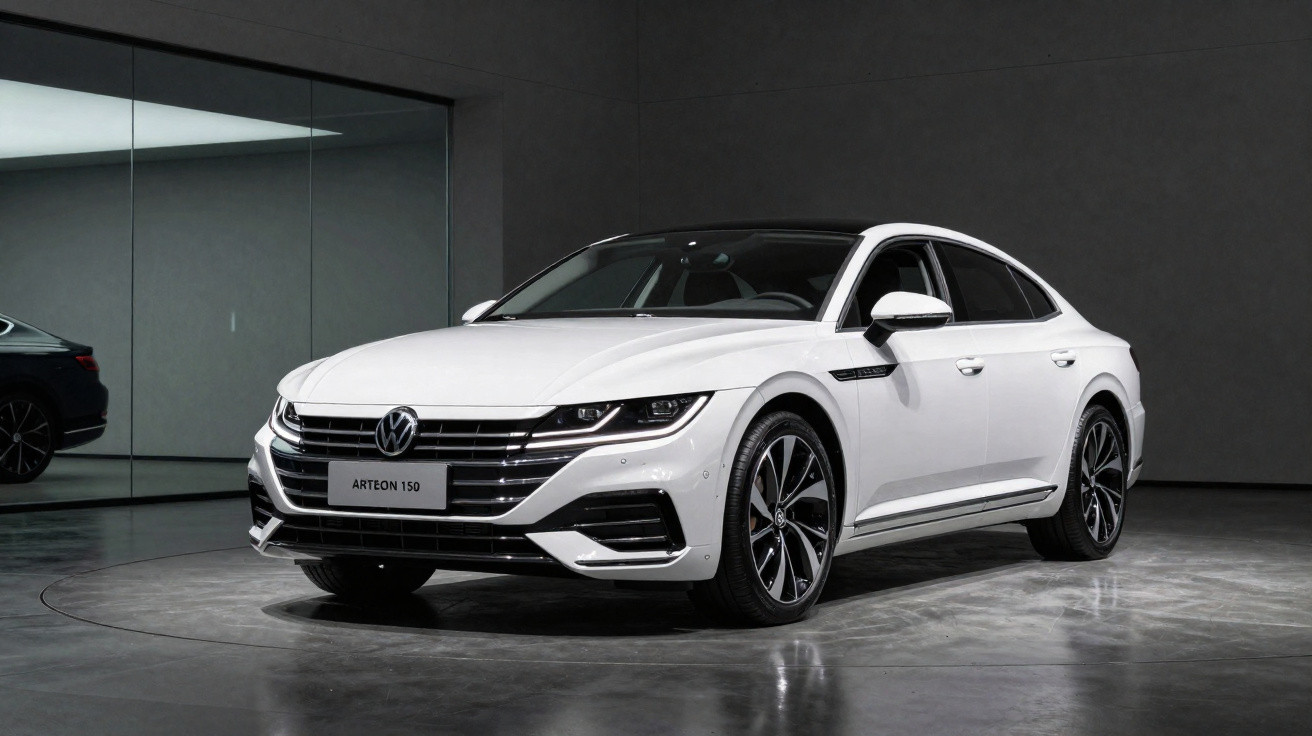
Two years after we first tested a Volkswagen Arteon in Elegance trim with the 2.0 TDI producing 150 hp, we’ve now spent time again with an Arteon in that same specification.
The difference is that, between the earlier test and this one, the Arteon has undergone a recent facelift and update. In other words, as well as a subtly refreshed look, it arrives with added technology and the latest evolution of the 2.0 TDI engine that we first saw introduced on the new Golf.
Has this update strengthened the Volkswagen’s case as it tries to “stand up to” the premium alternatives? The answer is in the lines below.
Much the same as ever
If there’s an area where the Arteon’s refresh feels particularly restrained, it’s the styling. Yes, it gains new alloy wheels, revised bumpers, and the option to extend the lighting signature across the full width of the grille, but these are the sort of tweaks only the keen-eyed are likely to spot-because in every other respect it looks essentially unchanged.
And, frankly, that’s no bad thing. Especially at the front, the Arteon still has a strong identity: it’s pleasingly distinct from the Passat (and also more visually assertive), while keeping the brand’s familiar sense of understated design.
On top of that, its flowing shape hints at a sporty edge, ensuring the Arteon can hold its own against the segment’s premium contenders when it comes to turning heads.
Usual quality, ergonomics… not quite
Step inside the Volkswagen Arteon and one thing becomes obvious almost immediately: space is abundant. The advantages of the MQB platform remain clear, and whether you’re in the front seats or the rear, it’s genuinely hard to feel short of room in this German model.
Staying with practicality, the boot offers 563 litres of capacity-more than enough for the holiday luggage of four adults. The fifth door (with the rear window integrated into the tailgate) adds welcome versatility, and you don’t have to sacrifice style to get it.
Those strengths haven’t changed with the facelift, but the wider cabin has seen several updates. They’re more noticeable than the exterior revisions-and they have a bigger impact on how you interact with the car.
First of all, a redesigned centre console gives the Arteon’s interior a slightly more distinctive feel than the Passat’s, helping to widen the gap between the two.
Other additions, such as the move to the MIB3 system and the fact that the digital instrument cluster is now standard, are clear improvements over the Arteon we previously knew.
However, the switch to touch-sensitive climate controls and the new multifunction steering wheel raises questions about how much they truly add. Visually, both features enhance the cabin (and the wheel has a very good feel in the hand), but in day-to-day usability and ergonomics the story is less convincing.
The touch climate panel means you have to take your eyes off the road more often-and for longer-than before, and the new steering-wheel controls take time to learn if you want to avoid mistakes. Even then, they can still catch you out, occasionally sending you into a digital dashboard menu you didn’t intend to select.
Finally, two things appear wisely untouched: build quality and material choice. The former means there are no squeaks or rattles from the plastics, even on rougher surfaces, while the latter ensures much of the cabin is lined with materials that look and feel pleasing.
A familiar old friend
By chance, I’ve recently tested several cars fitted with the 2.0 TDI producing 150 hp (as well as the Arteon, I’ve driven the Skoda Superb and the SEAT Tarraco). The more distance I cover with this engine, the more I come to value it.
It has enough punch to feel effortless, while striking a very appealing balance between performance and fuel economy. In the Volkswagen Arteon, that translates into covering long motorway distances at higher cruising speeds without constantly worrying about consumption-or about the next fuel stop.
Paired here with a seven-speed DSG gearbox (typically quick and smooth, as you’d expect from Volkswagen Group transmissions), it suits the Arteon’s long-distance character extremely well.
To give you a clear idea, on the motorway at a steady speed around 120 km/h, I saw the trip computer display averages between 4.5 and 4.8 l/100 km and indicate a range of more than 1000 km.
On a mixed route combining town driving, motorway running and national roads, the figures sat between 5 and 5.5 l/100 km, only pushing beyond six litres when I chose to explore the Arteon’s dynamic abilities more enthusiastically.
As for those dynamics, the Volkswagen Arteon isn’t as interactive or as entertaining as a BMW 420d Gran Coupé or an Alfa Romeo Giulia (both rear-wheel drive). Even so, it doesn’t give anything away to the well-sorted Peugeot 508, and it’s more engaging from behind the wheel than a Toyota Camry.
Overall, its handling is defined above all by predictability, security and stability, making it a genuine long-distance cruiser-ideal for lengthy motorway journeys, where its ride comfort stands out.
Is it the right car for me?
Solidly put together and styled to look notably more distinctive and dynamic than the more family-focused Passat, the Volkswagen Arteon is aimed at those who want extra flair without giving up the practicality and flexibility needed for more family-oriented use.
What’s more, it remains comfortable and-when fitted with this 2.0 TDI producing 150 hp-impressively economical.
Rather than dramatically transforming a car that already had plenty going for it, this refresh delivers a welcome update for the Arteon, particularly in the increasingly crucial area of technology.
Comments
No comments yet. Be the first to comment!
Leave a Comment