
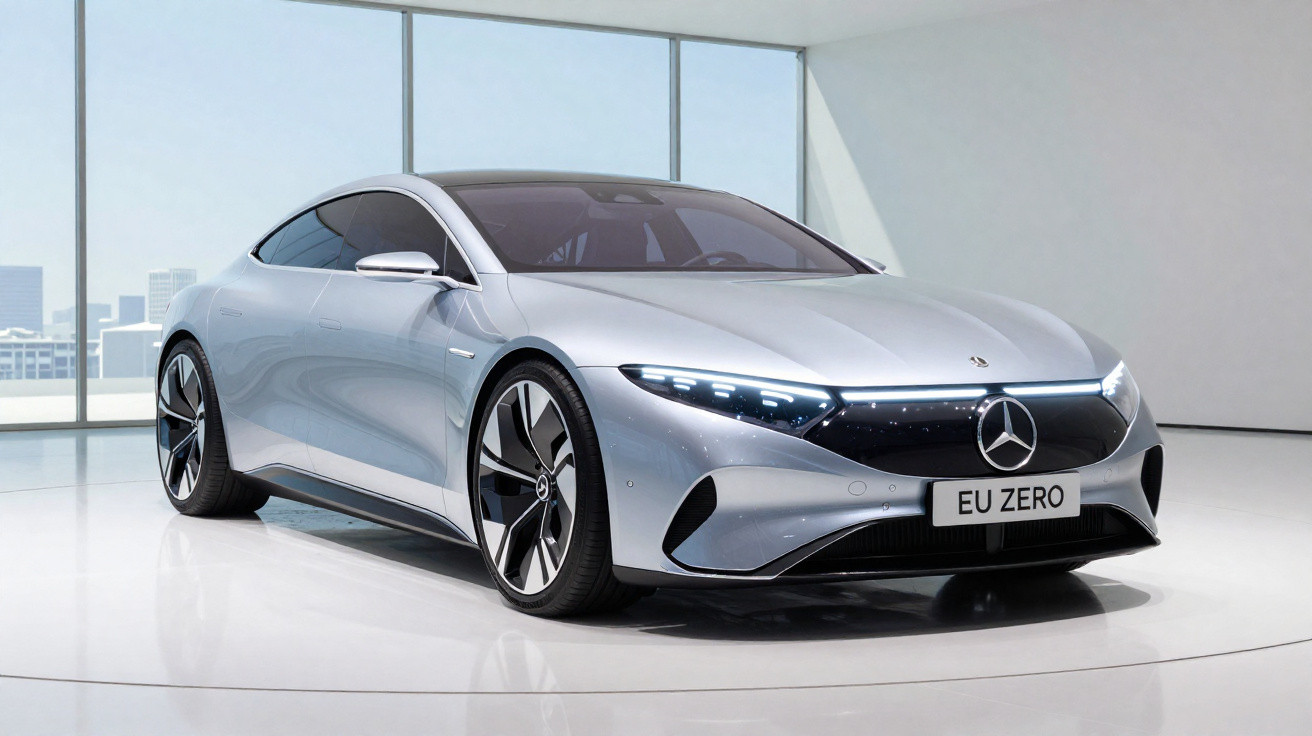
The European Commission’s decision to change its carbon dioxide (CO2) emissions reduction target for 2035 from 100% to 90% should be reconsidered, according to ACEA (the European Automobile Manufacturers’ Association). The organisation is currently chaired by Ola Källenius, who is also Chief Executive of the Mercedes-Benz Group.
Källenius argues that, even though the revised target appears to allow continued sales of cars with internal combustion engines, it still requires the CO2 emitted to be offset. In practice, that offsetting would rely on measures such as synthetic fuels, sustainable biofuels, or the use of low-carbon steel produced in Europe.
Compensation mechanisms and the risk of a “hidden” 100%
Speaking to journalists in Brussels, the ACEA President said these mechanisms could turn a 90% reduction into a “hidden” 100% reduction. In Källenius’s view, the proposed compensation system effectively reinstates the 100% requirement.
“Even with the proposed compensation mechanisms (…), the Commission’s proposal for 2035 keeps a 100% emissions reduction as the compliance threshold to avoid penalties”.
ACEA statement
He warned that, if implemented as currently set out, these measures could end up distorting the European new-car market and risk triggering a collapse in demand. He also cautioned that regulators could undermine the automotive sector’s economic foundations by pushing through an overly hurried transition to decarbonisation.
More flexibility
For Källenius, European regulators should look at broader emissions-reduction tools, including solutions for the roughly 250 million vehicles already on Europe’s roads. One of the options he highlighted is a growing role for synthetic fuels, which are carbon-neutral.
He also asked for more time for manufacturers to adjust to the new targets. At present, the European Commission foresees a compliance period calculated as a three-year average (between 2025 and 2027), but Källenius says this should be extended to five years.
“Not debating whether we move towards decarbonisation and electrification. We are debating how to get there”, he concluded.
“Made in Europe” under the Industrial Accelerator Act
On the “Made in Europe” initiative presented this week under the Industrial Accelerator Act (IAA), he said he supports the aim of strengthening European industry, while warning that the rules currently on the table are excessively complex.
Other reactions
Criticism of the EU’s new approach to emissions targets has also emerged in Portugal. At ACAP’s annual results meeting, Pedro Lazarino, the association’s Vice-President and Stellantis’s Managing Director in Portugal, said the message delivered to the market had been contradictory.



Comments
No comments yet. Be the first to comment!
Leave a Comment