
The Bigster marks a string of firsts for Dacia. It is the biggest model the Romanian brand has ever produced, it is the first Dacia aimed at the C-segment, and it is the vehicle selected to introduce Renault Group’s new hybrid system.
Bigster pricing and the Dacia approach
Even with those milestones, it still holds on to what defines the brand. The Bigster comes in at a genuinely aggressive price point, starting from 24 550 euros. And even with the hybrid powertrain - which sits at the top of this SUV’s range - it remains under 30,000 euros.
We recently drove Dacia’s largest model specifically in this hybrid version, and we were taken aback by what this SUV can deliver. You can watch (or rewatch) that test here:
With that in mind, the Bigster is not short of selling points, and it shows: the model’s commercial launch in Europe has got off to a strong start. What fewer people realise, though, is that Dacia’s new SUV will also be sold in other parts of the world wearing a Renault badge.
Renault Boreal vs Dacia Bigster: design and cabin upgrades
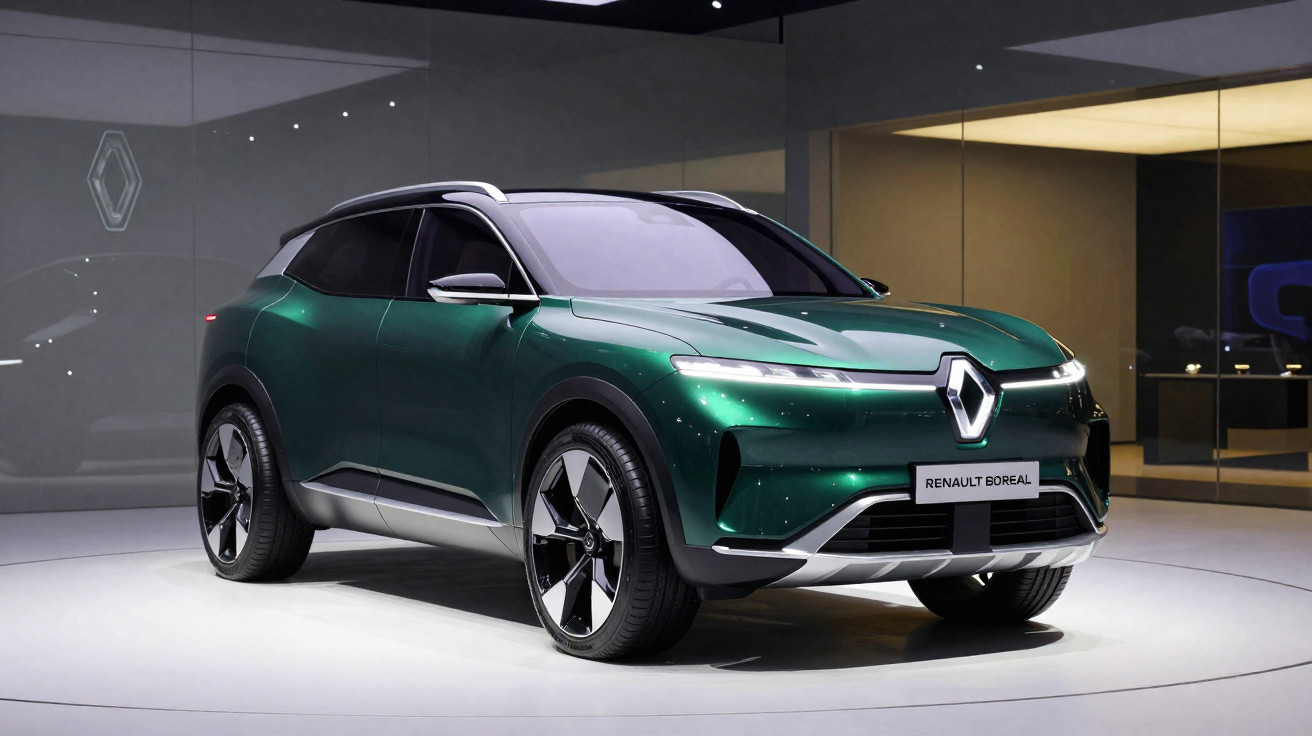
The Renault Boreal is, in essence, a more upmarket-looking take on the Dacia Bigster. It features a more sophisticated front end, a more contemporary lighting signature, and a cabin with higher-quality finishes, including ambient interior lighting and a Google-based infotainment system.
Even so, many of the key elements remain. There is still a panoramic roof, 19-inch wheels, plastic body cladding around the exterior, and a substantial centre console - exactly as on the Bigster. What changes is the overall “look”, inside and out: it comes across as more modern and less adventure-focused.
Only one engine - for now
A further major difference is found under the bonnet: hybrid systems, for example, are not on offer at all. The Renault Boreal is available solely with a 1.3 turbo engine paired with a six-speed automatic gearbox, with output depending on the market.
In Brazil, for instance, it can produce 156 hp or 163 hp when running on so-called Flex Fuel, which combines petrol with ethanol. In Turkey, that same engine is limited to 138 hp.
However, Renault itself is already signalling that the model could be offered in other markets with different types of powertrain. For the moment, though, no other Boreal variants have been announced, and it will be built in Brazil and Turkey.
The Renault Boreal will launch in Brazil closer to the end of the year. Its rollout in the remaining markets - it will be sold in 17 South American countries and in 54 markets across Eastern Europe and the Middle East - is only scheduled for 2026.
Comments
No comments yet. Be the first to comment!
Leave a Comment