
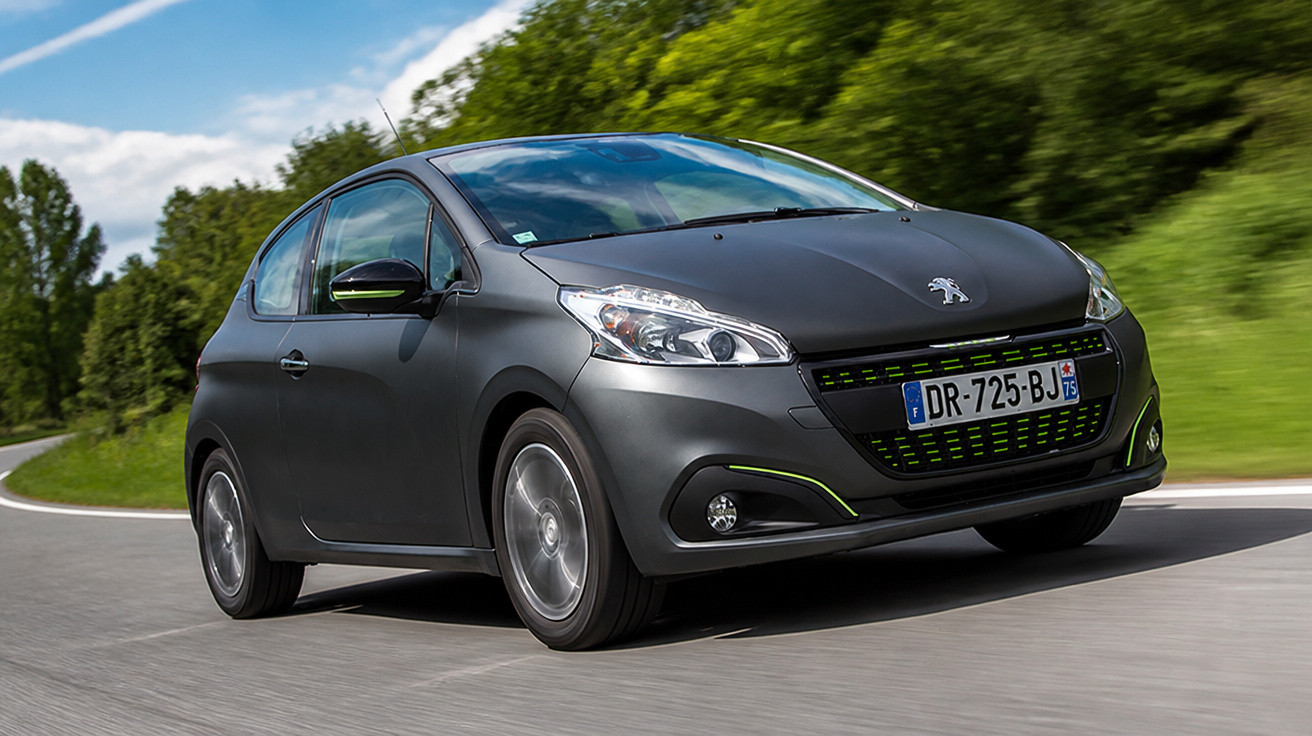
The Peugeot 208 facelift in brief
Peugeot has given the 208 - its best-selling model and direct rival to the Ford Fiesta - a mid-life update.
So what’s changed? A fair bit, with the most noticeable tweak being a redesigned front end that looks a touch crisper. There’s also a revised engine range, and the carry-over units have been reworked to cut emissions and improve efficiency - the usual facelift fare.
Engines and performance in the Peugeot 208
Petrol: what’s the line-up now? A new 109bhp version of Peugeot’s familiar 1.2-litre three-cylinder petrol takes over from the 81bhp unit as the most powerful non-GTI petrol option. Paired with the standard five-speed manual gearbox, it’s quoted at 0–62mph in 9.6 seconds (0–100km/h in 9.6 seconds) and a 118mph top speed (190km/h).
And the diesels? We also drove the 118bhp 1.6-litre diesel, which has an official combined figure of 78.5mpg (around 3.6L/100km). Even so, it isn’t the thrift champ in the 208 range: Peugeot says the 74bhp 1.6-litre can manage 94.2mpg (around 3.0L/100km).
Against the petrol, the 118bhp diesel trims a couple of tenths from the 0–62mph time, while matching the same 118mph top speed (190km/h). It’s also the quickest 208 available without stepping up to a GTI.
What about the GTI? Actually, there are GTIs. Quietly, Peugeot has introduced a new flagship that sits above the standard 208 GTI. It’s called the 208 GTI By Peugeot Sport, and it’s essentially the old 208 GTI 30th Edition minus the commemorative plaque: same differential, same power, same lot. If you’ve only just bought a 208 30th Edition, unlucky.
Driving, cabin and costs
How does it drive? We didn’t get to drive the GTI - not allowed. Sorry. In regular form, the 208 feels much as it always has: it isn’t naturally entertaining because the set-up is on the soft side, so the strong flexibility of the larger diesel suits its character best.
That doesn’t mean the petrol is a poor choice. It’s refined, easy-going and quick enough for everyday traffic, but pressing on doesn’t deliver much enjoyment. The five-speed ‘box feels loose and vague, and the engine isn’t as rewarding to work hard as Ford’s small EcoBoost.
And, again like the EcoBoost, real-world economy won’t come close to the official claims. Expect figures in the mid-40s mpg. Peugeot’s petrol engines are improving, but they’re not quite there yet - and dynamically, the 208 remains merely decent rather than class-leading.
Anything else new? There’s a textured paint option. Spend a few hundred quid and you can have your supermini finished in a divisive satin/matte shade. Peugeot says it invested four years developing the process, yet expects only two or three per cent of buyers to tick the box - perhaps because it doesn’t do much beyond looking less glossy than standard paint.
What’s it like inside? Largely unchanged. It remains reasonably comfortable, but still manages to irritate.
If you’re tall, you’ll still find yourself dropping the tiny steering wheel oddly low just to see the instruments properly, the driver’s seat won’t go down far enough, and the infotainment is just as frustrating as ever to set up while on the move.
When can I buy one, and what does it cost? It’s on sale now. Pricing starts at £11,695 for a version you won’t want, rising to £21,995 for one you might.
Comments
No comments yet. Be the first to comment!
Leave a Comment