
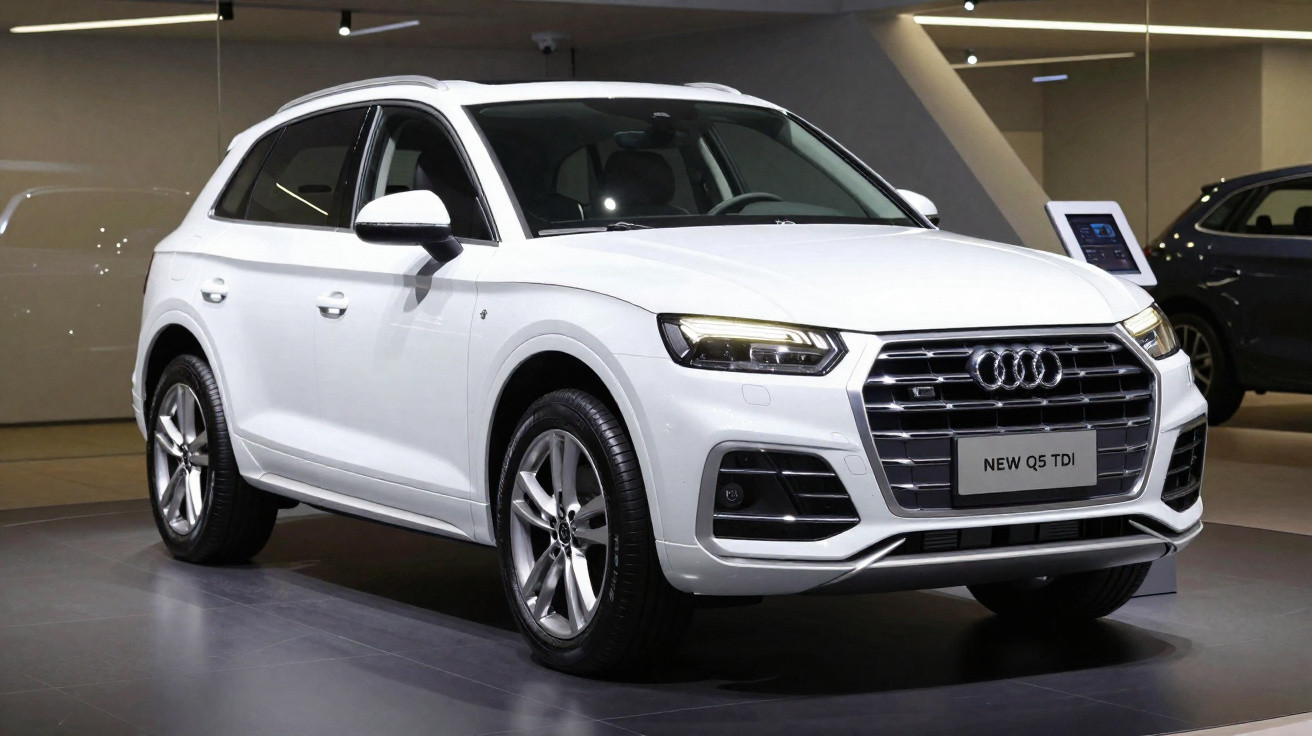
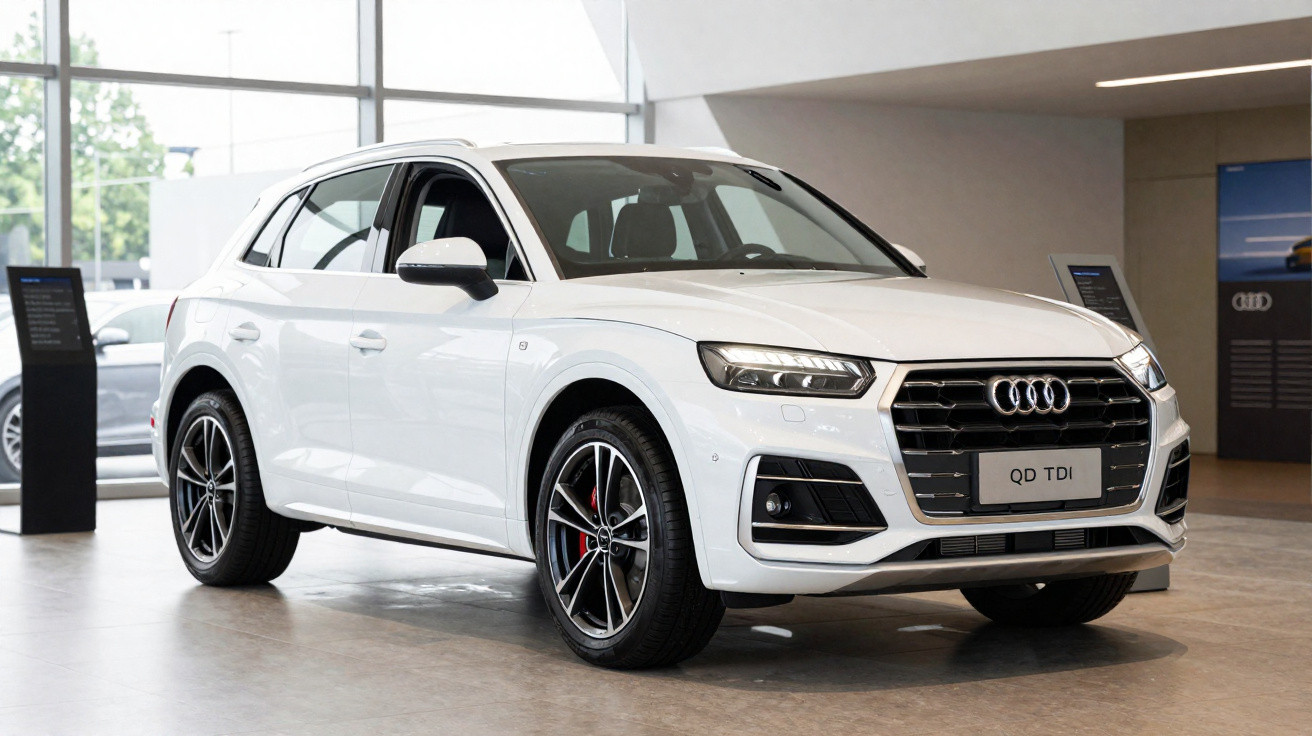
You can feel the weight of responsibility on the new Audi Q5 - after all, it’s Audi’s best-selling model worldwide.
Following the recently introduced A5, the third-generation Audi Q5 becomes the German brand’s second model to sit on the new PPC (Premium Platform Combustion) architecture. This platform is paired with the latest electronic system used by the four-ring brand and is always delivered with some form of electrification - mild-hybrid from launch, with plug-in hybrid versions to follow later.
Given where demand stands today, Audi appears to have made the right call by extending the lifespan of its combustion-engined range - particularly for the Q5 SUV, which has been a sales success ever since it first arrived in 2009.
In total, 1,6 million units of the first generation were registered, and around 1,1 million of the second generation introduced in 2017. That second iteration was also the first to gain the Sportback body style (with a coupé-like, arcing roofline).
This new generation grows by 35 mm in length (4717 mm), while the other dimensions change by no more than a centimetre. The styling, however, is more noticeably different: sharper and more assertive at the front, and more organic overall, clearly following the design direction seen on the new A5.
Up to three sophisticated screens in the Audi Q5
Inside the new Audi Q5, the changes are even more apparent, with larger displays and a higher count - up to three screens in total.
All of them use OLED technology. The driver’s instrument display measures 11,9”, the curved central infotainment screen is 14,5”, and an optional third 10,9″ screen sits directly in front of the front passenger.
Material choices and fit-and-finish in the new Q5 remain at Audi’s typically high level, with soft-touch surfaces across the dashboard and door panels. That said, the extensive gloss-black area on the centre console is less appealing, as it quickly becomes covered in fingerprints.
The configurable ambient lighting and the upgraded head-up display - improved both in the amount of information shown and with an 85% larger projection area - further enhance comfort and wellbeing on board.
Space for everything, but…
Rear-seat room is generous for two adults up to 1,90 m tall - I’m 1,80 m and still had four fingers of headroom and eight fingers of legroom.
A third passenger in the middle will have to “live” with the substantial centre tunnel, which is both tall and wide, making it uncomfortable; their seat is also narrower and firmer. In the Audi Q5 Sportback, headroom is slightly reduced (just over one finger less).
There are direct rear air vents with digital temperature control, and the outer rear seats also feature heating. Because the second-row seats are positioned higher than the front seats, passengers in the back benefit from a theatre-style, amphitheatre effect - something those travelling behind tend to appreciate.
Boot capacity is 520 l for the Audi Q5 SUV and 515 l for the Sportback. That matches the previous generation, yet key rivals do better: the BMW X3 offers 570 litres and the Mercedes-Benz GLC reaches 600 litres.
Even so, the Q5 wins back ground because the loading floor sits lower than before, which makes it easier to load and unload heavier items. What’s more, if you choose air suspension, you can lower the boot floor by a further 50 mm using a control located in the luggage compartment.
Finally, the parcel shelf can now be stowed beneath the boot floor, where there is also a small-item compartment - although the mild-hybrid system battery takes up most of that space.
Driving the “old faithful” TDI
For this first dynamic drive of the Audi Q5, the chosen powertrain was the Diesel option, as it’s expected to be the most in demand in our market.
The first major impression, though, comes from the steering. It is progressive as standard and, while relatively light, it feels extremely accurate and direct (just 2,2 turns lock-to-lock).
The 2.0 TDI’s response (204 cv) becomes more eager from 1750 rpm, where full torque arrives (400 Nm). That torque holds through to above 3000 rpm, with a noticeable drop in urgency from 4000 rpm onwards.
Either way, performance is strong, both in in-gear acceleration (helped by the high torque, the gearbox’s kickdown function and extra torque from the small electric motor) and in outright acceleration (7,4s from 0 to 100 km/h and a quoted 226 km/h top speed).
The seven-speed dual-clutch automatic adapts its behaviour to the selected drive mode - unlike the accelerator mapping. If you enjoy changing gears yourself, the steering wheel also comes with two paddles for “manual” shifts.
Well behaved
The balance between comfort and stability is hard to fault, especially in this version equipped with air suspension. It stays compliant over poor surfaces while remaining stable enough when you drive it in the way a diesel SUV is intended to be driven (the 20″ wheels play their part).
Braking hardware consists of ventilated discs on all four wheels, and they consistently delivered an immediate, linear response.
At the end of a 107-kilometre route, the Audi Q5 SUV 2.0 TDI quattro returned an average of 8,8 l/100 km - almost three litres above the officially approved figure. However, that result is partly explained by the more demanding pace typical of a dynamic driving test.
Higher than you’d like
At the start of Audi Q5 sales, three powertrains are available: a 2.0 TFSI with 204 cv and 340 Nm, with either front-wheel drive or quattro (all-wheel drive); a 2.0 TDI with 204 cv and 400 Nm (only offered as quattro); and the SQ5, currently the range-topper, using a three-litre V6 producing 367 cv and 550 Nm.
In a few months, the line-up will expand with two plug-in hybrid versions, featuring a 25,7 kWh battery and an electric-only range close to 100 km.
On pricing, the entry point for the new Audi Q5 2.0 TDI quattro is 75 677 euros. If you choose the more sporting-looking Sportback body, the starting price rises to 79 683 euros.
It’s a steep figure, but in line with the main competitors, such as the BMW X3 and the Mercedes-Benz GLC. And, as is typical for this class, the lengthy options list is likely to push the price into even less reasonable territory.
Comments
No comments yet. Be the first to comment!
Leave a Comment