
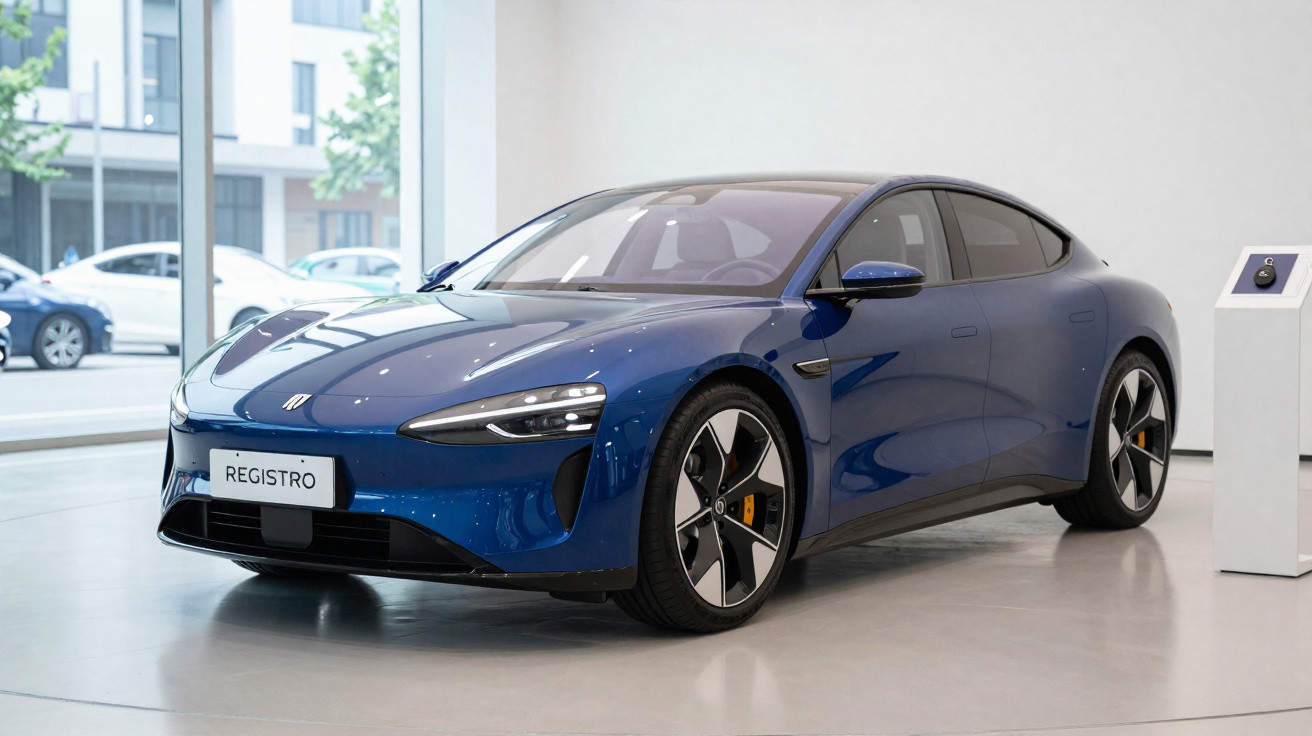
Anyone who has never driven a car registered in someone else’s name can “cast the first stone”. Whether it was your dad’s car, a sibling’s, or even a friend’s, most of us have done it at some point.
Even so, is it actually allowed? What happens if you are stopped at a roadside police check? If a speed camera catches you speeding, who loses licence points and who pays the fine? And if there is an accident, who is responsible?
So there are no doubts on the subject, the next sections answer each of these questions.
Is it prohibited?
Starting with the simplest (and also the most important) question: the answer is straightforward - no, it is not prohibited to drive a car registered in another person’s name.
In fact, not only is it lawful to drive a car that is not registered in your name, but the policyholder on the insurance does not have to be the vehicle’s owner either.
That said, the topic of driving a car registered in someone else’s name does not end there.
If I get fined, who pays?
In general, when any rule in the Road Traffic Code is broken, responsibility falls on the driver.
However, it is not always possible to identify who was driving - for example, when a speed camera records an excess-speed offence. In situations like these, responsibility shifts to the vehicle’s owner.
The Road Traffic Code is clear: the holder of the vehicle identification document, or the lessee, is secondarily liable for paying the fines and any related costs owed by the person who committed the administrative offence, without prejudice to their right of recourse against that person where there has been abusive use of the vehicle.
In other words, for the owner not to be treated as responsible for the fine, it is up to them to prove “that the driver used it abusively or breached the orders, instructions or the terms of the authorisation granted”.
Still within this topic, Article 135 of the Road Traffic Code states that liability for offences falls on:
- The driver of the vehicle, for offences connected with the act of driving;
- The holder of the vehicle identification document, for offences relating to the conditions under which the vehicle is permitted to circulate on public roads, as well as for the offences mentioned in the previous point when it is not possible to identify the driver;
- The lessee, in the case of operational vehicle hire, long-term rental or financial leasing, for the offences referred to in point (a) when it is not possible to identify the driver;
- The pedestrian, for offences relating to pedestrian traffic.
There is more: if the owner allows the car to be used by someone without a legal driving entitlement, under the influence of alcohol or drugs, or subject to any form of “reduction in the physical or mental faculties necessary for driving”, then responsibility for the offences lies with the car’s owner.
What about insurance?
Naturally, if you are allowed to drive a car that is not registered in your name, the insurance can also be in someone else’s name.
Even so, this point deserves attention. Although the policy remains valid, if there is another regular driver of the vehicle, it is sensible to inform the insurer.
Why? Quite simply, to reduce the risk that, if there is an accident, the insurer may try to refuse liability on the grounds that someone else was driving.
If it is shown that, at the time of the accident, the car’s regular driver is not the person named on the policy, the insurer may decline responsibility.
What if you sell the car?
This is the final scenario in which you may be driving a car that is (still) registered in someone else’s name.
When a car is bought or sold, it is possible to drive it while it remains registered to another person. However, you must not forget to transfer the registration of ownership as quickly as possible - and this must be done within 60 days from the date of purchase.





Comments
No comments yet. Be the first to comment!
Leave a Comment