
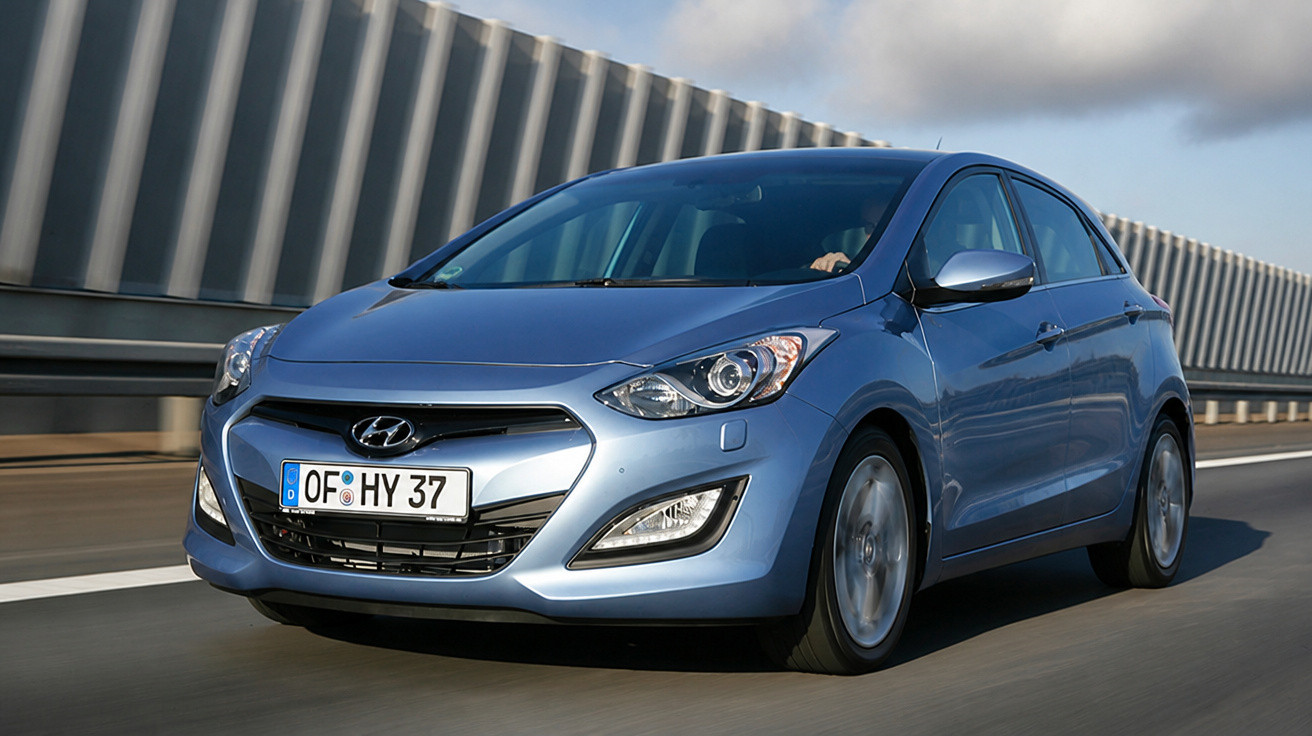
Early prototype impressions of the Hyundai i30
This was only a prototype, so I’m not going to make any sweeping claims. Still, after a short, early run in a near-production car, my hunch is that the new Hyundai i30 will turn out to be even more competitive than the i40 - and we’ve already said we quite like that one.
Hyundai is aiming the i30 straight at the centre of the Focus market - or, put another way, it’s taking a swing at cars such as the Honda Civic. One thing Hyundai continues to do brilliantly is keeping owners happy with strong reliability and a generous warranty. More recently, people have been just as pleased with how their Hyundais look and the way they drive, which is why the brand has been putting in genuinely outstanding performances in customer satisfaction surveys - the sort of tables that used to be dominated by the Japanese.
If drivers were fond of their old i30s, this new one is likely to feel like a big step up.
Of course, that isn’t really the whole story. Being more handsome and better to drive than the previous Hyundai i30 is one thing; what really counts is whether it can edge up towards the true best-in-class.
On the road: 128bhp diesel, steering and economy
One highlight is a quiet, free-revving 128bhp diesel that actually comes in under the 100g/km CO2 threshold. The result is a mean fuel-economy figure paired with perfectly acceptable performance.
The manual gearbox feels accurate and positive. The steering is similarly tidy, with decent progression and sensible weighting. You can alter the steering weight, although there’s little reason to bother because the different settings are much the same. The downside is that the wheel doesn’t communicate much about available grip.
Cabin ergonomics and small design touches
The driving position is a real strength. It’s the sort of car you simply get into and drive: the seats fall naturally into the right place, and their shape feels spot-on - neither too soft nor too firm. In plenty of rivals, I find myself constantly adjusting the seat in search of comfort that never quite arrives. The i30 nails the fundamentals.
Once you look beyond the basics, there are pleasing details: crisply defined exterior panel lines, plus a dashboard that’s thoughtfully finished and nicely illuminated.
Refinement is strong, too. The car rides quietly, although I should add that I spent most of the time with four people on board - and in almost any car that load can help settle the ride at gentle speeds. On the motorway it stayed calm and largely unruffled, which is notable because early cars often suffer from lots of wind noise. That said, it was a busy day and I never found enough clear road to go beyond 80 mph (about 130 km/h).
A limited drive, but few obvious flaws
So no, this wasn’t a proper, exhaustive road-test-style assessment. It was a brief drive of a near-production prototype: no tyre-squealing cornering, no full-throttle acceleration. Just everyday motoring, driven as people typically do - and used that way, it was remarkably difficult to find much to criticise.
Prices still to be confirmed
The one big unknown is the price, which hasn’t been announced yet because, as I write, the car is still four months from going on sale. We’re hearing Hyundai insiders talk about “leading with the chin” on pricing. They should tread carefully: a Hyundai that’s unexpectedly expensive is a poor idea, because Hyundai is meant to deliver pleasant surprises.
Comments
No comments yet. Be the first to comment!
Leave a Comment