
Most motorists beyond North America still hesitate to describe it as a “car”, yet it continues to surge up the sales rankings year after year - forcing the motor industry to rethink what a genuine best‑seller looks like.
How a work truck became Ford’s global sales champion
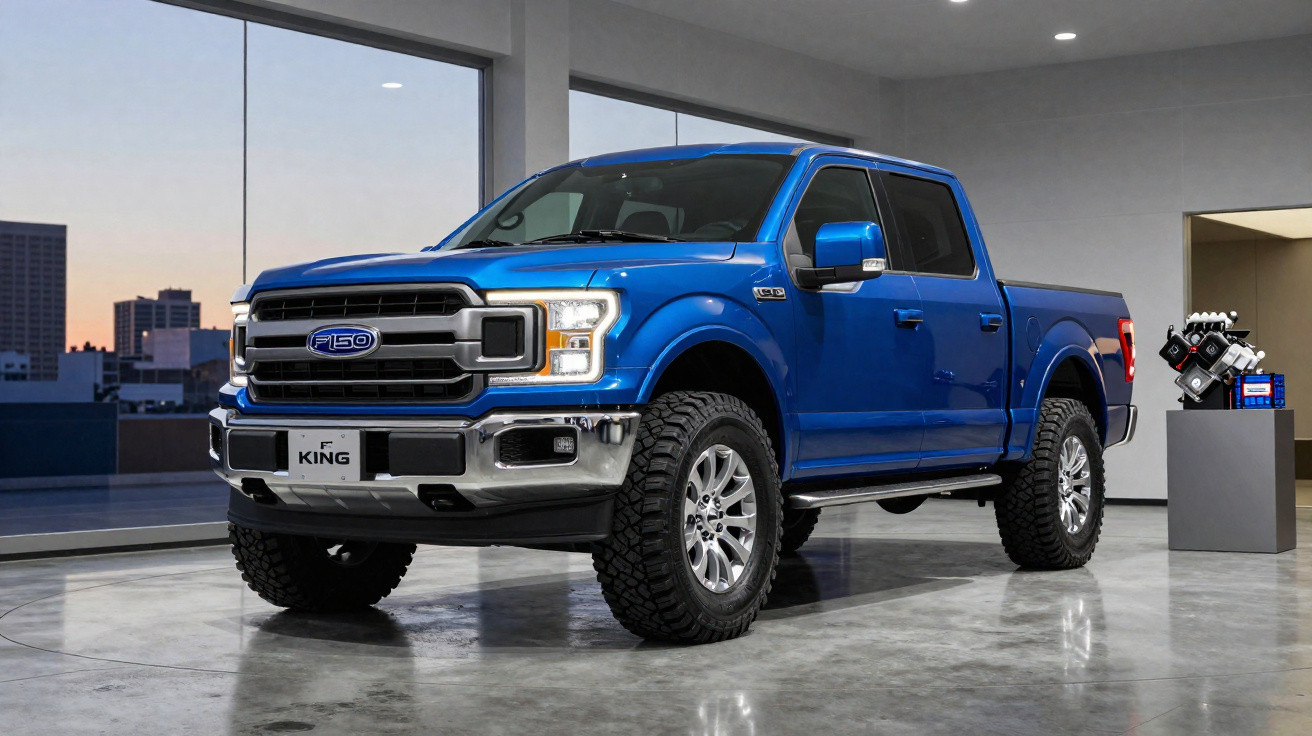
In 2025, the Ford F‑150 - and, more widely, the F‑Series range - is once again set to secure the title of the best‑selling vehicle in the United States. That same achievement also positions it as Ford’s best‑selling model worldwide for the 49th time. Not a small hatchback. Not a crossover. A full‑size pickup.
Describing the F‑150 as a “car” feels odd once you consider the physical reality. In its shortest configuration, it measures roughly 5.80 metres from end to end. Even in basic form, it tips the scales at more than two tonnes. Move up the range to higher specifications - with plush cabins, larger cabs and off‑road packages - and the weight climbs well beyond that.
The world’s top‑selling Ford is not a small hybrid or an affordable city car, but a body‑on‑frame pickup that can tow several tonnes.
In American reporting, vehicles like these are still filed under “light vehicles”, grouped alongside family saloons and compact SUVs. Within the US industry, though, the more revealing label is simply “trucks”. For Ford, General Motors and Stellantis, full‑size pickups sit in a separate universe - one with profit margins and customer loyalty that most mainstream cars can only dream of.
Eight times more than a Renault Clio: the shock of the numbers
From a European viewpoint, the F‑Series’ scale can seem almost implausible. Ford is forecasting at least 800,000 F‑Series sales for 2025 once the final totals are confirmed. The precise figure may shift slightly, but the overall magnitude won’t.
Set that against France’s long‑time favourite, the Renault Clio. The supermini is likely to finish the year at around 100,000 registrations. Put another way, Ford sells roughly eight F‑Series trucks in North America for every Clio registered in its domestic market.
Across Europe as a whole, the leading model - the Volkswagen T‑Roc SUV - is expected to only just clear 200,000 units. That is a strong result for its class, yet it remains far removed from F‑Series volumes.
A single US pickup nameplate sells more units in a year than many entire brands manage with their full European line‑up.
This is exactly why US manufacturers defend their pickup operations so aggressively. The income from trucks underwrites expensive development work, from electric platforms to advanced driver assistance systems. It also subsidises lower‑margin models that exist largely for image building or to satisfy regulation.
Ford’s big-engine bet: V8s refuse to die
While some competitors steadily move away from large‑capacity engines, Ford has taken a more mixed approach. Over the last decade, it poured investment into smaller, turbocharged six‑cylinder units, even installing its EcoBoost V6 in flagship models such as the Ford GT. In the heavy‑duty arena, however, the picture is starkly different.
Ford’s Super Duty trucks rely on truly substantial mechanicals. Leading the line is the 7.3‑litre pushrod V8 known as “Godzilla” - a cast‑iron workhorse built around low‑down torque, durability and straightforward engineering rather than attention‑grabbing horsepower headlines. For owners hauling large trailers, horseboxes or jobsite equipment, that design still has real logic.
Alongside it sits a sizeable diesel offering: a 6.7‑litre V8 aimed at buyers who prioritise torque output and long driving range above all else. These powertrains may be occupying an ever‑smaller slice of the global market, but in rural parts of the US and across construction fleets they remain everyday tools, not nostalgic indulgences.
While Europe tightens emissions rules around every gram of CO₂, Ford still sells petrol and diesel V8s that can drag entire building sites behind them.
Where the electric F‑150 Lightning went wrong
The F‑150’s wider success also obscures a notable stumble: the F‑150 Lightning, Ford’s all‑electric take on its bestseller, lost momentum after an initially strong launch. Early demand was intense, reservations piled up, and waiting lists formed as the model arrived amid huge publicity as a marker of Detroit’s electric direction.
Then the market reality proved less forgiving. Expensive pricing, worries about towing range, patchy public charging in rural regions and quickly changing EV incentives all dulled demand. Retailers began to talk of unsold inventory. Output targets were cut. Ford stepped back quietly, and in several specifications the electric F‑150 now reads more like a technology statement than a true high‑volume cornerstone.
That leaves the conventional F‑150 - and the broader F‑Series portfolio - to help compensate for the setback. Healthy pickup profits give Ford the space to revisit its EV plans, including cheaper vehicle architectures and plug‑in alternatives that fit US driving patterns more naturally.
Chevrolet, Ram and Toyota: the rivals chasing Ford’s shadow
Ford is not alone in the full‑size pickup arena. The Chevrolet Silverado is positioned as America’s second‑best‑selling vehicle, and it is again expected to close the year at roughly 550,000 sales. It shares much of its underlying engineering with the GMC Sierra, which is aimed at a more upmarket buyer with extra brightwork and plusher cabins.
Ram - now under Stellantis ownership - completes the Detroit trio. Its 1500 range puts the emphasis on refinement and interior execution, targeting private owners who use a pickup more like a family estate car than a work implement. Together, these large US pickups - along with Ford’s own F‑Series - account for a significant share of new‑vehicle demand in the United States.
Ford F‑150, Chevrolet Silverado, GMC Sierra and Ram together account for more than 15% of the entire US light‑vehicle market.
And that percentage doesn’t even include the Toyota Tundra, Nissan Titan or smaller fringe entrants. Even so, the category is overwhelmingly led by American brands - one of the few areas where Japanese and Korean manufacturers have not fully managed to unlock the formula.
Why the Toyota RAV4 still matters globally
Step back from the US market and the story changes. The Toyota RAV4 frequently ends the year as the world’s best‑selling passenger car when all countries are counted, largely because it is sold broadly across regions. North America, Europe, Asia and Australia all take their own versions of this compact SUV.
In the US on its own, the RAV4 does not reach F‑Series volumes, but its worldwide footprint delivers vast scale for Toyota. Hybrids represent a sizeable share of the line‑up, which supports Toyota as emissions rules tighten in many markets. Where the F‑150 rules one region through sheer capacity, the RAV4 steadily fills driveways across almost every continent.
Why Americans keep choosing full‑size pickups
To outsiders, the appeal can look illogical. Fuel costs are higher than they once were, roads and city streets are not expanding, and climate concerns grow more pressing each year. Even so, demand for large pickups continues to hold firm.
A number of factors stack up:
- Practicality: Large load beds, strong towing ratings and available four‑wheel drive fit building trades, agriculture and leisure use.
- Tax and regulatory rules: In the US, trucks are subject to different standards and can avoid some of the costs applied to cars and SUVs.
- Culture and image: For many owners, pickups serve as moving symbols of independence, toughness and rural identity.
- Comfort and tech: Today’s trucks can match premium SUVs with oversized screens, leather trim and advanced safety systems.
- Residual value: Consistent demand keeps used prices high, easing the impact of a big initial outlay.
For Ford, the challenge - and the skill - is extending the F‑150 template across very different audiences. Fleet customers still specify no‑nonsense trims with vinyl seating and steel wheels. Suburban households choose crew cabs, rich infotainment and panoramic roofs. Off‑road buyers gravitate towards Raptor‑style versions, with aggressive tyres and long‑travel suspension.
What this dominance means for the future of Ford
Depending so heavily on a single product family offers both reassurance and exposure. So long as the US pickup market stays robust, Ford benefits from a dependable profit machine that can fund riskier moves, from EV programmes to software‑driven services. But if policy, fuel prices or urban regulation change structurally, the impact would hit Ford at its most sensitive point.
That is why Ford is now trying to balance multiple directions: maintaining the high‑margin V8 and twin‑turbo variants customers want, while expanding hybrids and trialling electric or plug‑in solutions that cut fleet emissions. The F‑150 hybrid already appeals to drivers seeking big‑truck ability without entirely disregarding fuel costs.
| Model | Main market | Typical annual sales (approx.) | Powertrain focus |
|---|---|---|---|
| Ford F‑Series | North America | 800,000+ | Petrol V6/V8, diesel V8, hybrid |
| Chevrolet Silverado | North America | 550,000 | Petrol V8, diesel, some mild‑hybrids |
| Toyota RAV4 | Global | 800,000–1,000,000 | Petrol, full hybrid, plug‑in hybrid |
| Renault Clio | Europe | 100,000 | Petrol, mild‑hybrid |
Key questions for buyers and regulators
For US consumers, the F‑150’s dominance prompts a straightforward dilemma: do they genuinely require so much truck? Someone towing a heavy trailer monthly or working in a trade may well say yes. A city commuter who rarely leaves tarmac might soon face higher taxes, tighter parking rules or shifting social attitudes that make a huge pickup harder to defend.
For policymakers, the trade‑offs look different. Trucks such as the F‑150 support jobs, generate tax income and sustain extensive supplier networks. At the same time, they are heavier, taller and more energy‑hungry than smaller cars. Cities are concerned about pedestrian safety and road wear. Climate policy pushes manufacturers towards electrification, yet many US truck buyers remain sceptical of range claims once heavy loads come into play.
Over the next decade, the shift is likely to be slower and more complicated than the clean break many EV proponents once envisaged. Battery‑electric pickups aimed at fleets and suburban owners with home charging will sit alongside hybrids, petrol‑powered work trucks and niche high‑performance V8 models.
And as that transition plays out, Ford’s steel heavyweight seems poised to stay on top. So long as several hundred thousand customers each year still want a ladder frame, a large engine and a tailgate broad enough for building supplies, the world’s best‑selling Ford will remain less a car and more a mobile piece of American infrastructure.
Comments
No comments yet. Be the first to comment!
Leave a Comment