
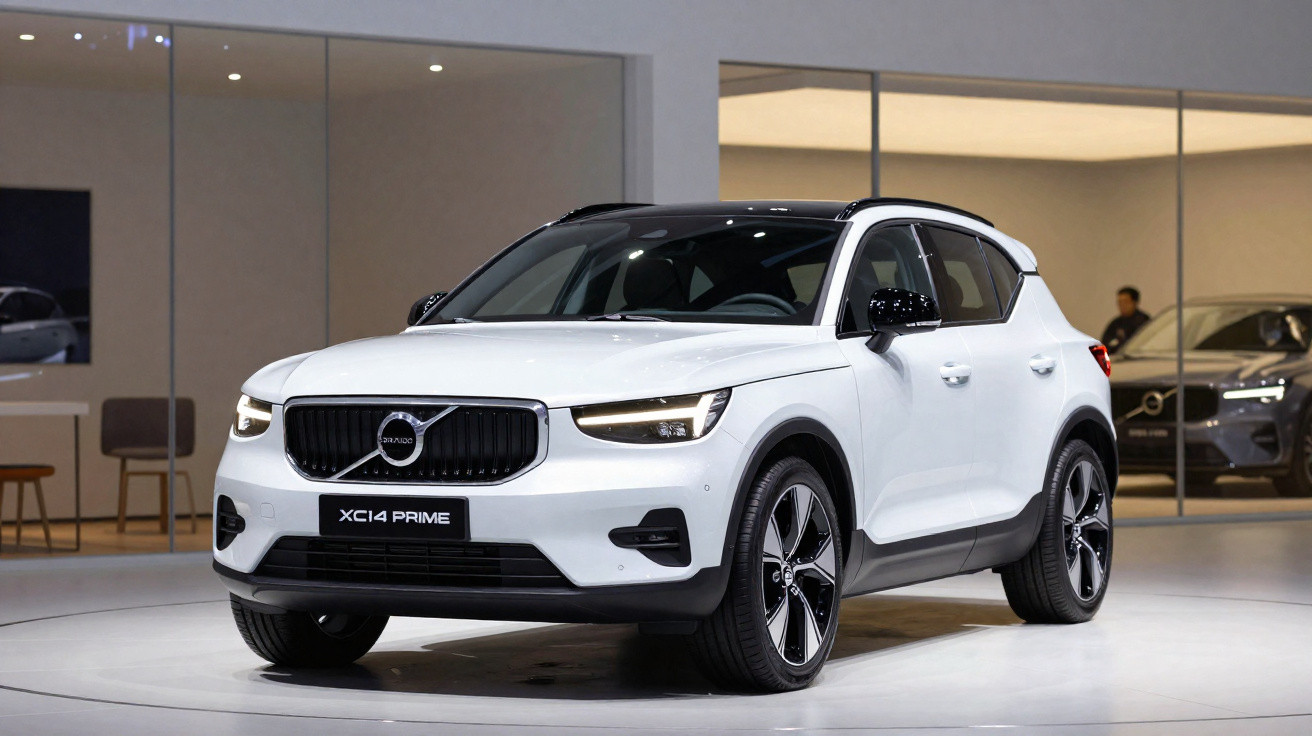
Age hasn’t weighed on the Volvo XC40. Loads of style, several engines and plenty of choice on the used market.
The Volvo XC40 is a rare example in the compact SUV class. It has matured gracefully without having to reinvent its recipe every couple of years.
Since its 2017 launch, it has established itself as one of the most well-rounded models in the compact premium segment: the right footprint for city driving without compromising stability on longer journeys, a strong image, a well-finished cabin, and a safety reputation that’s hard to match.
It remains one of the most in-demand options, whether bought brand new as a “zero-mile” car or through approved used programmes. At this link you’ll find more than a hundred options:
Do the maths and the used Volvo XC40 has become a regular pick for anyone wanting to “move up a segment” without “blowing” the budget.
Across the line-up there are engines to suit most tastes - and needs - but one version makes more sense than the rest. We’ll come back to that shortly.
Exterior
The XC40 has always leaned more towards clean, rational design than outright flashiness, and that works in its favour as a used buy. The styling is tough, well proportioned and unmistakably Volvo, with the “Thor’s Hammer” daytime running lights giving it a clear identity even on entry-level trims.
Over its life, changes have been subtle rather than full-blown facelifts. The most noticeable updates arrived from 2022 onwards, bringing a redesigned grille, new headlamps and slightly revised bumpers, aligning the look more closely with the brand’s electric models.
There’s never been a stark visual split between “before” and “after”, which helps earlier cars avoid looking old. When buying used, pay close attention to paint condition and headlamps, particularly on cars that have lived in busy urban environments. Even so, the XC40 continues to hold its value well.
Interior
It’s inside where the XC40 most convincingly earns its price tag, especially on the used market. Even after many thousands of miles, it typically still feels premium, thanks to good materials, solid build quality and straightforward, intuitive ergonomics.
The biggest step change comes with the development of the infotainment. Early cars use the Sensus system, which is simple, dependable and easy to live with.
Later on, the XC40 moved to an Android Automotive-based setup that’s quicker and more modern, with built-in Google Maps and Google services - a strong selling point in today’s market.
For space, it isn’t the roomiest in the segment, but it’s above average and perfectly adequate for normal family use. The boot does the job, and the abundance of storage compartments remains one of the car’s nicest surprises.
Driving
The XC40 never tried to be a sporty SUV - which is no bad thing for anyone shopping for a family car. The driving experience prioritises comfort, stability and predictability, with a set-up clearly tuned for everyday use. It won’t excite, but it does everything competently.
In the petrol range, the T3 (156 hp or 163 hp) stands out as the best all-rounder. Over the years you’ll see cars with slightly different quoted outputs (depending on model year and type approval), yet the core character stays consistent: enough shove, smooth operation and performance that suits the car’s weight and positioning.
The automatic gearbox is a key part of the appeal. Around town it makes the XC40 far easier to live with; on faster roads it delivers the smoothness that matches the car’s relaxed nature. The manual is fine, but it isn’t the sweet spot. Ultimately, it comes down to the numbers.
Price
In the Portuguese used market, the Volvo XC40 T3 generally sits between €21,000 and €29,000, mainly depending on year, mileage, gearbox and equipment level.
The most appealing cars - automatic, well specced and with a clear history - usually land in the upper half of that bracket. It isn’t a cheap used car, but it also isn’t an SUV that sheds value quickly. On the contrary: demand remains high, and asking prices reflect that.
Running costs
Servicing costs for the XC40 T3 are in line with the segment, but it’s worth remembering this is a compact premium SUV. Consumables, brakes and tyres typically cost more than on an equivalent mainstream model.
So you know what to expect, we’ve brought together the cost of the main components for the Volvo XC40 in T3 form:
In the event of an accident or breakdown, some parts - particularly LED lighting units and body panels - can be expensive. Listen out for suspension noises, especially on higher-mileage examples, as these can point to significant repair bills in the near term.
A thorough pre-purchase inspection, or choosing a used car with a warranty, can make all the difference. Here you’ll find more than 100 cars available under those conditions.
Overall, it isn’t a model known for major chronic issues, particularly in petrol and 100% electric versions, provided maintenance is carried out rigorously.
Our pick: Volvo XC40 T3 automatic
Within the range, the decision is straightforward: a Volvo XC40 T3 automatic, ideally post-2020 and, budget permitting, with the newer infotainment system. It isn’t the fastest or the most economical in its class, but it delivers the best balance of comfort, real-world usability, image and long-term peace of mind.
If you have somewhere to charge at home or at work, don’t rule out the 100% electric versions. They are widely regarded as dependable, often surpassing 250,000 kilometres with only marginal degradation versus the claimed range.
In this report provided by the consultancy MotorCV / Piscapisca.pt, you can access the most relevant information about this model in the Portuguese market:


Comments
No comments yet. Be the first to comment!
Leave a Comment