
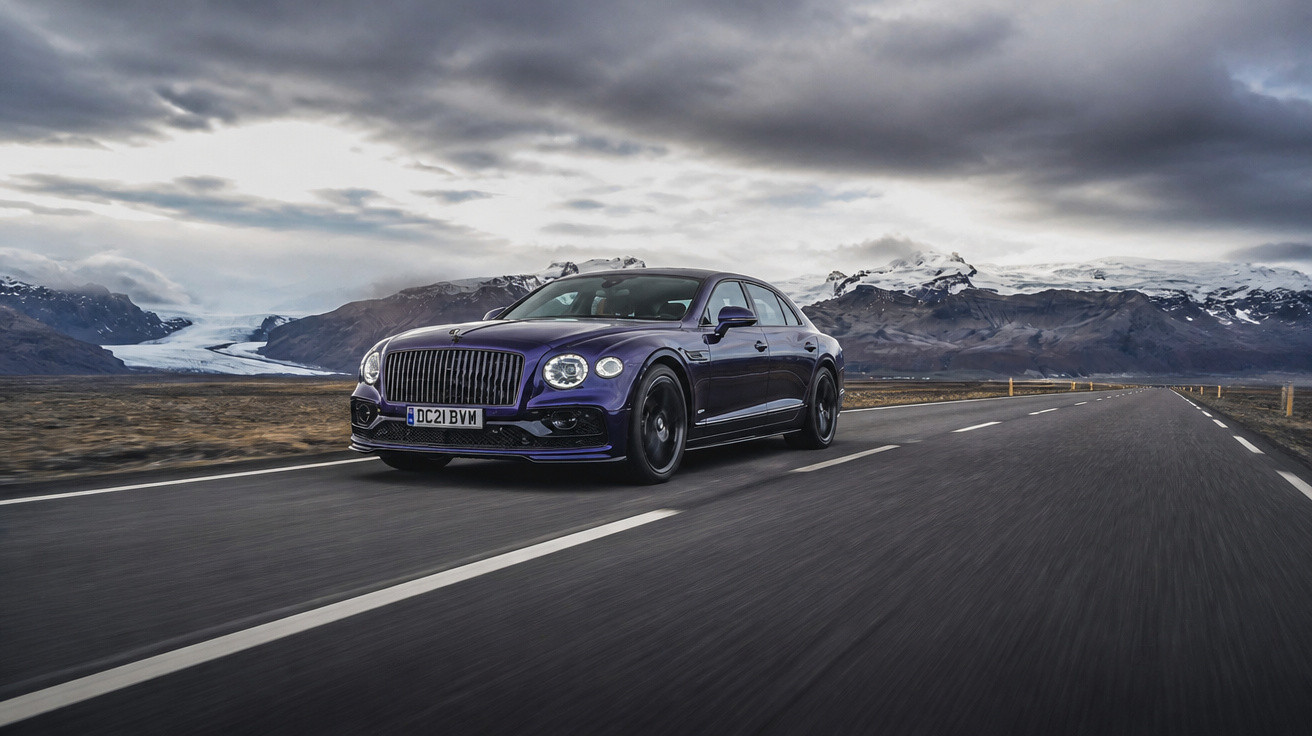
Iceland puts its geology on full display.
There’s no soft blanket of farmland and woodland and hardly any comforting layer of soil. What little you see of buildings and infrastructure looks oddly delicate in this harsh landscape of lava and landslips, like temporary adornment rather than something permanent. Apart from the odd cap of snow and ice, there’s almost nothing to hide the island. Iceland is nature’s hands-on lesson in “how things work”.
Iceland’s exposed geology and renewable energy
And it has plenty of lessons to offer. Its geology is well documented, and energy comes with it as part of the package. Down below, it’s seriously hot. The Mid-Atlantic Ridge runs straight through the country and is pulling apart at 40mm per year; on top of that, Iceland sits on a thin crust sliding over a mantle plume that’s effectively torching it from underneath. Meanwhile, any water that isn’t locked up as ice tends to race across the surface. Put a pipe into the ground or hang a turbine in a waterfall and you’ve found power.
In fact, 75 per cent of Iceland’s electricity is generated by hydro, with the remainder coming from geothermal. Boreholes drop 2.5km down to bring up boiling brine, or send cold water down that returns heated. That system warms 85 per cent of homes in the country. For renewables, Iceland has hit the jackpot. And, in the shadow of the COP26 climate conference, you don’t need anyone to underline how urgent clean energy is.
I’m meeting Thordis Gylfadóttir, the minister of tourism, industry and innovation (“Basically the minister of fun,” she tells me). She sets out an emphatically serious ambition: Iceland to be entirely free of fossil fuels by 2050, “the first country in the world, I hope".
The story isn’t entirely one-directional, though. In a taxi, between bursts of Led Zeppelin (“Did you know Immigrant Song was written about Iceland? Listen to it when you’re driving, it’s a perfect match for the scenery. I have to tell that story and put it on before some comedian demands Jaja Ding Dong”) the driver complains about his Audi e-tron’s winter range - “About 170-180km, that’s all” - then adds that, thanks to various tax incentives, a hybrid S-Class costs literally half as much as a diesel.
Crossing Iceland in a Bentley Flying Spur Hybrid
At this stage I should introduce a purple Bentley. I realise it arrives in the narrative with all the grace of a fish flopping on a trawler deck, and yes, I could have smuggled it in more smoothly - but it’s a purple Bentley. It’s unavoidably declarative. And, given it’s a 2.5-tonne plutocratic stogie wagon, that declaration doesn’t look especially virtuous. Still, as with this country, the interesting part is what’s going on beneath the surface.
Well, that’s not strictly fair to either. The Flying Spur is sharp-looking: a sleek, flowing four-door where the person behind the wheel doesn’t automatically read as the chauffeur - a trick very few luxury saloons pull off. As for the country, it’s downright hypnotic. I reached a point where I couldn’t properly take it in anymore, almost dazed by the scenery. Then we crossed a bridge with icebergs drifting below it, snapped off the glacier I’d been staring at on the far side of the bay. I’ve never seen anything like it. And for reasons I’ll get to, it sobered me immediately.
Photography: Mark Fagelson
Image carousel
The car itself matters here. This is Bentley’s first-ever hybrid saloon. Beneath the long bonnet sits a 2.9-litre V6 with twin turbos, with the cats tucked between the cylinder banks so they stay hot and work efficiently. Between engine and gearbox there’s a 134bhp electric motor, fed by a 14kWh battery. Plug it in and, provided your trips are under 30 miles (about 48 km), you can run on electricity alone.
Ours won’t be anything like that. The idea is to drive right across Iceland, coast to coast, propelled by nothing but water, straw and volcanos: a 470-mile (about 756 km) renewable-fuel road trip. Except it almost unravels before it really starts. Route 953 - the dirt track out to Dalatangi lighthouse on Iceland’s easternmost tip - has been shut by a landslide. Instantly, our route is 30 miles (about 48 km) shorter, which at least improves our odds of doing the whole thing in one stint.
Then, when we reach our hotel in Egilsstadir, snow begins to fall. The Bentley is fitted with summer tyres. It may genuinely be the only car on the island wearing summer tyres, given that most vehicles seem to clatter along on studs. I turn in feeling uneasy.
At 5am the next day, as I reset the trip computer, the display reads 0.5˚C. If there’s a recipe for tentative driving, that’s it. The V6 rumbles into life and I edge out into the dark on Route 1 - Iceland’s 1,000-mile ring road. Every ten minutes or so a lorry storms past in the opposite direction; otherwise, the pre-dawn feels empty.
The road undulates. On each climb I let my speed bleed off, worried about putting the powertrain under strain, and on each descent I try either to coast or to stuff charge back into the battery. It suits the Bentley’s character. The car never feels flustered; it would happily go faster, but it’s perfectly content gliding along at a measured pace. I’m told there’s a Lamborghini in Iceland and perhaps two Ferraris. But what’s the point? This place isn’t for speed; it’s for looking - for having the right vantage point from which to take it in. The 90kph limit feels spot on. If Bentley ever built a landaulet, I’d happily do this in the rear.
As the sky slowly brightens, mountain chains appear as silhouettes, and I can’t help wondering what I missed during the first two hours when my world was limited to the headlights’ reach, plus the occasional shimmer of far-off lorries and lonely farmhouses.
I’m tracing the coastline, arcing in and out of enormous glacier-carved valleys, while to my left the sun lifts from the sea. The light moves from grey to yellow, warming the rock, deepening shadows, and suddenly exposing the true scale of everything.
The scale is almost impossible to process. I find myself leaning forward over the steering wheel to see more of it, but when I sink back into the seat’s cocooning comfort - letting out a satisfied sigh - something else clicks. Creative types talk about how a frame can enhance a painting; it’s the same effect here. If the landscape were even slightly less spectacular, the rich damson leather would feel over the top, but instead the Flying Spur’s flawless brightwork, textures and colours become exactly the right foreground for Iceland’s immense backdrop.
Still, I can’t resist stopping at Hvalnes. It’s too overwhelming to drive past. A long tongue of black sand shelters a lagoon filled with - wait, are those… swans? They are. A tangle of moss-covered rocks rises from the water to darker scree, building towards a final flourish of jagged peaks. Below it all, the ribbon of road provides the place’s pulse, passing through without trying to dominate. It’s astonishingly beautiful.
We’re a quarter of the way in, and we’ve averaged 27mpg to this point. And no, I’m not doing any monkish suffering: my elbows are gently heated by warmed armrests, Led Zep has been Naimed through the cabin, and once or twice I’ve given in and booted it towards a far-off horizon.
I shouldn’t have bothered. When the V6 is left alone it’s smooth and subdued, but when you ask for effort it turns coarse. It doesn’t feel especially Bentley. Then again, it isn’t really a Bentley powertrain - it’s sourced from Porsche, essentially the same set-up already installed, to little acclaim, in the Bentayga. Bentley has said every model will be electrified by 2026 and the brand will be all-electric by 2030, but it will need to raise its game beyond this.
Straw-based biogasoline, melting ice and fresh lava
On the satnav there’s a green circle showing my electric range. Zoomed out, it’s a dot. Today I’ll cover perhaps 15 times as much distance on the combustion engine as I will on electricity - and that engine produces four times the power of the e-motor. But there’s one essential twist: it isn’t using petrol. It’s running on biogasoline made from… straw (you were wondering when that would show up, weren’t you?).
This isn’t the fully synthetic fuel Porsche and others are developing, yet it still matters because it’s a second-generation biofuel. First-generation options - from vegetable oil, wheat grain or sugar cane - can compete with food, or occupy land that could otherwise grow it. Straw, by contrast, is waste: a by-product of wheat or maize production.
Coryton developed the process: straw becomes fermented biomass, which produces bioethanol. After the water is removed, a step called oligomerisation turns ethylene into longer-chain hydrocarbons. Can you tell I’m fumbling my way through this? The key point is that the end product carries the same EN228 rating as forecourt petrol, meaning it’s fully interchangeable.
It still produces tailpipe emissions - CO2 exits the exhaust at roughly the same rate as it would in a normal car - but when you account for the CO2 absorbed during growth and the cleaner manufacturing route, overall emissions drop by 40 per cent compared with conventional petrol.
By late morning, Vatnajökull comes into view. Seeing an ice sheet like this is oddly unsettling. Glacial “fingers” thread between mountains, but behind them the ice simply sits there: a huge, pancake-like dome laid across the landscape. It merges into the cloud cover, and I wouldn’t be able to see the end of it anyway - it blankets 10 per cent of Iceland’s land area.
We can, however, get near Fjallsárlón glacier - close enough, it feels, to reach out and touch. In reality it’s nearly two miles (about 3.2 km) away. Yet 100 years ago it was where I’m standing now, and 20 years ago it was only halfway back across the lagoon.
As we set off again, we reach that bridge: the one where huge blocks of glacial ice drift beneath, carried by meltwater towards the sea and eventual disappearance. It’s the starkest, most confronting image of global warming I’ve ever encountered.
I select EV mode, but driving this purple Bentley over the top brings on an immediate surge of guilt. I’ve flown here; I’m piloting a fairly ordinary hybrid; my CO2 footprint is enormous - and look at what I’m contributing to. I suddenly feel embarrassed, diminished by a country that, despite its own efforts, is now presenting me with the consequences of what I’m - what we’re - doing.
But are we truly responding that slowly? Iceland operates on geological timescales, and I find myself suspecting - hoping - that future generations will look back at our reaction to the climate crisis and decide that once we properly understood the harm, we actually moved quickly to fix it. Yes, I know I’m rationalising. We could do more. And car makers, like any capitalist business, exist to earn money and maximise profits; they won’t prioritise the environment unless legislation and public pressure force them to. That pressure is now arriving.
Two years ago Bentley’s Crewe site - shimmering with solar panels - became the UK’s first carbon neutral car factory. The target is end-to-end carbon neutrality by 2030.
Luxury marques, easy as they are to point at, have to set the pace here. I can’t say whether battery-electric power is the final destination for personal transport, but it’s clearly the right answer at this moment - and it suits luxury travel exceptionally well. Even so, the Flying Spur Hybrid doesn’t feel like a breakthrough.
We make quiet progress along the south coast and I become more contemplative. Here the landscape softens: there’s more settlement and agriculture, more vehicles, more visitors. Coaches pour out of Reykjavik to grab Instagram shots at Skógafoss, on black sand beaches, and among ancient lava fields. Everything they want is strung along Route 1.
The servers that store that digital trail are here as well. Powered by clean electricity and cooled by cold air, Iceland is turning into a rapidly expanding data hub. “But is this how Iceland should be using its energy?” ask the critics. “So people can mine Bitcoin or post their best life?”
Iceland produces more energy than it can consume. The minister spoke to me about generating and exporting hydrogen, undersea power cables, building wind capacity and carbon-capture projects - and she even asked about the fuel we’re using.
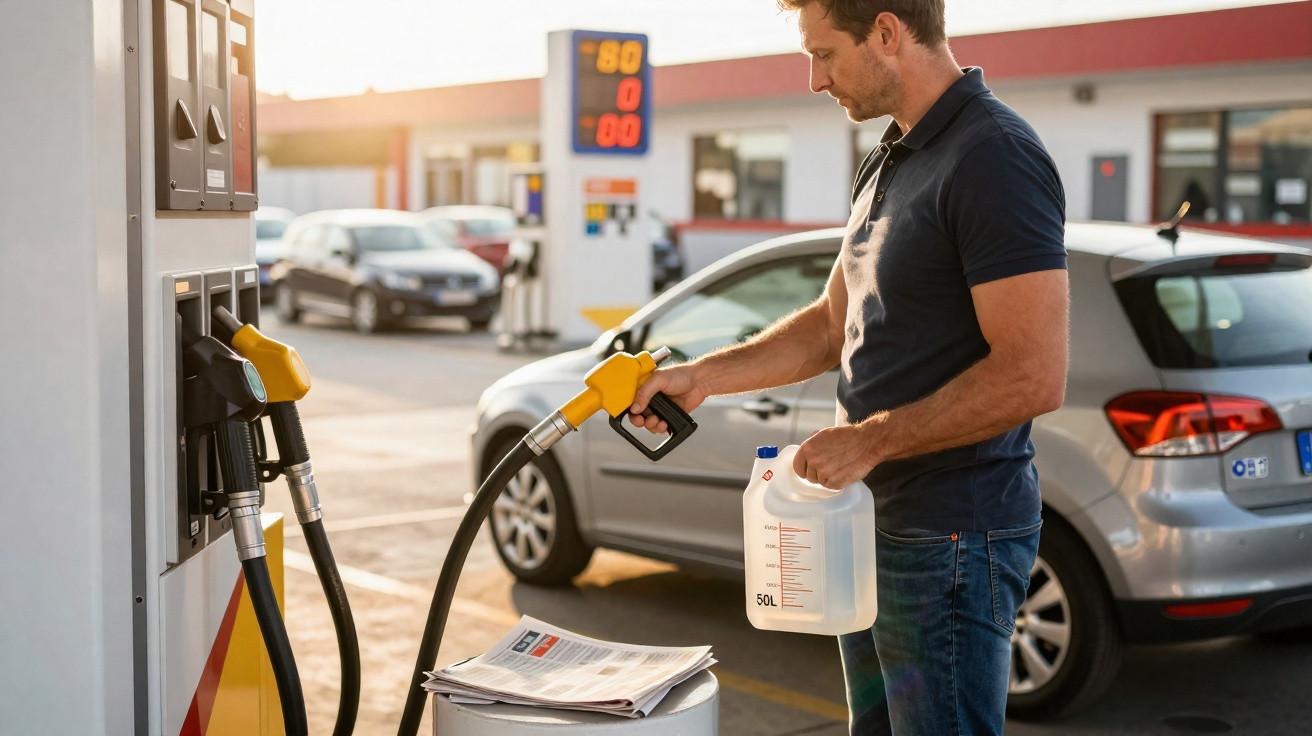
That fuel leaves us stranded 10 miles (about 16 km) short of our destination: the Svartsengi geothermal power station. We’ve travelled 471 miles at 28.0mpg. It’s decent enough, but it’s hardly transformative - if I’d really tried, I might have squeezed out 30mpg and avoided the nervous late-night top-up from a can at the roadside.
The following morning I plug in at the power station itself, but the Bentley will only take 7kW, so charging is slow: two hours to claw back those 30 miles (about 48 km).
Put aside the overly vocal V6 and the FS Hybrid behaves properly: it drives as a Bentley should, feels strong yet restrained, and it’ll make sense for city users. But bringing it into a place like this sharpens the questions. Against the backdrop of where other PHEVs and BEVs now stand, it feels only just acceptable - a thin layer masking the cracks of internal combustion.
The recycled straw fuel, by contrast, is persuasive. I couldn’t detect any change other than a less pungent odour.
I leave the car behind and meet volcanologist Dave McGarvie, who leads me on foot across the brand-new lava flows of Fagradalsfjall. Even after everything else I’ve seen, this feels utterly unearthly - interplanetary. Some sections are smooth or delicately rippled; others resemble volcanic coral: light, razor-edged, fragile, and comically difficult to scramble over. Lava “tongues” protrude upwards, gas whispers from cracks, and there’s that sulphurous tang. “Primordial, isn’t it,” says Dave, “the lava’s about 20 metres deep here, it’ll take at least two years to cool down.”
The estimate is that a third of all lava to have spilled onto the planet in the last 500 years has done so in Iceland.
It all rises from below, where an iron core 1,500 miles (about 2,400 km) across, heated to 5,200˚C and squeezed under 3.6 million atmospheres, warms the Earth from the inside. If you could somehow flip a switch and stop it, the heat wouldn’t fade away for 91 billion years. That’s real energy. For most of the world it’s unreachable - but not here, where raw, twisted geology lives and breathes right beside you.
Comments
No comments yet. Be the first to comment!
Leave a Comment