
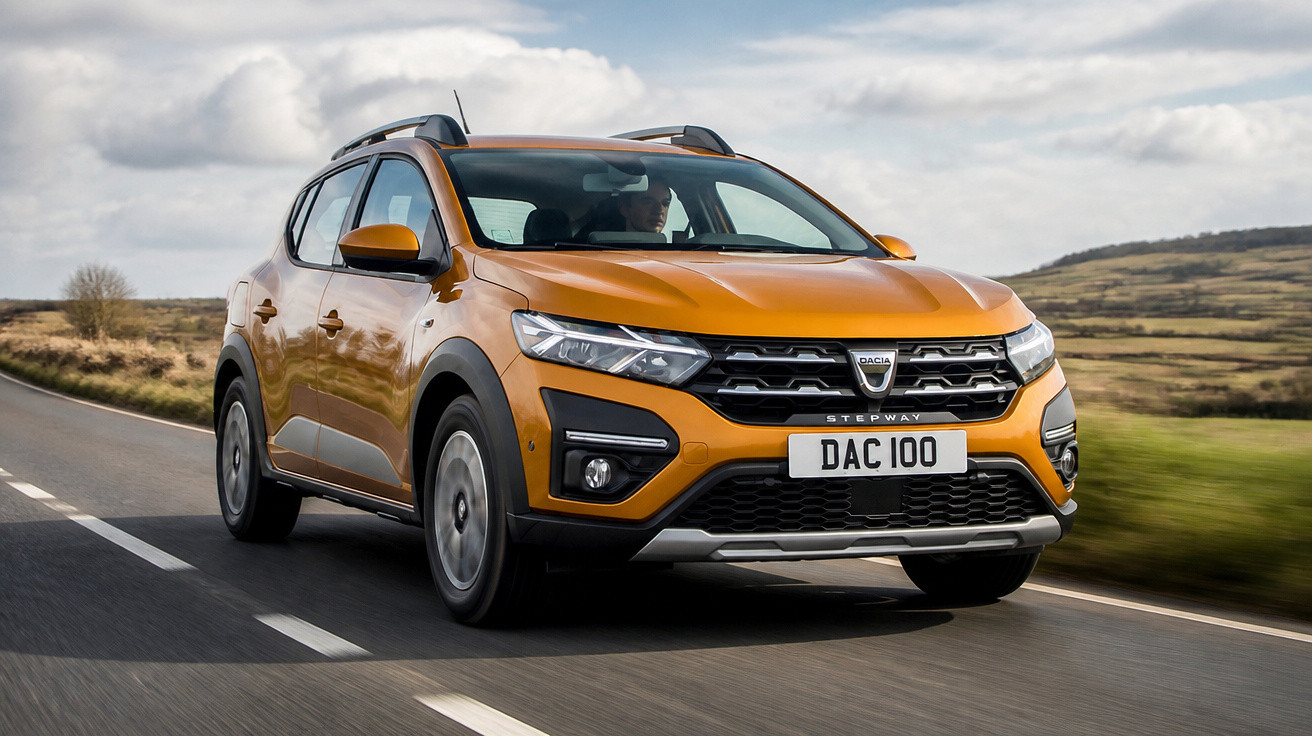
Dacia. Value. Is there anything else worth discussing?
That’s as good a place as any to begin, because you’re not wrong: bang-for-buck is overwhelmingly Dacia’s strongest card. The car in question is the latest Sandero Stepway - the raised-ride-height, plastic-arched, crossover-flavoured take on the regular Sandero hatchback. Calling it the style-led Dacia might be pushing it a bit.
Dacia Sandero Stepway pricing and trims
The range opens at £10,995 and tops out at £14,595. If you match engines like for like, the Stepway asks roughly £1,000 more than the standard Sandero - and you can’t pair the Stepway with the very smallest engine and the most bare-bones equipment level. In truth, hardly anyone wants that version anyway.
Most buyers spend a little more because the starting point is already so affordable. They’ll choose the automatic gearbox, or move up from Essential to Comfort trim. Put £1,500 down and you’re looking at about £180 a month for the version most people would actually pick: a TCe 100 Bi-Fuel with a list price of £12,995.
Bi-fuel and running costs (LPG)
Hang about, bi-fuel?
Yes - it arrives with an LPG tank already installed, which is handy if you’re trying to cut day-to-day costs. And in Comfort specification it’s genuinely, well, comfortable: you get an 8-inch touchscreen, Bluetooth, DAB radio, an electric parking brake, parking sensors, keyless entry (an especially good setup because it locks itself when you walk away), phone mirroring, and two years’ free servicing.
One caveat: if you’re able to, a larger deposit is sensible. Dacia’s finance rate is 6.9 per cent APR, which looks steep when plenty of competitors are advertised at zero per cent. The counterpoint is that those rivals cost more to start with. At the upper end of the Sandero range, you’re effectively cross-shopping with the cheapest versions of cars like the Hyundai i10, Suzuki Ignis or Swift.
How can Dacia price it like this?
How does Dacia do this? Is it losing money on every car?
It’s a fair question, and I can’t claim to know the full maths behind it. Still, a few things help explain it. The Stepway leans on established Renault engineering - tech that has already had its development costs paid back in cars such as the Clio. Dacia also keeps its focus firmly on value, rather than trying to trade on “brand” and “image” in the way mainstream makers do (which then forces them to price and position themselves directly against key rivals). And low list prices don’t appear to be dragging down second-hand values either.
There are plenty of reasons Dacia can pull this off while others don’t - but the biggest is simply that nobody else has properly followed them. That leaves Dacia as the standout budget option: if you want a cheap, strong-value car and you specifically want to buy brand new, they’re effectively the only game in town. The real surprise is how capable the Sandero is - and how much this new Stepway variant builds on that.
On the road: refinement, performance and handling
What, as in well built and good to drive?
Yes - with some caveats. Starting with the positives: the turbocharged 1.0-litre engine is impressively smooth and subdued. The ride is another strength. It can feel a touch bouncy because the springs are on the soft side, but the body stays reasonably controlled, there’s little harshness coming back through the suspension, and overall it’s compliant and easy-going. For the Sandero Stepway, those are the fundamentals - and it delivers them well.
Will the typical Stepway customer be bothered that the engine feels short of breath at the top end, to the point where the 6,200rpm redline might as well be a far-off foreign holiday? Or that the clutch bite point is, at best, indistinct; the steering communicates about as well as an average teenager; and the throttle mapping isn’t great?
I’m guessing not.
Nor am I - though the throttle tune is the one issue people probably should notice, because it makes the car’s responses harder to judge. At times it reacts too sharply and feels like it surges ahead; other times it seems reluctant. It’s an odd calibration, and alongside the vague clutch it can make the Stepway slightly fiddly when you’re manoeuvring at low speeds.
The drivetrain has a slightly loose, heavy-flywheel character - almost as if the car is doing its best to keep you at arm’s length from the engine. Still, the six-speed manual can be driven smoothly enough that you don’t need to pay for the £1,200 automatic offered on some versions. 0-62mph takes 11.9secs.
Does it handle?
It does - it’s more than adequate, and mildly surprising in a car you might expect very little from. It doesn’t fall apart the moment the road turns, and at just 1,154kg it has that typically French knack for getting along a challenging lane without making a fuss. It’s not the sort of thing you’d buy for thrills, but it does leave you quietly satisfied.
Cabin space, practicality and equipment
How’s the cabin?
Most importantly, it’s sized correctly. There’s enough room for four adults, plus a decent amount of luggage in the 328-litre boot. It occupies that “supermini-plus” territory - similar footprint to many hatchbacks - and it feels like a good compromise: manageable on the road, yet usefully spacious inside.
Yes, some of the plastics and trim feel cost-conscious, but because the basics are nailed - especially the layout and day-to-day ergonomics - it’s hard to get worked up about scratchy door bins. The test car also deserves credit for a dashboard phone mount with a conveniently placed USB port right next to it. It’s simple, and it works. The fabric strip across the dashboard also does a bit to brighten the atmosphere.
More broadly, it’s just straightforward to live with: intuitive heating controls, supportive seats, and screens that don’t try to do so much that they become a nuisance to operate. It lands in a genuine sweet spot - especially for less than £13,000.
Run it on LPG and you can slash fuel spend to roughly half the cost of petrol, though the official economy figure drops from 48.7mpg on petrol to 38.2. CO2 stands at 130g/km. In running-cost terms it ought to be as cheap as any electric car - and vastly cheaper to buy in the first place.
Design and image
Does it have an image problem?
Not to me. If anything, telling people you drive a Dacia can come across as a smart decision: you’re choosing value without necessarily looking penny-pinching. I also think it’s a likeable-looking thing - notably less blocky than the old Sandero Stepway, less try-hard than plenty of crossovers, and actually a fairly neat piece of design.
Score: 8/10
Specs: 999cc 3cyl turbo, 6spd man, FWD, 100bhp, 125lb ft, 0-62mph in 11.9secs, 109mph max, 48.7mpg, 130g/km CO2, 1154kg

Comments
No comments yet. Be the first to comment!
Leave a Comment