
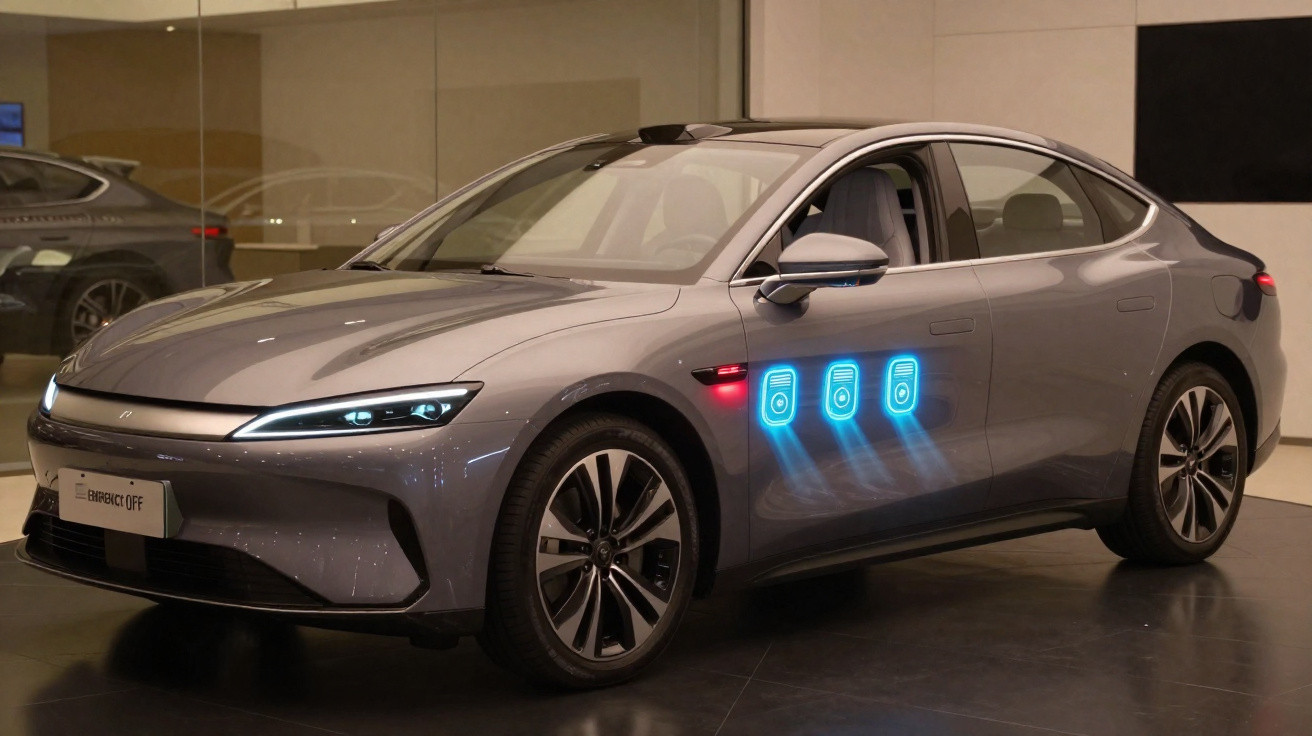
Modern vehicles fitted with an intelligent ignition system deliver far more than everyday convenience. In genuinely critical driving situations, using the main button correctly can help prevent serious harm by giving the driver immediate control of the vehicle during unexpected events in towns, cities and on the motorway.
How does the push-button start system work in today’s cars?
Keyless start technology replaces the old mechanical ignition barrel, making day-to-day use simpler for drivers. With the key present, pressing the switch prompts the car’s electronic control unit to authorise ignition of the engine, coordinating the vehicle’s systems to run with maximum efficiency on journeys.
What many owners do not realise, however, is that the very same device is also programmed with special protocols for hazardous moments. Understanding these emergency routines in detail can help avoid severe accidents, allowing the driver to stay calm and make the right decisions with real speed when it matters.
What happens when you hold down the car key buttons?
Holding the unlock command can trigger a hidden feature that opens all the vehicle’s windows to… Read more.
Why does pressing the button three times switch off the engine while moving?
During normal driving, an accidental tap on the button will not stop the car because the system blocks unintended inputs. But if the driver presses the button quickly three times in a row, the control unit reads it as an intentional protection command designed for your safety.
This feature exists for extreme situations, such as a mechanical throttle fault or pedals becoming stuck unintentionally. By cutting propulsion, the driver cancels unwanted acceleration, bringing the car under control and restoring order in the cabin.
Below is a video from the YouTube channel DELLA Honda in Plattsburgh that explores the points discussed in this topic in more depth.
Which manufacturers use rapid-command emergency shut-down?
Major manufacturers such as Hyundai, Kia, Toyota and Honda use comparable solutions on vehicles with proximity keys. Although the engineering differs between brands, either a triple press or holding the button will disable the power unit when an unexpected risk arises on the road.
Each design sets its own confirmation pattern to ensure the driver’s action was deliberate. Some models require repeated presses, while others ask you to hold the button down for a continuous few seconds to complete the shut-down with maximum precision.
Driver Safety Kit
Steps for switching off while moving
Follow the guidance recommended by manufacturers for critical situations:
- Press the start/stop button repeatedly three times in succession;
- Keep both hands steady on the steering wheel and maintain control of the vehicle;
- Apply the brakes firmly until the vehicle comes to a complete stop.
What happens to steering and brakes after shut-down?
If propulsion is cut while the car is still moving, the electrical circuit remains live to preserve essential controls. Power steering assistance and braking capability continue so the driver can manoeuvre the vehicle without losing control.
Even with assistance still available, the brake pedal can gradually feel heavier as vacuum assistance reduces. For that reason, it is advisable to keep steady pressure on the pedal and steer the car to a safe place, avoiding sudden changes of line on the motorway.
A few essential precautions should be followed during emergency stops:
- Keep a firm two-handed grip on the steering wheel while slowing down;
- Press the brake pedal continuously until the vehicle has fully stopped;
- Switch on the hazard warning lights immediately to alert other drivers.
How can you check the correct procedure in the owner’s manual?
Because every manufacturer defines specific commands for the start button, carefully reading the vehicle’s handbook is essential. The official guide explains whether your model requires three quick presses or a sustained press, and it also describes any audible warnings sounded via the instrument cluster.
Being familiar with these technical instructions supports quick, deliberate reactions in unusual traffic situations. When you understand how your car behaves, the technology becomes a genuine ally-helping journeys feel calmer while protecting the wellbeing of all passengers on board.





Comments
No comments yet. Be the first to comment!
Leave a Comment