
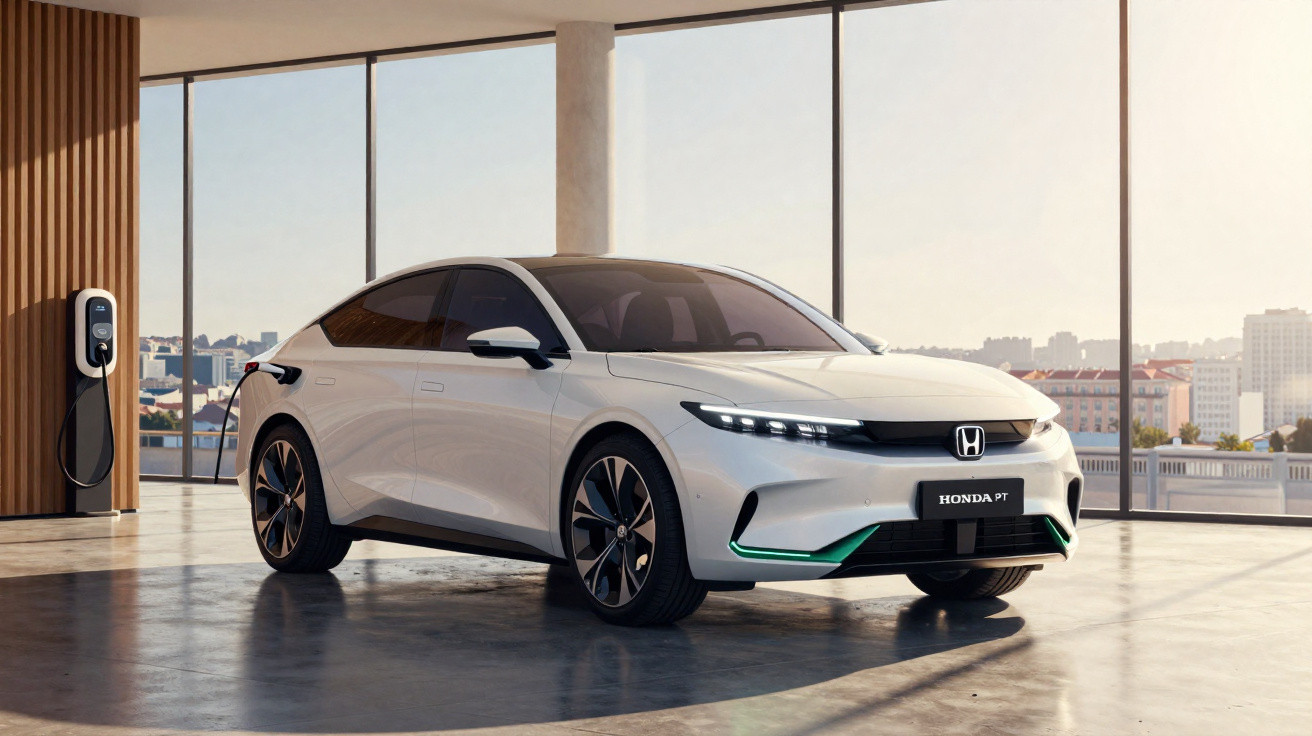
Honda Portugal’s position on the proposal put forward this week by PAN – People, Animals and Nature, approved with votes from the PS and the BE, opposed by the PSD, PCP, CDS and the Liberal Initiative, with Chega abstaining, is unequivocal.
Represented in Portugal by Sōzō, the Japanese brand argues that this initiative would, in practical terms, further worsen an automotive sector already in a difficult place-one that, throughout this year, has recorded falls of more than 35% due to the current economic and social climate.
Impact on the automotive sector and employment in Portugal
In a letter signed by Sérgio Ribeiro, CEO of Honda Portugal Automobiles, the company expresses “great concern for the jobs of the more than 150,000 people who currently make up the driving force of the automotive sector in Portugal”.
Honda Portugal on the purpose and practical effects of the PAN proposal
Honda Portugal Automobiles says it cannot see what outcome this measure is intended to achieve. From a practical standpoint, the company states that it “will merely represent an additional tax burden for less polluting vehicles (hybrids and plug-in hybrids). This burden, in turn, will have the direct side effect of encouraging demand for internal combustion vehicles, which are naturally more harmful to the environment”.
The position from Honda Portugal Automobiles was set out in five points, which Razão Automóvel reproduced in full:
Five points set out by Honda Portugal Automobiles on hybrids and plug-in hybrids
Vehicles that use hybrid technology produce substantially lower emissions when compared with internal combustion vehicles, including when higher engine capacities are considered. By way of reference, a hybrid family car emits, on average, 119 g/km of CO₂, compared with 128 g/km for a diesel family car or 142 g/km for a petrol family car (Source: ACAP, Registrations Jan–Oct ’20). Average vehicle emissions are calculated after rigorous type-approval tests, which are continuously evolving and which confirm these figures.
At present, there is no sufficiently broad and consolidated study indicating a greater harmful effect from hybrid and plug-in hybrid cars compared with internal combustion powertrains, even taking into account cases where they are not charged. In parallel, hybrid technology is founded on combining two engines (one combustion and one electric) whose joint operation is primarily aimed at greater efficiency, improved fuel economy and, as a consequence, lower CO₂ emissions. In the company’s view, the starting point for this new measure has not been examined in enough depth and does not reflect reality.
The effect of this measure will be an increase in taxation (in some cases, doubled) on hybrid and plug-in hybrid cars-that is, vehicles that are objectively more environmentally friendly. This would mean, on the one hand, that Portuguese consumers will pay more for less polluting cars, which will naturally slow demand for these types of powertrains. On the other hand, the company believes fully electric vehicles are not a viable alternative for drivers of hybrids and plug-in hybrids given their everyday usage patterns, so buyers will turn to internal combustion engines; in that case, the newly approved measure would be counterproductive.
A more effective way to cut emissions from the national vehicle fleet-one of the oldest in Europe, with an average age of 13 years-would be to introduce tax incentives to scrap vehicles with outdated and, naturally, more harmful technologies. Gradually renewing the Portuguese vehicle fleet with more efficient cars, namely hybrids and plug-in hybrids, would strategically and sustainably ensure a sharp reduction in average CO₂ emissions in the short and medium term.
The automotive industry has undoubtedly been one of the most active drivers of measures and technologies designed to mitigate and reduce the environmental footprint. These actions naturally require significant in-house investment in research and development, aimed at delivering a range better aligned with CO₂ emissions targets, while also widening public access to greener technology. In Portugal’s case, that access now becomes even harder, making the sector’s efforts in this direction fruitless and placing the market, once again, in a highly retrograde position when compared with the European reality.
Strategic, economic and social repercussions, according to Honda Portugal
For Honda Portugal Automobiles, the proposal “will have serious repercussions on the sector’s strategic direction, but above all on the economic and social landscape. This new direction is nothing more than the diametrical opposite of the strategy implemented over recent years to achieve a stronger environmental commitment, and represents, in our opinion, a profound contradiction of the path taken so far, which will translate into severe consequences with immediate effect”.


Comments
No comments yet. Be the first to comment!
Leave a Comment