
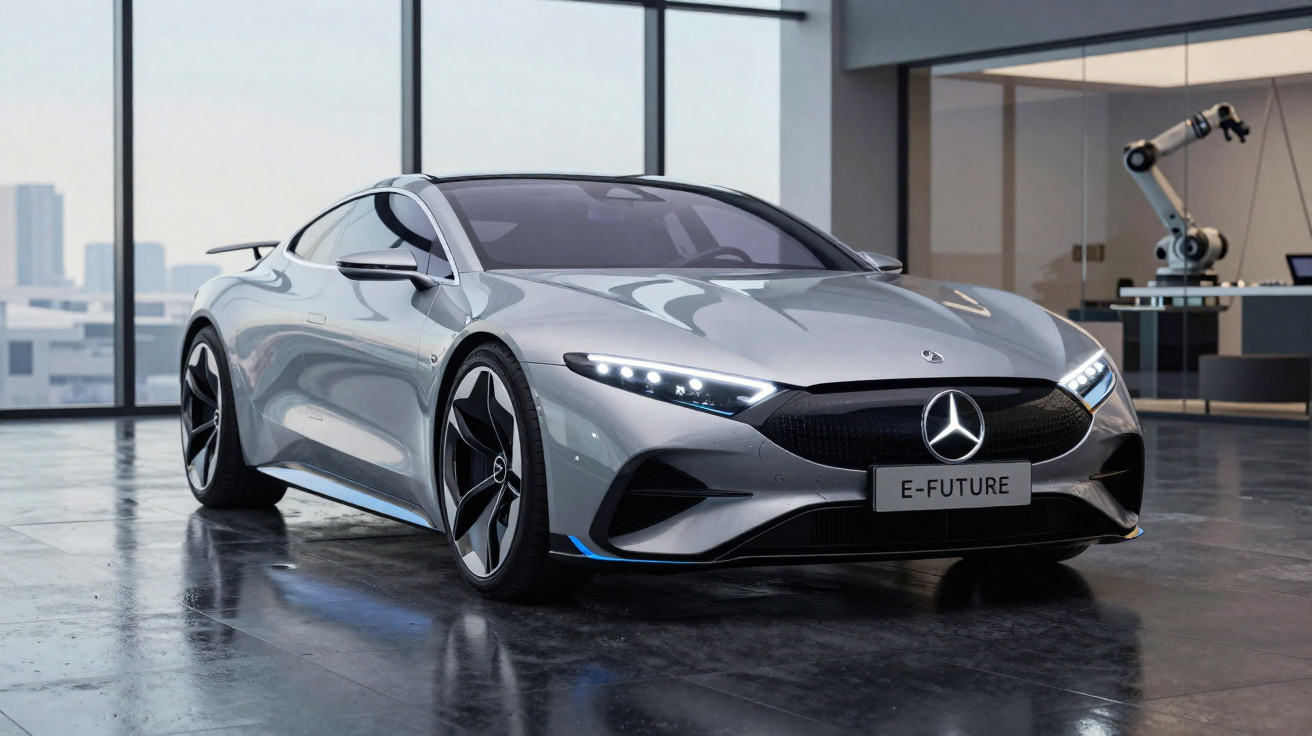
Mercedes-Benz’s electrification roadmap (2025–2030)
Mercedes-Benz has already pledged that, from 2025 onwards, it will offer a 100% electric version of every model in its range. It has also set out an ambition to become fully electric by the end of the decade in markets where that is feasible. Against that backdrop, Daimler Chief Executive Ola Källenius has addressed what this shift is likely to mean for the company’s workforce.
Källenius says he believes the move to electrification can be delivered thanks to the manufacturer’s “highly skilled and motivated workforce”. Even so, he is not willing to gloss over the “elephant in the room”: the job losses that this transformation could bring.
What Ola Källenius expects for jobs by 2030
On 1 August, the Swedish executive told the German newspaper Welt am Sonntag that Mercedes-Benz’s headcount is expected to fall gradually up to 2030. As he put it: “we have to be honest with people: assembling combustion engines requires more labour than producing electric motors (…) Even if we produce all the electric drivetrains ourselves, we will employ fewer people by the end of the decade”.
Will it really be that way?
While acknowledging that electrification is likely to reduce the number of jobs in the brand’s factories, Ola Källenius also noted that this new phase of the automotive industry will, on the other hand, create new and more highly skilled roles.
Not everyone shares such a downbeat view. A study by management consultancy Boston Consulting Group (BCG) argues that the electric transition will not eliminate jobs, but will instead lead to “role transfers”.
In other words, someone who is currently building a combustion engine would move to manufacturing a component for an electric model. According to the study’s author, Daniel Küpper, the headcount comparison between producing a combustion engine and producing an electric motor should not be treated as the “standard”.
Küpper stresses that “the comparison of workload, where three employees are needed to assemble a diesel engine and only one is enough to produce an electric motor, applies only to engine production (…) The amount of work required to build a complete electric car is almost as high as that of a car with a combustion engine”.
Even though he does not agree with Källenius regarding how many employees will be required overall, Küpper accepts that electrification will drive demand for higher-skilled employees-especially for making battery cells, the modules that house them, the full suite of electronics, and the batteries’ thermal management system.
What Daniel Küpper’s perspective appears to overlook-and what Ola Källenius’s comments bring into sharper focus-is that, in most cases, the batteries used in electric cars are not manufactured by the carmakers themselves. Many are supplied by external companies, most of them (for now) based in Asia. That is a situation that could change over the decade that is now beginning.
At this point, even Germany’s powerful unions seem persuaded that job reductions in the automotive industry are unavoidable. One workers’ representative in the sector said: “you can’t swim against the current when the whole world is betting on electric cars”.
Source: Auto Motor und Sport.
Comments
No comments yet. Be the first to comment!
Leave a Comment