
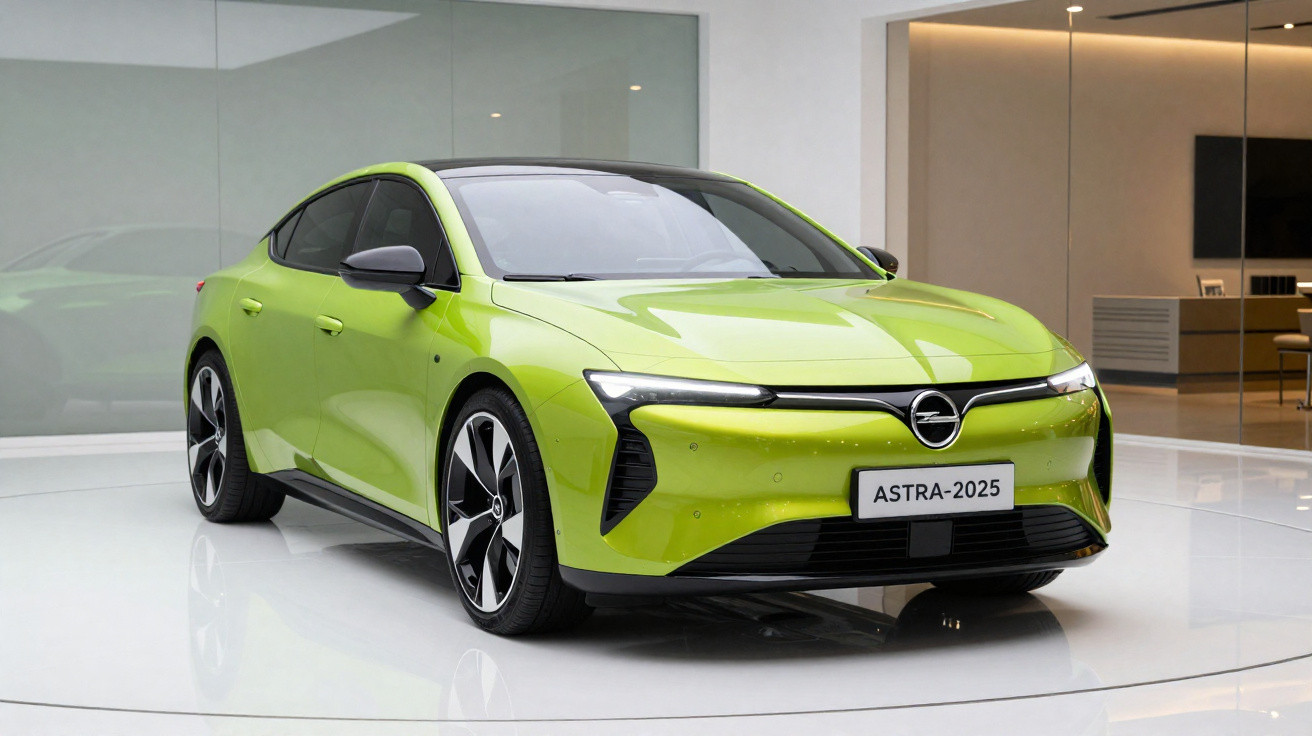
The new Opel Astra, due to arrive next year and already hinted at through a run of official teasers, has now entered the final stage of its development testing. This follows a genuine marathon that has taken it from the frozen roads of Lapland to the Dudenhofen test centre in Germany.
The “life” of the 11th-generation Astra began, as you would expect, with the help of computer-aided design (CAD). From there came the build of the first prototypes and the launch of a demanding test programme designed to throw a wide range of challenges at them.
One of the toughest tests took place last winter, when the Opel Astra “travelled” to Lapland - a familiar destination for engineers from many car manufacturers.
With temperatures around -30°C, chassis development specialists covered countless kilometres to refine how the electronic stability control, traction control and braking systems respond on low-grip surfaces such as ice and snow.
This latest generation will be the first version of the German hatchback to be electrified. As a result, the behaviour of the lithium-ion batteries used in the plug-in hybrid variants was also scrutinised, with the team at the Rüsselsheim-based brand ensuring that cell performance meets the required standards even in very low temperatures.
Dudenhofen: a “torture chamber”
Germany’s Dudenhofen test centre also proved a major challenge for the new Astra, particularly in the development of driver assistance systems. It was there that Opel’s engineers calibrated systems such as adaptive cruise control, the emergency braking system, forward collision warning and blind-spot alert.
As well as high-speed testing on long straights - essential preparation for the Autobahn - the new Astra was also put through water tests, always at depths of more than 25 cm.
Validation tests on “home” roads
As development moves closer to its final phase, Opel’s team of engineers and technicians is monitored more closely by management, including Opel’s Chief Executive Officer, Michael Lohscheller.
At this stage, still wearing heavy camouflage, the Astra was driven on public roads around the Rhine-Main region, near Opel’s home city and the factory where it will be built, in Rüsselsheim. It is here, on “home” ground, that the Astra must secure its final approval.
What to expect from the new Opel Astra
Built on an evolved version of the EMP2 platform, the same architecture used by the new Peugeot 308, the next Astra will be offered in two body styles: a five-door hatchback and an estate, the Sports Tourer variant.
When it comes to powertrains, it is certain the Astra will gain electrified options, although it remains unclear whether it will feature only one plug-in hybrid version or more.
Even so, the latest rumours indicate a model could be in the works with 300 hp of combined power, all-wheel drive and, possibly, the GSi badge, positioning it as the sportiest version in the line-up.

Comments
No comments yet. Be the first to comment!
Leave a Comment