
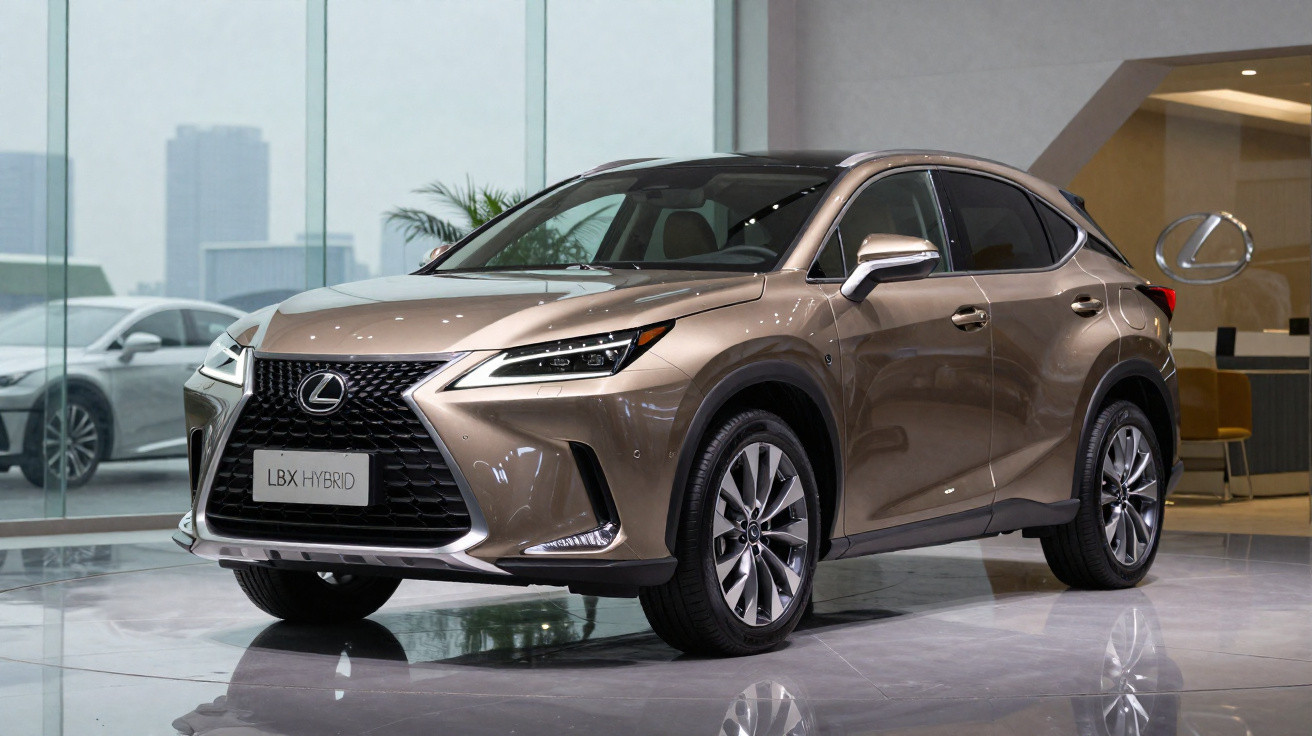
I went in search of a Yaris Cross in different clothes and, in the LBX, found a concentrated dose of Lexus - right down to the price.
I spent a couple of unusual days in Valencia, Spain, for the international dynamic launch of the new Lexus LBX.
To start with, even though it was December, the thermometer climbed to 28 ºC. And then there was the bigger surprise: every preconception I had about the LBX turned out to be wrong. It is far more than a Yaris Cross (with which it shares platform and mechanicals) dressed in a different suit.
I should have known that Lexus wouldn’t leave its reputation in anyone else’s hands, even when it comes to its smallest model ever - and also its most affordable (although “affordable” is always relative). Besides, the LBX was developed with Europeans very much in mind.
I won’t spend long on detailed descriptions of the LBX’s exterior and interior. We already did that during the static presentation of the model, where Miguel Dias explains everything “down to the last detail”. Watch it, or watch it again:
Many modifications, for the better
I’m tempted to jump straight to the driving, but I can’t do that without first mentioning a few of the changes Lexus engineers made to the GA-B platform - shared with the Yaris Cross - and how much they influence the LBX’s overall feel and dynamic character.
I’ll begin with the structural strengthening, where the standout is a new crossmember linking the base of the A-pillars, giving the steering a new, stiffer mounting point.
The track has also been widened by a few centimetres - at 1.82 m wide, the LBX is broader than several offerings from the class above - and the wheels are sizeable at 18″ (except on the entry version, which uses 17″).
Driving position hasn’t been overlooked either: you sit lower in the LBX than in the Yaris Cross, and the attention to detail shows in elements such as the repositioning of the transmission selector.
Even though the seating position is good, rear visibility isn’t great, thanks to the combination of a small rear window and a very wide C-pillar.
Expectations exceeded
So how do all these Lexus changes translate on the road? It doesn’t take many metres behind the wheel of the LBX to realise they have a very positive effect.
The Lexus LBX stands out for the solidity of the whole package and its extra refinement, while also managing to feel both more stable and more agile than its Toyota “cousin”. At times, it genuinely feels like you’re driving something from a higher segment.
The steering deserves special mention, as it inspires a lot of confidence. Lexus resisted the temptation to make it excessively light - as seems to happen in so many other models - which only helps the impression of precision and robustness.
It was on the motorway, however, where the LBX surprised me most, because smaller cars don’t usually shine in this environment. This is where it best “pretends” to be bigger than it really is.
It showed very good straight-line stability - the generous track width surely plays a part - and cabin refinement is high. The only caveat is some aerodynamic disturbance around the door mirrors, but the acoustic windscreen (available on the more generously equipped versions) makes a noticeable difference.
Although the damping leans towards the firmer end of the spectrum - bringing precision and well-contained body movements - comfort in the LBX doesn’t suffer, even with a simple torsion-beam rear axle. After more than two continuous hours at the wheel, I stepped out still feeling fairly “fresh”, which also says a lot about the seats (comfortable and supportive) fitted to this crossover.
The hybrid drivetrain convinces, with two exceptions
Lexus’s smallest crossover is convincing to drive, and its sole hybrid powertrain (not plug-in) is a solid companion. It’s already familiar from the Yaris Cross - a naturally aspirated 1.5 l three-cylinder petrol engine paired with an electric motor - but here it delivers 136 cv (100 kW) instead of 116 cv.
Beyond the extra power, this drivetrain also brings a new 1 kWh bipolar nickel-metal hydride battery which, as well as being lighter and more compact, promises faster charge and discharge response.
Overall performance is perfectly adequate (9,2s from 0 to 100 km/h) without being remarkable, but I have two criticisms of this powertrain.
First - inevitably - the e-CVT (continuously variable transmission). It’s getting better all the time, and in calmer driving you barely notice it, but when you ask more of the LBX it makes the three-cylinder “shoot up” in revs and holds them there, which leads me to the second point.
That is the sound when the engine “visits” those higher rev ranges, which simply “invades” the cabin. It’s not that the noise is unpleasant in itself, but considering how calm the LBX is in almost everything it does, the contrast is hard to miss.
Frugal, as you’d expect
If the e-CVT remains far from my favourite transmission - even though the car I drove had paddles behind the steering wheel and an “S” mode that lets you simulate a six-speed gearbox - facts are facts: it’s the best route to lower fuel consumption.
Even if these first drives don’t always produce truly representative figures - because of the driving style or the length of the test - I managed less than 5,5 l/100 km. That was on a very varied route, from city streets to motorway, plus mountain roads. Some colleagues even achieved under five litres, in line with the official 4,8 l/100 km.
It may be premium, but it’s still expensive
The Lexus LBX can already be ordered, but the first deliveries won’t happen until March 2024 - and the entry-level version arrives later, in June. Prices start at 34 950 euros.
What those figures make clear is that Lexus’s new entry point is a long way from being truly accessible. What’s more, there are rival models that have just arrived on the market - including fully electric options - that end up offering more for similar money.
Perhaps the most telling example is the Volvo EX30. Like the LBX, the EX30 is Volvo’s first attempt at this segment, but it has chosen to do it with a 100% electric proposition. Prices start close to 38 mil euros, yet it offers double the power (272 cv) and far stronger performance.
It will be difficult for the LBX to compete on that specific level, even if it has other strengths, such as a high-quality cabin (fit and materials), a more generous boot (402 l), and the fact it’s a hybrid that doesn’t waste any time charging - refuelling will always be quicker.
Lexus expects the LBX to add 25 mil units per year to its European totals, which should translate into significant sales growth for the brand in 2024. In Portugal, order books opened in November and the brand has already recorded more than 50 reservations.
Comments
No comments yet. Be the first to comment!
Leave a Comment