
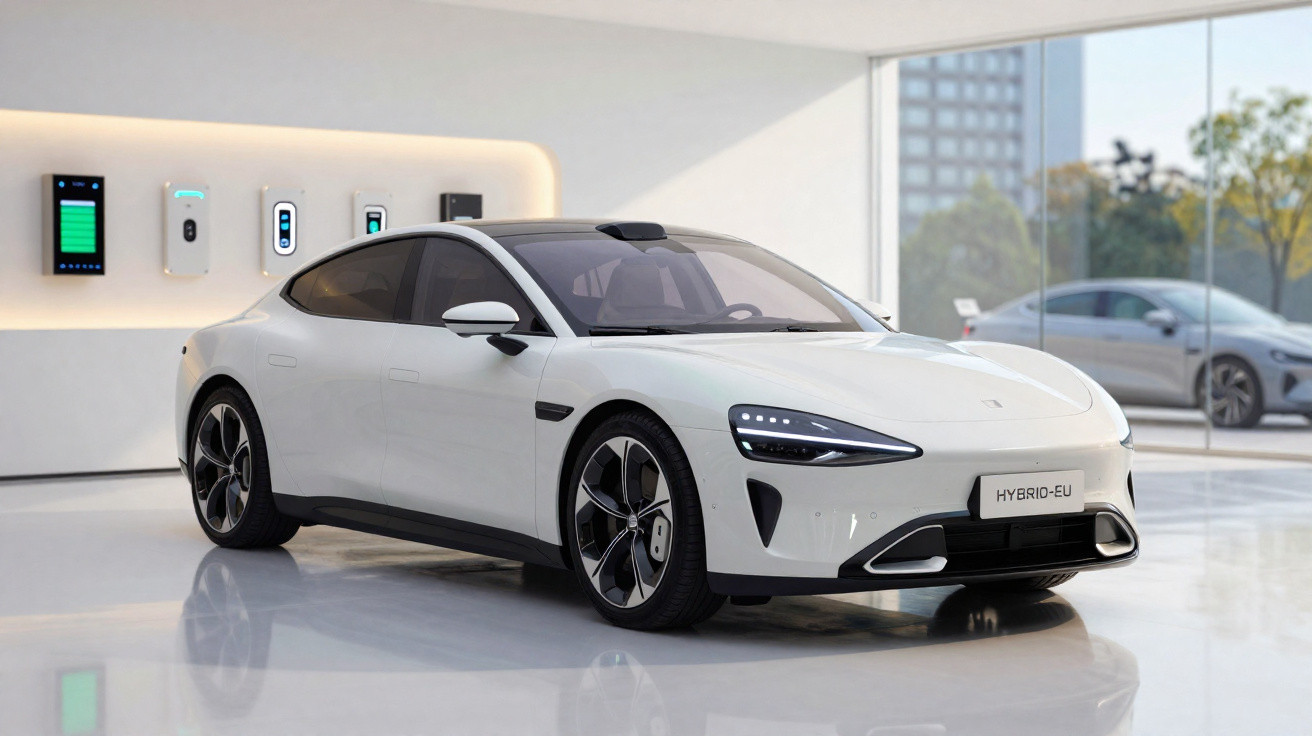
Stellantis has taken a step back and confirmed it will no longer be fully electric in Europe by 2030. The message was reiterated at the Munich Motor Show 2025 by Jean-Philippe Imparato, the group’s European chief executive, who argued that the European Union (EU) emissions targets that point to an end for internal combustion engines by 2035 are unachievable for any manufacturer.
Stellantis revises its 2030 all-electric plan for Europe
Even so, electrification remains high on the group’s agenda, not least because it still needs to meet emissions targets. To get there, Stellantis is considering several routes, with one standing out: hybrid powertrains that do not need to be plugged in - full-hybrids.
After the Volkswagen Group, Stellantis is now choosing to lean into a technology already proven by pioneers such as Toyota and Honda, and also used by Renault, Hyundai and Nissan. Stellantis has already moved first within its own line-up by launching this type of powertrain in the new generation Jeep Cherokee.
Full-hybrids: the technology Stellantis wants to scale
While that American SUV is not expected to come to Europe, the same cannot be said for the hybrid system behind it. The set-up is based around an engine that is familiar and widely used in Europe: the 1.6-litre turbo petrol unit that also underpins the group’s plug-in hybrids, including the Peugeot 3008.
Imparato did not share the European specification of this system - in the Cherokee it produces 210 hp, combines two electric motors and uses a 1.08 kWh battery - but he did say that, among all the solutions Stellantis is pursuing, this one will demand the biggest investment of time and money. He also confirmed these new hybrids are due to start reaching the market between 2027 and 2028.
Other powertrain investments: 48 V mild-hybrids, plug-ins and range extenders
Spending will not be limited to full-hybrid powertrains. Imparato also set out the rest of the group’s powertrain work, spanning mild-hybrids, pure EVs and plug-in hybrids:
- Mild-hybrids 48 V - development of a second generation is under way and a third is planned, with the aim of reducing reliance on 100% electric vehicles.
- Plug-in hybrids - development of plug-in hybrids with longer electric-only range. The Peugeot 308 plug-in hybrid, for example, claims up to 65 km in electric mode, while the Volkswagen Golf quotes 143 km (WLTP).
- Electric vehicles with a range extender - for now, only Leapmotor uses this technology in the C10, but Jean-Philippe Imparato has not ruled out deploying it in other Stellantis EVs.
Hybrids moving into the spotlight
This renewed focus reflects their growing sales success, their role in helping to meet the EU’s CO₂ emissions targets - partly because demand for 100% electric cars has been below expectations - and the fact they are typically cheaper than plug-in hybrids (because their battery is much smaller), which could support wider adoption.
These models differ from pure EVs in that they deliver a driving experience closer to a conventional combustion car, and they are not dependent on a charging network that, despite expanding, remains insufficient and not always reliable.
At present, Europe’s full-hybrid market is led by Toyota. The Yaris Cross stands out as the best-selling model, with 111,747 units recorded up to July (source: Dataforce).

Comments
No comments yet. Be the first to comment!
Leave a Comment