
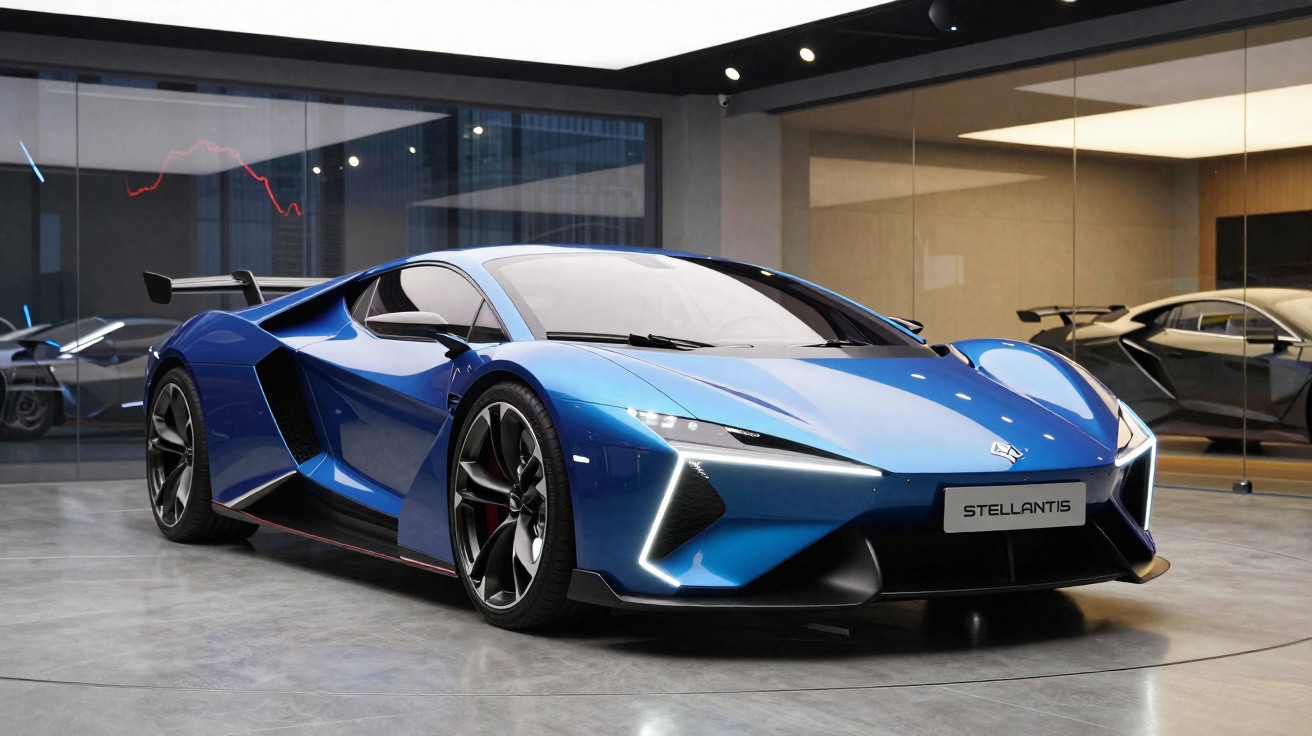
First-half 2025 financial results for Stellantis
Stellantis has published its financial figures for the first half of 2025 - and they make for bleak reading. The group reported a net loss of €2.3 billion, a deterioration of 140% compared with the same period last year.
Net revenues also slipped to €74.3 billion, down 13% versus the first half of 2024. Stellantis attributes the fall largely to weaker sales in its two biggest markets: North America, where volumes dropped 23% (647 thousand units sold), and the wider Europe region, where sales fell 7% (1.3 million units).
South America was the standout exception and the only region still expanding, with sales up 20% to 471 thousand units.
“We will have to take difficult decisions to restore profitable growth and significantly improve results,” the chief executive said, without detailing what those decisions might be.
Why Europe matters most to Stellantis in 2025
Even with these headwinds, Stellantis is forecasting a more encouraging second half. To get there, the new chief executive Antonio Filosa - who took up the role on 23 June - must tackle a range of issues, many of them centred on Europe.
Europe is Stellantis’ highest-volume market, generating €29.2 billion in revenue in the first half.
What problems are those?
Filosa has inherited a long list of challenges, with one of the most visible being the slow pace of new-model launches and ramp-ups. Key examples include the Citroën C3, the Opel Frontera and the FIAT Grande Panda - all built on the group’s Smart Car platform, regarded as crucial to Stellantis’ competitiveness in the supermini segment.
For the FIAT Grande Panda, introduced in the spring, sales in Europe reached just 3600 units by June. The production disruption affecting these models is largely tied to the electrified transmission (dual-clutch gearbox) used in the 48 V mild-hybrid versions, which is not being manufactured in the volumes required. Stellantis says it has implemented several measures since the beginning of the year to bring output of this component back to normal.
“My first weeks as chief executive have reaffirmed my strong belief that we will fix what is wrong at Stellantis, by building on everything that is right.”
Antonio Filosa, Stellantis chief executive
Another pressure point is light commercial vehicles. Although Stellantis leads the segment in Europe with a 30% market share, sales are down 13% this year, held back by economic uncertainty and companies pushing back fleet renewal decisions.
The outlook for Maserati is also unresolved. The luxury brand’s sales fell 30.7% in the first half, to just 4200 units. Stellantis has already acknowledged it is reassessing the marque’s positioning, and all signs point towards deeper integration with Alfa Romeo to unlock greater synergies.
On top of these commercial challenges, Filosa must manage two serious technical issues: the widening spread of “do not drive” orders linked to Takata airbags, and the long-running problems associated with the 1.2 PureTech engine. Both carry direct reputational and financial consequences for the company. The airbag issue alone has led to €300 million in charges.
Finally, there are the tariffs imposed by Donald Trump. The automotive giant is among the groups most exposed - a significant share of the models it sells in the US are built in Mexico and Canada, which are subject to a 25% tariff - and Stellantis estimates a net impact of €1.5 billion in 2025. In the first half alone, tariffs cost Stellantis €300 million.
What is being done?
To try to reverse the slide in sales and profitability, Stellantis has introduced several new models in Europe, including the Citroën C3 Aircross, FIAT Grande Panda and Opel Frontera, while also updating others such as the Citroën C4/C4X and the Opel Mokka. In North America, the emphasis has been on Ram, which has refreshed multiple models.
The flow of new products is set to continue in the second half. In Europe, the headline arrivals will be the DS Nº8 - which we have already driven - alongside the Citroën C5 Aircross and the Jeep Compass. Stellantis is also bringing back the GTi badge to Peugeot, with the new 208 GTi.
Across the Atlantic, the key developments include the return of the iconic HEMI V8 to the Ram pick-up and the launch of a new generation of the Jeep Cherokee.
Comments
No comments yet. Be the first to comment!
Leave a Comment