
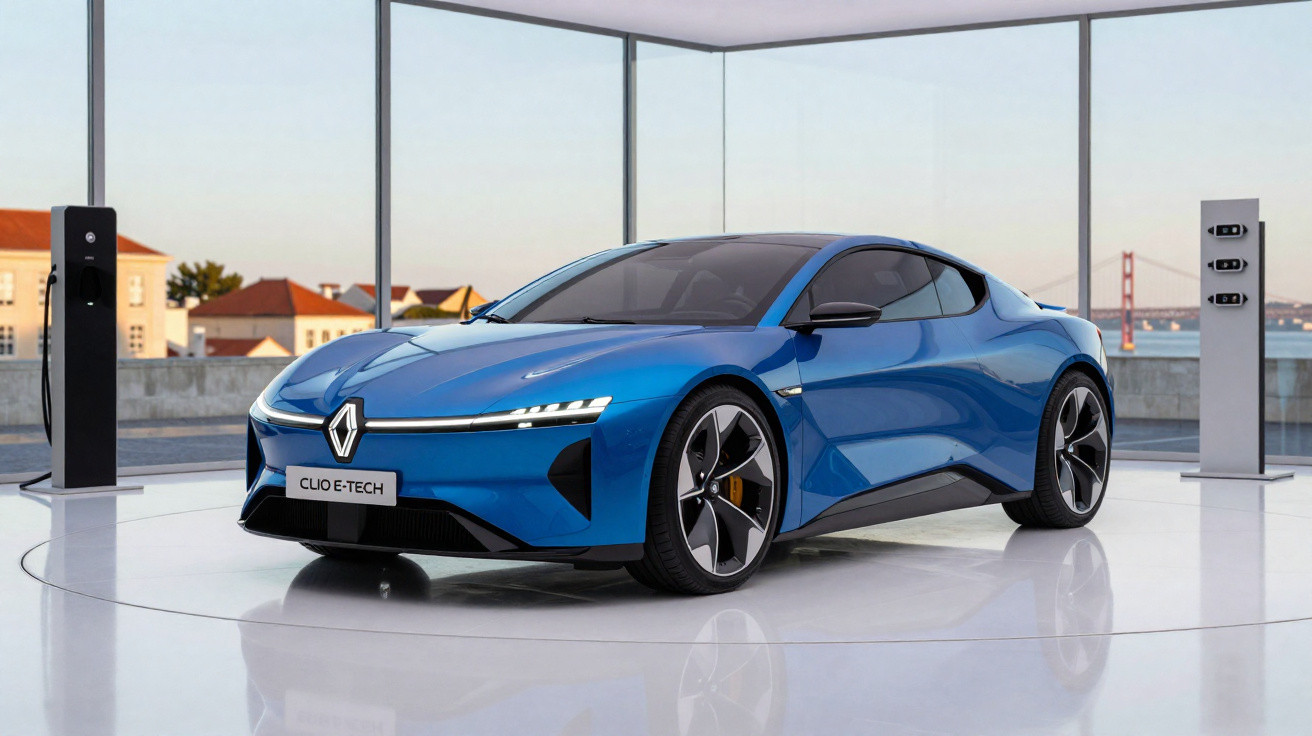
The French supermini icon stays compact, yet feels noticeably more grown-up: more technology, a stronger hybrid system and three clearly separated trims are designed to make the Clio equally appealing to city commuters, cost-conscious drivers and those who want a sportier look. The first drive of the latest version took place around Lisbon.
What changes with the new Clio generation
At first glance, it is the front end that stands out: slimmer headlights, a bolder grille and sharper surfacing. The Clio looks less playful and more mature-closer to a mini family hatch than a traditional supermini. New alloy wheel designs also arrive, alongside contemporary paint options, including a striking deep red used on the test car.
The engineering story centres on the hybrid. Renault is placing the full-hybrid model at the heart of the range. For drivers who spend most of their time in town, the electric contribution should cover a large share of everyday journeys with zero local emissions-without needing to plug in.
The new Clio arrives with three clearly separated trim lines and a revised full hybrid that offers more engine capacity than before.
Three trims: Evolution, Techno and Esprit Alpine
Renault has kept the line-up relatively straightforward. Rather than an opaque maze of options, buyers get three fixed trims that now differ more clearly from one another-both visually and in terms of equipment.
Evolution: the entry point for budget-minded buyers
The entry-level version is aimed at customers who want an affordable, practical supermini, but still expect modern kit. Typical items in this trim include:
- manual air conditioning or basic automatic climate control
- an infotainment system with smartphone connectivity
- core driver-assistance systems such as lane-keeping assist and autonomous emergency braking
- cloth seats and a generally more understated look
That makes the Evolution particularly relevant for fleet use, new drivers or commuters who mainly focus on keeping monthly costs down.
Techno: the everyday all-rounder
For the drive around Lisbon, Renault provided the mid-range Techno. It is positioned as the best all-round choice, with a noticeably more upmarket cabin feel and added convenience features. Depending on specification, this trim can include:
- a larger central display with expanded online functions
- more supportive seats with higher-quality upholstery
- additional assistance packages such as adaptive cruise control
- two-tone paint finishes and more attractive wheels
In day-to-day use, the Techno stands out for feeling calmer and more comfortable. If you regularly cover longer distances-or simply want a more modern equipment level-this is likely the sweet spot.
Esprit Alpine: a sportier look for drivers who want more presence
The third trim, Esprit Alpine, is intended to create a visual link to Renault’s Alpine performance brand. The focus is firmly on styling: sportier bumpers, specific wheels, darker exterior accents and more blue detailing plus Alcantara-style materials inside are typical of this theme.
The point is not outright power, but a more dynamic overall package. Paired with the full hybrid, it results in a supermini that can stay frugal in everyday use while looking noticeably more assertive than the lower trims.
New E-Tech full hybrid: more engine capacity, more relaxed driving
A key update for the Clio is the full-hybrid system, badged E-Tech. Compared with the previous generation, the petrol engine increases from 1.6 litres to 1.8 litres. The aim is not higher peak output, but stronger pulling power and a more effortless feel.
In general use, the full hybrid is designed to run on electric power frequently at lower speeds. That suits heavy urban traffic, stop-start conditions and short trips. The petrol engine cuts in when extra performance is needed or when the battery requires charging.
| Feature | Previous hybrid | New E-Tech hybrid |
|---|---|---|
| Petrol engine capacity | 1.6 litres | 1.8 litres |
| Typical use case | mainly city driving | more relaxed in town and on country roads |
| Everyday feel | economical, but sometimes strained | smoother running, more in reserve |
With the larger capacity, the engine can achieve the same pace while turning at lower revs. That reduces noise and makes the car feel more assured-particularly when accelerating on country roads or joining the motorway.
Driving impression: what is the Clio Techno Hybrid like on the road?
On the winding roads around Lisbon, the Clio continues to deliver the nimble character it is known for. The steering responds promptly without feeling twitchy. The suspension setup is clearly tuned more for comfort than for unnecessary firmness, which is generally more pleasant in everyday driving than forced sportiness.
The full-hybrid system switches between electric and petrol operation fairly smoothly. Driven gently, the Clio cruises along quietly, especially in urban settings. When you demand more acceleration, you can hear the petrol engine fire up, but the extra capacity removes some of the strain and urgency.
The combination of compact dimensions, a comfort-focused suspension setup and hybrid power makes the Clio a clear city favourite with long-distance ability.
In testing, the main advantage is how little effort is required from the driver: there is no need to understand the hybrid system for it to deliver benefits. You simply get in and drive; everything else happens automatically. Drivers who adopt a light right foot can noticeably increase the share of electric running and, as a result, lower consumption.
Which trim suits which type of buyer?
The three trims target clearly different audiences. As a broad guide:
- Evolution: a sensible pick for low-mileage drivers, younger motorists, fleets and anyone who simply wants dependable A-to-B transport.
- Techno: aimed at everyday users who value up-to-date assistance systems, nicer materials and extra comfort.
- Esprit Alpine: best for style-led buyers who want a sportier look and would like to stand out from a sea of grey cars in the car park.
Where you drive also matters. If you commute daily in a large city and want to avoid the hassle of public charging, the full hybrid is a strong fit. For drivers who mainly cover long motorway distances, conventional engines can still make sense-depending on which options Renault offers in each market.
Hybrid in a supermini: genuine benefit or just marketing?
In the supermini class, a common question is whether a full hybrid really pays off, or whether a small petrol engine is enough. In real-world use, short trips with frequent stops are exactly where hybrid technology shows its strengths. Every set of traffic lights becomes an opportunity for energy recuperation-recovering energy during braking.
That can bring a noticeable reduction in consumption in urban driving. If you spend most of your time on the motorway at a steady speed, the electric share is much lower. In those situations, comfort becomes more relevant: the larger petrol engine supports relaxed cruising, while the electric motor helps out during acceleration.
What buyers should check before signing
Before choosing between the three trims, it is worth reviewing the standard equipment and any available packs in detail. Many drivers now prioritise specific features, including:
- intuitive infotainment with stable smartphone connectivity
- current safety aids such as blind-spot monitoring or rear cross-traffic alert
- comfortable seats with enough adjustment range
- sufficient ISOFIX points for child seats
With the hybrid in particular, prospective buyers should plan for an extended test drive. It is the best way to decide whether the power delivery suits you. Some drivers enjoy the smooth, gliding sensation; others prefer the more direct feedback of a conventional petrol car.
Where the Clio sits in the supermini market
With the updated Clio and its clearly defined trims, Renault is positioning itself aggressively against rivals such as the VW Polo, Vauxhall Corsa and Peugeot 208. The full hybrid offers a benefit not every competitor provides in the same way: electric driving without a charging cable.
For many city residents without a dedicated parking space and home wallbox, that could be the deciding factor. You get part of the EV experience without having to take the bigger step into a fully electric car.
If you are seriously considering a supermini, it is worth measuring the Clio-across Evolution, Techno and Esprit Alpine-against your own needs: how often you drive, where you go, how many people you carry, and how much styling and equipment matter to you day to day. The simplified structure makes that decision process noticeably easier.
Comments
No comments yet. Be the first to comment!
Leave a Comment