
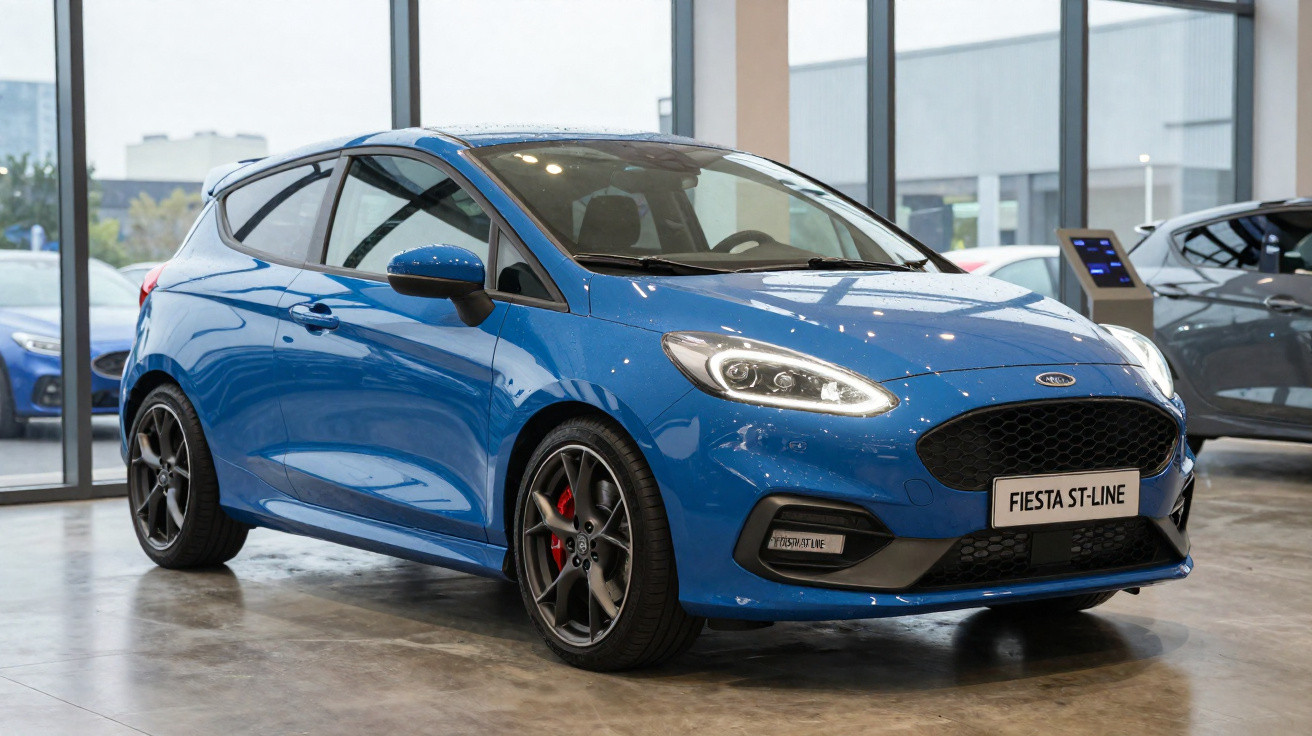
The Ford Fiesta has recently been refreshed - a decidedly restrained refresh, it’s true. Still, any excuse is a good one to get back behind the wheel of one of the segment’s most engaging superminis.
There are strengths and weaknesses here. But the best place to start is with what it does brilliantly: its dynamic behaviour.
Superb dynamics
The Ford Fiesta ST Line sits among the very best in its class for chassis set-up. And it’s not only about cornering flair: on broken, uneven surfaces this Ford still manages to surprise.
If we’re talking pure dynamics, only the SEAT Ibiza FR really runs it close. For outright comfort, though, you’ll want to look to the Peugeot 208 or the Citroën C3 - two excellent graduates of the French school, even if the latter is also among the cheapest cars in the segment.
The Volkswagen Polo, an unavoidable benchmark in this class, has to work hard to stay with the Fiesta in this department - the German model’s strengths lie elsewhere. As for the Renault Clio, it simply doesn’t have the same dynamic answers.
The comparisons could go on, but you can see the point…
When the brief is maximum fun for the least money, Ford’s formula is almost unbeatable.
The steering feels natural, the chassis reacts cleanly to every input, and the suspension tuning would embarrass plenty of genuinely sporty models. In this respect, the Ford Fiesta ST Line doesn’t mess about.
EcoBoost engine still impresses
Someone once said, “it takes two to tango”. I know nothing about ballroom dancing, but it feels like the perfect analogy for this supermini.
In the 1.0 EcoBoost engine, the Ford Fiesta ST Line’s chassis and suspension find an ideal partner.
This three-cylinder offers the liveliest, most frugal and most characterful 125 hp in the segment.
If this 1.0-litre, turbocharged three-cylinder with mild-hybrid tech is already convincing in the Ford Puma and Focus, it feels even more at home in the Fiesta. It’s worth revisiting the figures Ford quotes - with the warning that numbers never tell the whole story.
In this 1.0 EcoBoost 125 hp version with mild-hybrid (mHEV) technology, the Fiesta does 0–100 km/h in 9.4 seconds and reaches a 200 km/h top speed.
Yet it’s not when you’re wringing its neck - as if petrol cost only 1 euro… - that its response impresses most. The real surprise comes at low speeds, such as in town.
Peak torque (210 Nm) arrives at just 1,400 rpm, so even at a relaxed pace it feels punchy and readily available.
That shove - thank the turbo and the mHEV system - also helps the fuel economy. Because you rarely need to rev it hard, the brand claims a combined consumption of 4 litres/100 km (WLTP cycle).
Expect more. I managed 5 litres/100 km without paying much attention to how heavy my right foot was.
Some things haven’t changed… and they should have
Because this is a facelift, the Ford Fiesta hasn’t changed much - and that cuts both ways.
On the plus side, I’ve already covered the highlights up top, and honestly I could keep going. I could point to the infotainment system with Apple CarPlay and Android Auto compatibility, or the excellent standard equipment list.
On the downside, practicality remains a weak spot. In the rear seats, the Ford Fiesta is still one of the tightest options in the segment. The boot follows the same pattern, offering just 311 litres.
That doesn’t mean the Fiesta can’t handle everyday family life competently. It’s simply that some rivals do the job better - especially since cars in this class have grown noticeably over the last few generations. But there’s nothing like trying it for yourself.
Comments
No comments yet. Be the first to comment!
Leave a Comment